Your First Kitesurfing Lesson in Tarifa: What to Expect
Your first kitesurfing lesson in Tarifa is usually a calm, beach-based session.
Over about two hours at Valdevaqueros, you learn how the spot works, how the wind affects the kite, how the safety system helps you stay in control, and how it feels to fly the kite for the first time.
You do not need experience. You do not need your own gear. And you should not expect to ride the board straight away.
The first lesson is about building a safe foundation.
Liam Whaley, founder of Liam Whaley Pro Center, explains the approach like this:
“Introducing people into the sport that I love feels like I’m giving back in a certain kind of way.”
— Liam Whaley, founder, Liam Whaley Pro Center
That is the spirit of the first lesson. You are not rushed. Your instructor guides you step by step through the basics: the beach, the wind, the gear, the safety system, and your first controlled movements with the kite.
Once those basics feel clear, the next steps become much easier.
This guide walks you through a first two-hour session, from reading the wind to flying the kite on the sand.
⤷ If you want to see how the sessions are structured, our kitesurfing lessons in Tarifa page explains the lesson options and how we plan around the conditions.
Step 1: Reading the Wind and the Spot
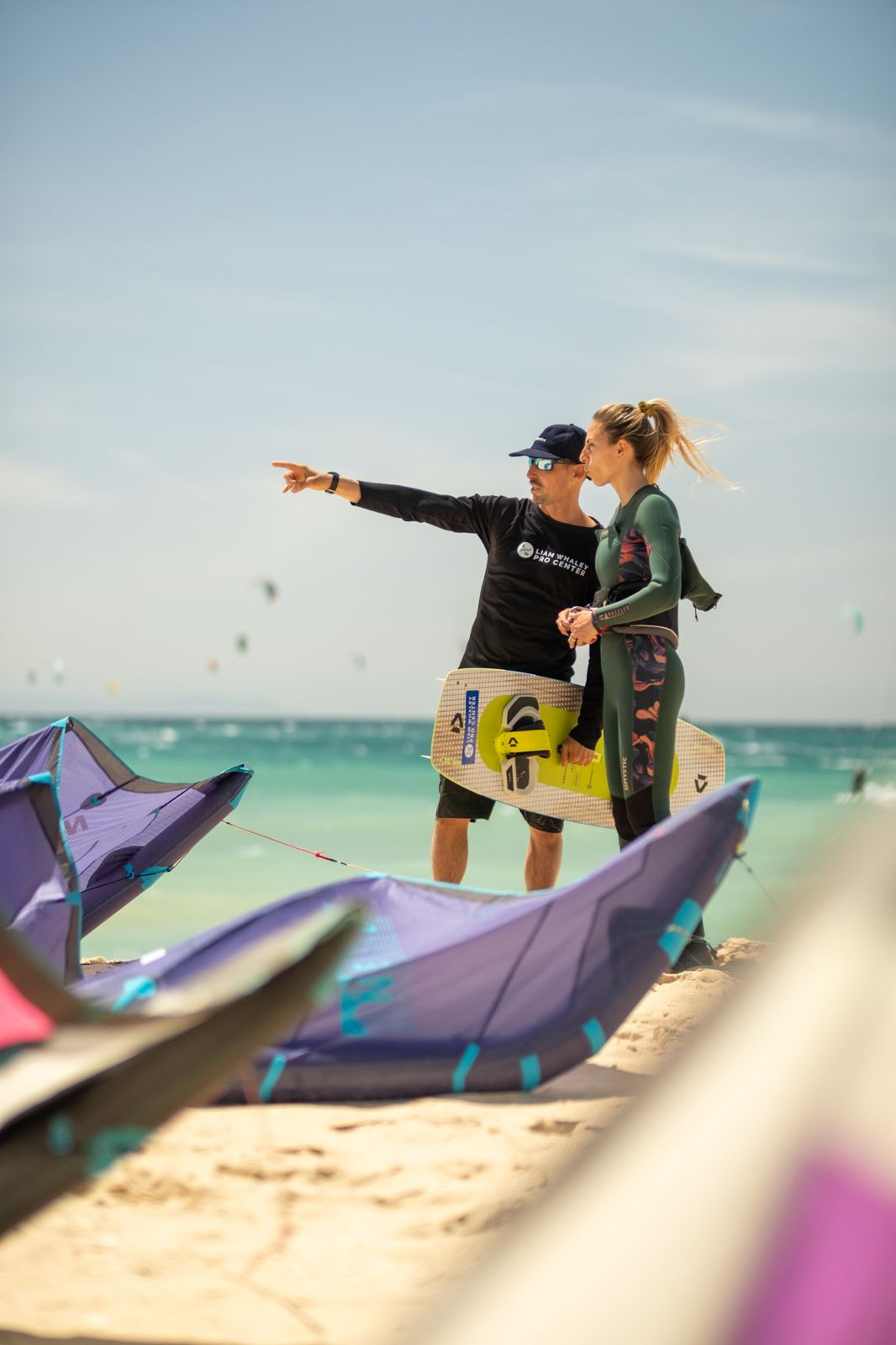
Before you fly a kite, your instructor reads the conditions with you.
When you arrive at Valdevaqueros, your instructor checks where the wind is coming from, where the teaching area sits, where the safe zone is, and what areas to avoid on the beach.
The lesson is built around the conditions on the day.
In Tarifa, this matters more than at many other spots. The Levante and Poniente can create very different learning conditions.
The Levante is the east wind, funneled through the Strait of Gibraltar between Spain and Morocco. It can be strong and steady, especially in summer. The Poniente comes from the west and is often lighter, sometimes with more swell.
You do not need to understand all of this before you arrive. Your instructor explains what matters for your lesson in simple terms.
They then choose the gear: kite size, line length, and where on the beach you will work. This depends on the wind, the space, your weight, and your level.
For most first lessons, the setup starts small and manageable. A beginner-friendly kite is chosen for the conditions, and shorter lines may be used to make the kite easier to control.
On day one, the goal is to feel in control before adding more power.
You do not need to become a forecast expert. You only need enough awareness to understand why your setup was chosen and how to start safely.
Step 2: Getting to Know the Gear
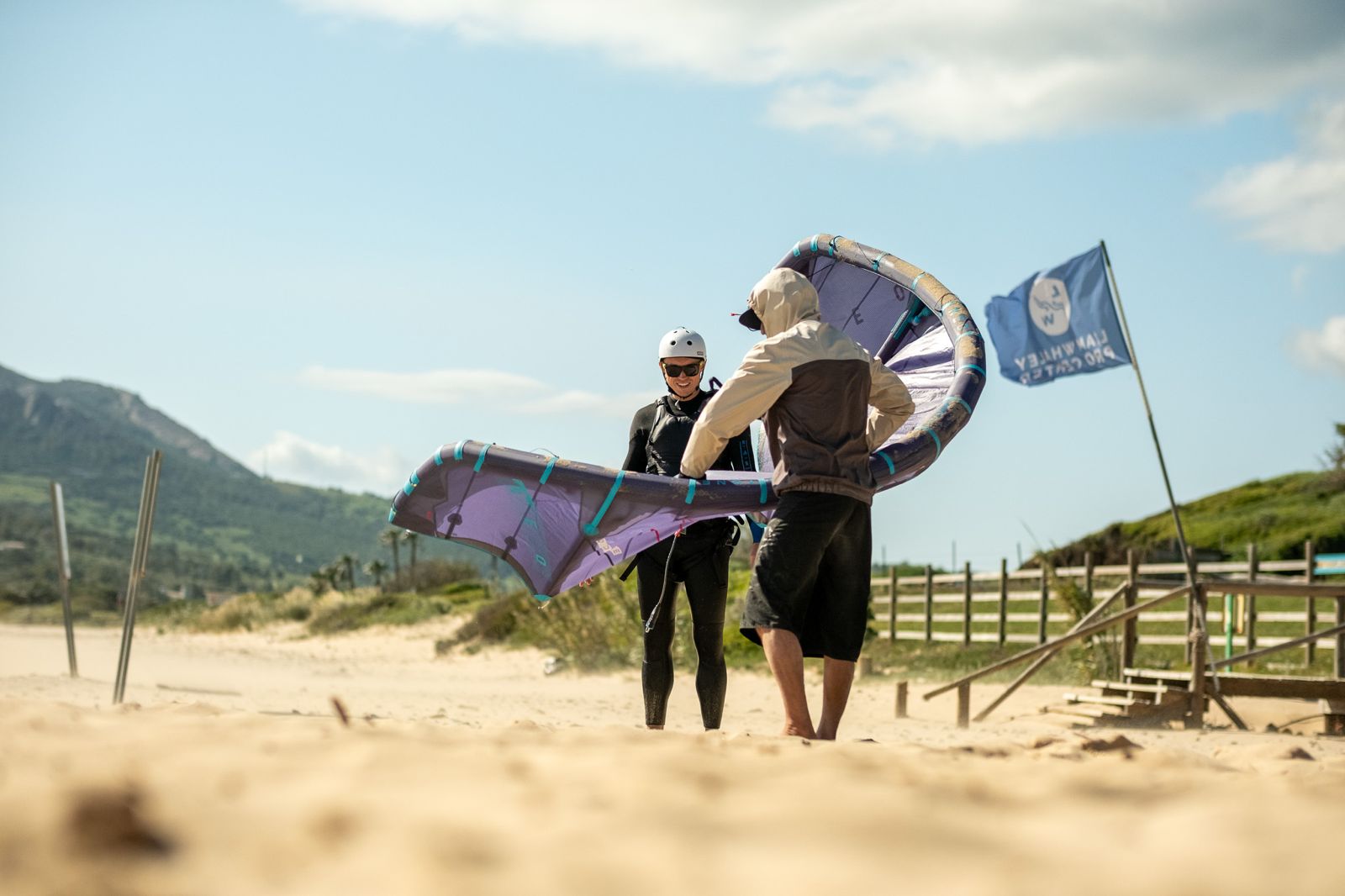
Once the wind and the spot are clear, you meet the gear you will use.
Your instructor shows you the kite, bar, lines, pump, harness, helmet, safety leash, and impact vest. You do not need to know how any of it works before you arrive.
The first lesson helps the equipment feel familiar before the kite goes in the air.
You may learn how to unroll and pump the kite, how to place it safely on the sand, and how to walk the lines out without tangles.
Your instructor also shows you the difference between the power lines and the steering lines, and why line awareness matters before anything goes up.
This part looks simple, but it is important.
A kite is a full system, not just something you fly. The more clearly you understand the gear on land, the calmer everything feels once the kite is in the air.
Step 3: Learning the Safety System
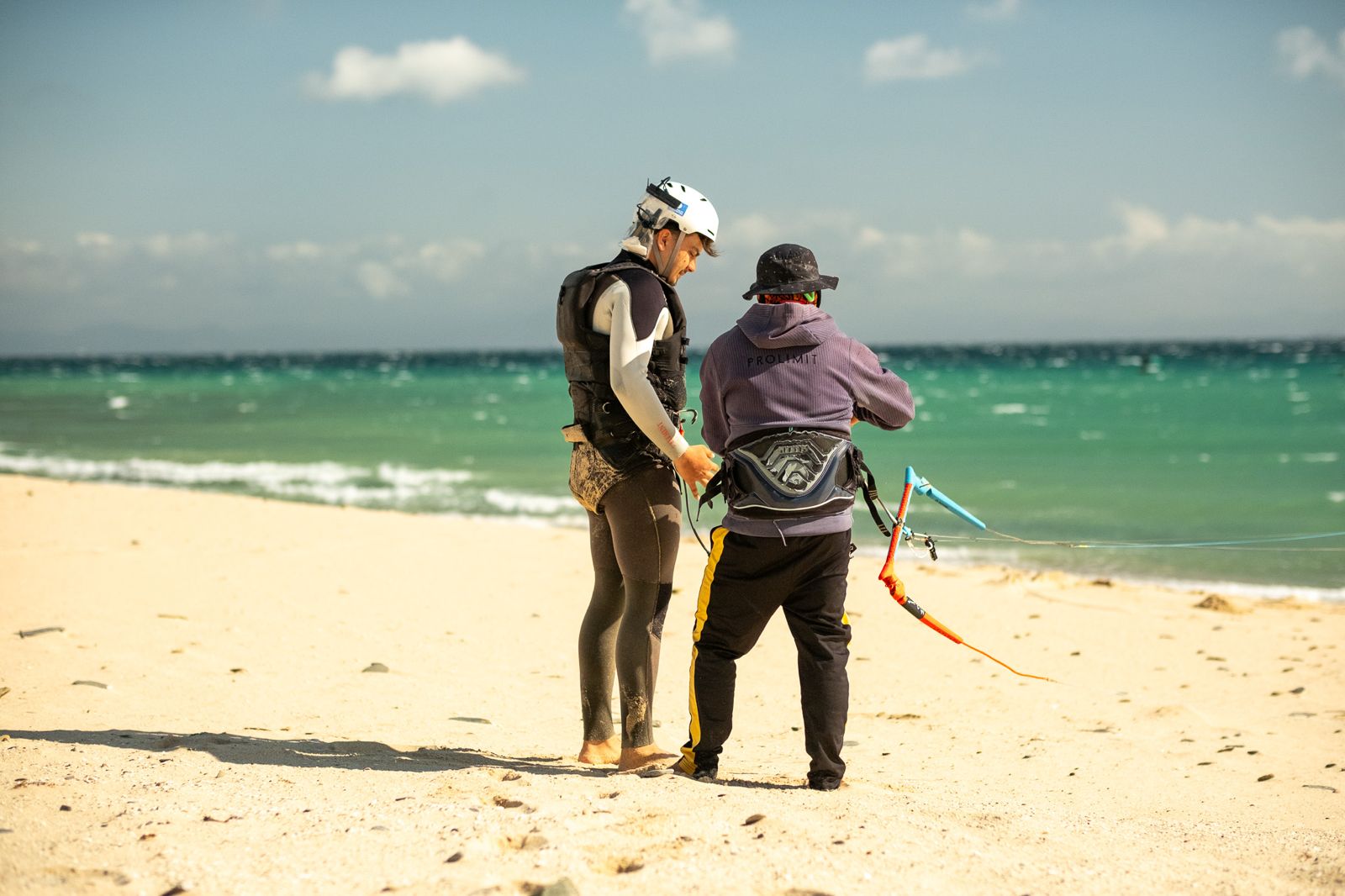
Before you fly the kite with any real power, your instructor teaches you how to reduce that power.
This is one of the most important parts of your first kitesurfing lesson, and it is usually simpler than beginners expect.
You are not trapped with the kite. You learn clear safety steps before the lesson becomes more active.
Letting Go of the Bar
The first safety action is also the simplest: Let go of the bar.
When you pull the bar in, the kite creates more power.
When you push the bar away, the power drops.
When you let go completely, the kite loses most of its pull.
You do not need to fight the kite with strength.
If the kite pulls too much, your instructor teaches you to let go, listen, and reset. This helps you understand that control does not come from force. It comes from knowing what to do.
Quick Release and Full Disconnect
Your instructor also shows you the quick release system.
If letting go of the bar is not enough, the quick release reduces the kite’s power while keeping it attached through the safety leash.
Your instructor will also explain the final safety step, which disconnects you from the kite completely. This is only for rare situations, but it is important to know that the option exists.
You practice finding these safety points by feel, so your hands know where they are.
Where the Kite Pulls Less
This is where the wind window starts to make sense.
Your instructor shows you where the kite feels calm and where it can create more pull. Some positions feel quiet and controlled. Others build power faster.
Learning this on the beach helps the kite feel less random and more understandable.
Control comes before power.
| Safety Action | What Happens | When You Use It |
|---|---|---|
| Let go of the bar | The kite loses most of its power. | First reaction to too much pull. |
| Quick release | Power drops and the kite stays attached by the leash. | When letting go is not enough. |
| Full disconnect | You separate from the kite completely. | Rare situations, as the final step. |
Step 4: Flying the Kite on the Beach
This is usually the most exciting part of the first lesson.
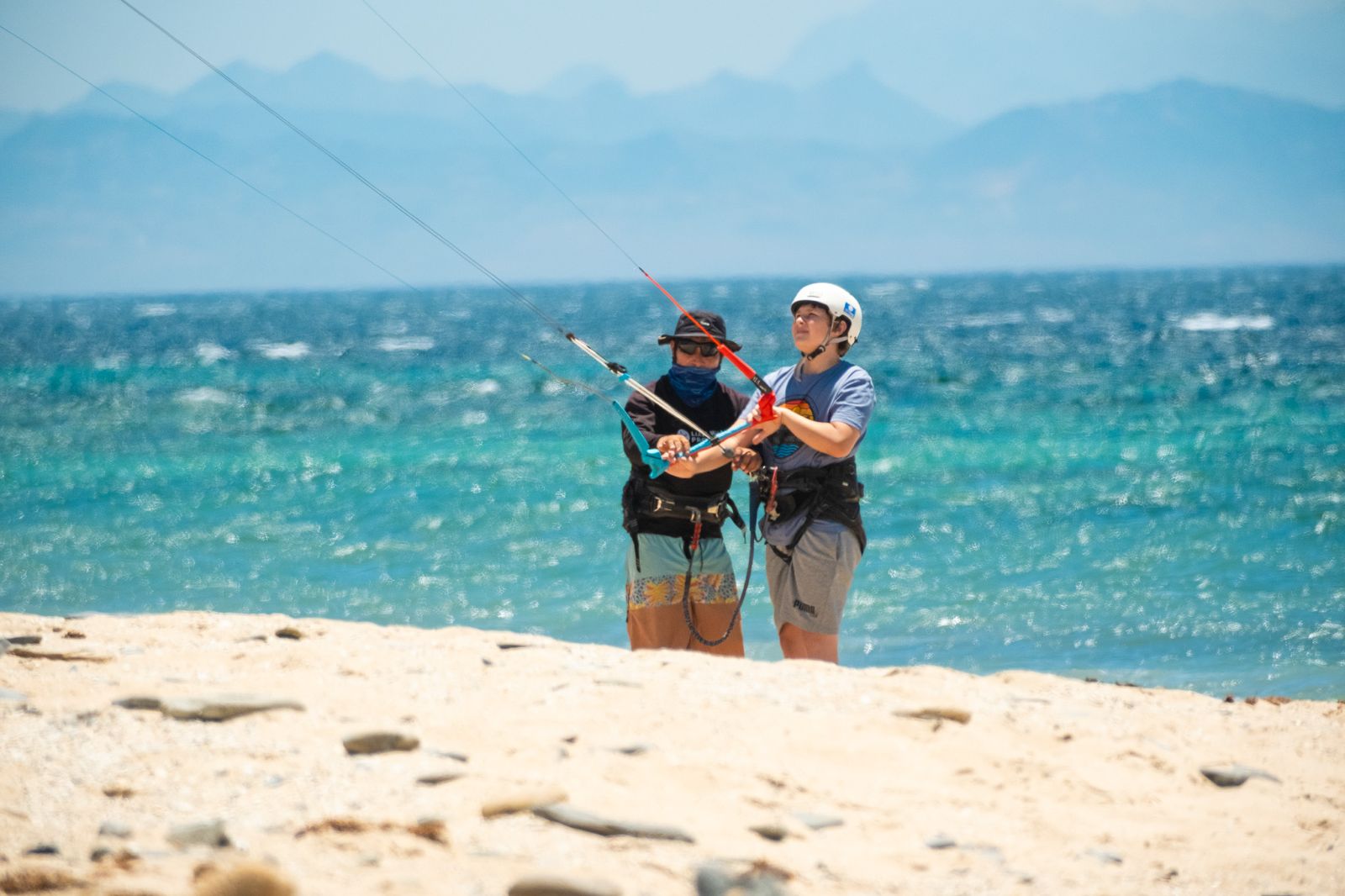
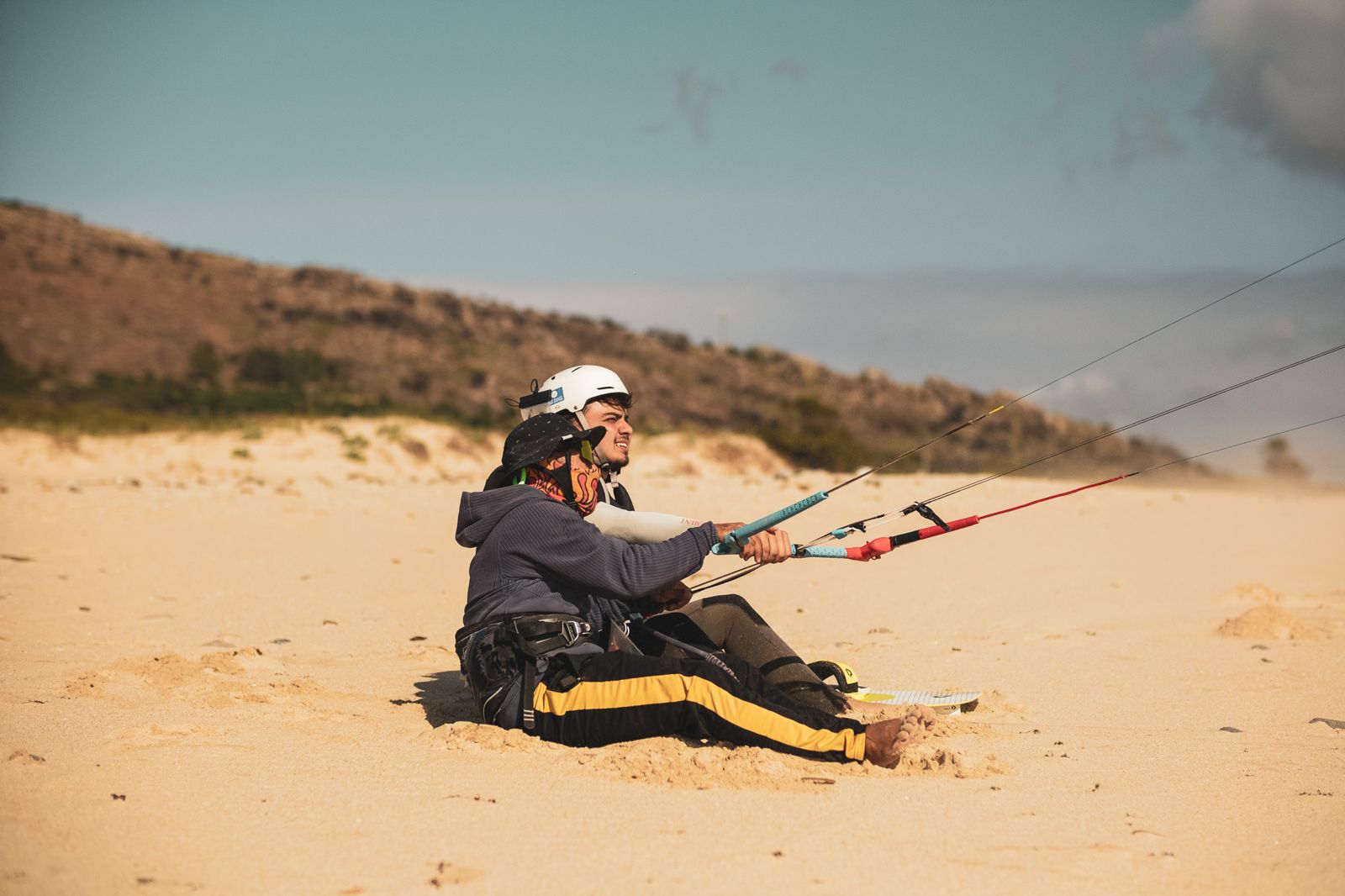
You do not take full control straight away. You start seated on the sand, usually on one side of the wind window, with your instructor close behind you.
The kite goes up with your instructor’s help first. Then you gradually take more control.
At first, your instructor flies the kite and lets you rest your hands on the bar so you can feel how it moves. You notice the pressure, the direction, and how small movements affect the kite.
Then, little by little, your instructor gives you more control.
They may keep their hands on the bar with you at first. Then they may move one hand away, stay close, and make small corrections when needed.
The same bar you learned for safety now becomes your steering tool.
When you steer left, the kite moves left.
When you steer right, the kite moves right.
When you pull the bar in, the kite creates more power.
When you push the bar away, the power drops.
Small movements make a big difference.
If you steer too much, too fast, or in the wrong direction, your instructor is right there to help. They can slow the kite down, correct the movement, and help you reset before it becomes too strong.
Crashing the kite is normal. Resetting is part of the lesson, not a mistake in it.
The goal is not to be strong. The goal is to feel the kite, understand the bar pressure, and learn how the kite responds.
By the end of this step, many beginners have their first real “click” moment: the kite stops feeling random and starts feeling like something they can understand.
Will You Go in the Water During Your First Lesson?
Usually, you will not go into the water during the first two-hour lesson.
For most complete beginners, the first session happens mainly on the beach. You learn the spot, the gear, the safety system, and basic kite control before adding the water.
This is not a delay. It is what makes the next step safer and more useful.
Water adds more things to manage: movement, chop, current, body position, and less stable footing. If you can already steer the kite calmly on land, you are better prepared when the lesson moves toward the water.
In some conditions, your instructor may bring you closer to the water sooner. That depends on the wind, the beach, your confidence, and your control.
The decision is made on the day, for you.
The goal is to finish the first session understanding the kite, not rushing into the sea before you are ready.
If you want to see how the first sessions are structured and how we plan around the Levante and the Poniente, visit our kitesurfing lessons in Tarifa page or send us your dates and level.
First Lessons for Kids and Semi-Private Groups
Bringing a child, or learning with a friend?
The base of the first lesson stays the same: spot awareness, equipment, safety, and first kite control. What changes is the pace, kite size, and level of support.
Some children can start young, but it depends on their size, focus, confidence, and the wind on the day. Under-18s need parental consent. Younger or lighter riders usually use smaller kites, and the instructor adapts the setup carefully.
In Tarifa, younger and lighter students often do better in private lessons. The wind can be strong, the beach can be busy, and one-to-one attention usually creates a calmer first experience.
In a semi-private lesson, two students share one instructor.
One person may fly while the other watches, listens, and learns from the same corrections. If both students are at a similar level and the conditions are suitable, the rhythm can build from there.
If one person needs more support, the instructor can slow the pace so both students stay safe and involved.
What to Bring and How to Prepare
You do not need to study before you arrive.
You will not be expected to ride the board, understand the forecast, or know how the equipment works. Your instructor will explain everything step by step.
Come rested, hydrated, and ready to listen.
For your first kitesurfing lesson in Tarifa, bring:
| Bring | Why it helps |
|---|---|
| Swimwear | Useful if the lesson moves near the water |
| Sunscreen | Valdevaqueros can be bright and exposed |
| Water | The wind and sun can make you thirsty quickly |
| Sunglasses | Helpful before and after the lesson |
| Hat | Useful while waiting or checking in |
| Towel | For after the session |
| Dry clothes | Comfortable for after the lesson |
We provide the technical gear. You bring sun protection, water, and comfortable clothes for before and after.
How Fit Do You Need to Be?
You do not need to be extremely fit or very strong for your first kitesurfing lesson.
The first session is more about coordination, focus, and listening than muscle. You should be comfortable moving on sand, spending time in the sun and wind, and following instructions outdoors.
If you feel tired, nervous, or unsure at any point, tell your instructor. That helps them adapt the pace.
How Long Is a First Kitesurfing Lesson?
A first kitesurfing lesson usually runs for about two hours.
That gives enough time to read the spot, set up the gear, learn the safety system, and feel the kite without overloading a complete beginner.
Shorter sessions can feel rushed. Longer sessions can be tiring in Tarifa’s wind and sun.
Two hours is usually enough to understand the basics, fly the kite for the first time, and finish with a clear idea of what comes next.
What You Take Away From the First Session
After your first lesson, you will not be riding the board yet, and that is completely normal.
What you take away is a real first feeling for the sport: how the wind works, how the kite responds, how the safety system works, and what the next step will be.
By the end of the session, you should start to understand:
| What you learn | Why it matters |
|---|---|
| Where the wind is coming from | Helps you understand the spot |
| How the wind window works | Shows where the kite is calmer or more powerful |
| How the bar controls the kite | Helps you steer and reduce power |
| How the safety system works | Gives you clear ways to reset |
| How the kite feels in the air | Builds confidence for the next session |
You may also feel tired. Kite control takes concentration when everything is new.
That does not mean you did badly. It means your body and brain were learning a new system.
From here, your next session may move toward more kite control, body dragging, and later board starts. Your instructor will explain the next step based on your control, confidence, and the wind.
The first win is not riding the board. It is realizing that the kite is something you can start to understand and control.
Book Your First Kitesurfing Lesson in Tarifa
Your first kitesurfing lesson is the safest way to understand what the sport actually feels like.
You do not need experience. You do not need your own gear. You do not need to understand the forecast before you arrive.
At Liam Whaley Pro Center, your first session starts step by step: the spot, the wind, the equipment, the safety system, and your first controlled movements with the kite.
The goal is not to rush you onto the board. It is to help you feel comfortable, understand the basics, and finish the lesson knowing what comes next.
Book your first kitesurfing lesson in Tarifa or send us a message with your dates, level, and questions. We will help you choose the right first session for the conditions and your confidence level.
Frequently Asked Questions
Will I go into the water during my first kitesurfing lesson? +
Usually not. Most complete beginners spend the first two-hour session on the beach learning the spot, the gear, the safety system, and basic kite control.
Your instructor may adapt this depending on the wind, the beach, your confidence, and your control.
Will I ride the board on my first lesson? +
No. A first lesson focuses on kite control, safety, and the wind window.
Riding the board comes later, once you can steer the kite calmly.
Do I need experience to start kitesurfing in Tarifa? +
No. The first lesson is built for complete beginners.
You start with the spot, the wind, the gear, and the safety system before moving toward water skills.
What should I bring? +
Bring swimwear, sunscreen, water, sunglasses, a hat, a towel, and dry clothes for after the session.
The technical gear is provided by the school.
Is Tarifa too windy for a first lesson? +
No. Tarifa can be windy, but lessons are planned around the real conditions of the day.
Your instructor checks the wind, the beach, your level, and the equipment setup before you start.
Can kids take a first kitesurfing lesson? +
Yes. Some children can start young, depending on their size, focus, confidence, and the conditions on the day.
Under-18s need parental consent, and younger riders often benefit from private instruction.
Is a semi-private first lesson different? +
The base is the same, but the rhythm can change. In a semi-private lesson, one person may fly while the other watches and learns from the same corrections.
The instructor adapts the pace so both students stay safe and involved.
How long until I can kitesurf on my own? +
A beginner course usually takes several sessions. Full independence takes longer and depends on your control, confidence, consistency, and the conditions.
The first lesson gives you the foundation: wind awareness, kite control, safety, and spot awareness.
Latest News
- Kitesurf Lesson Formats in Tarifa: Private, Semi-Private or Group?
- Your First Kitesurfing Lesson in Tarifa: What to Expect
- How to Read Windguru for Kitesurf Lessons in Tarifa
- Kitesurf Lessons in Tarifa: How the Forecast Shapes Your Learning Experience
- Kitesurfing Events in Tarifa: What to Watch During Your Kite Holiday
- What to Do in Tarifa Beyond Kitesurfing: No-Wind Days, After Sessions, and the Best of the Area
- Planning a Kitesurfing Trip to Tarifa: Flights, Transport, Forecast, and the Week Around It
- Tarifa in Spring for Kitesurfing: What to Expect in April, May and June
- Is Tarifa a Beginner-Friendly Spot for Kitesurfing? What to Know Before You Go
- The Liam Whaley Pro Center Reopens in March for the 2026 Season