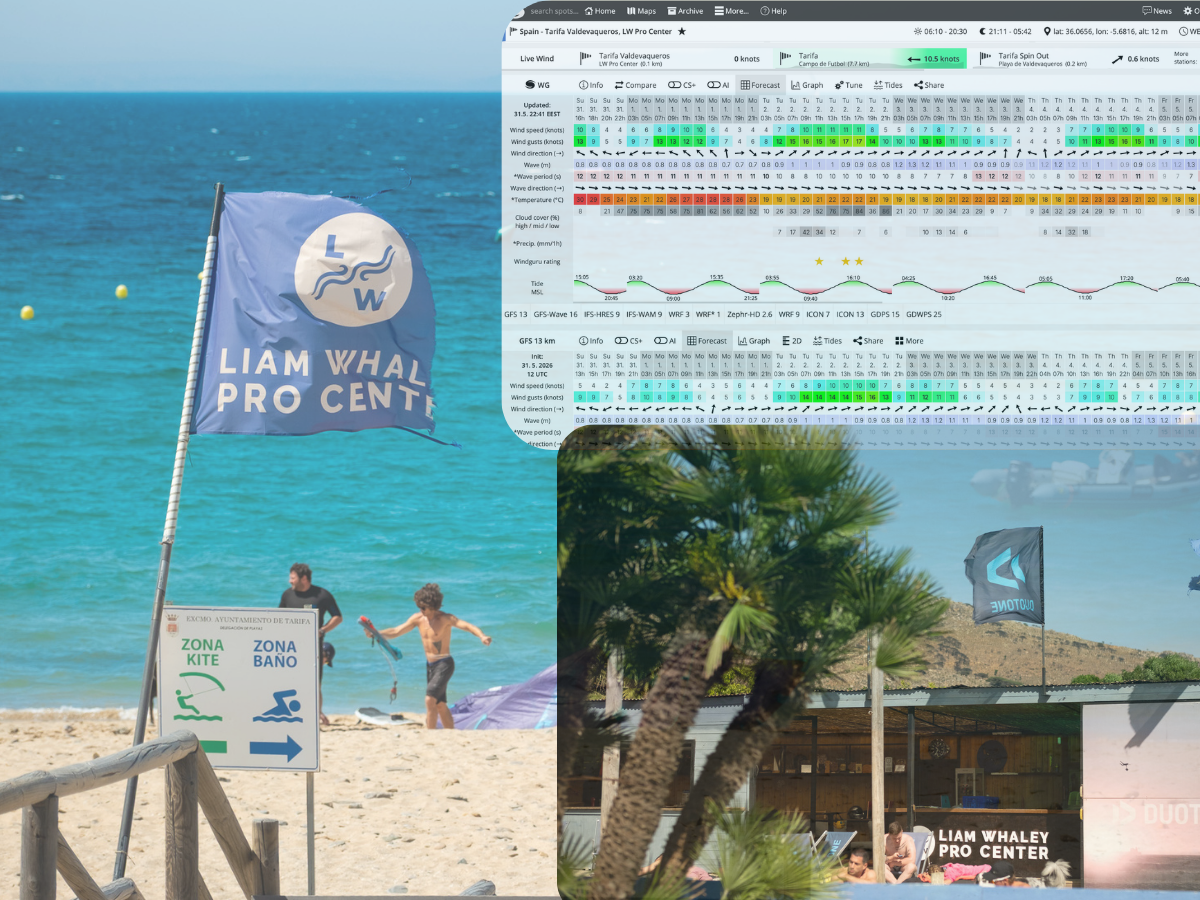
How to Read Windguru for Kitesurf Lessons in Tarifa
If you are planning kitesurf lessons in Tarifa, you have probably opened Windguru and thought: “Okay… what am I looking at?”
There are numbers, arrows, stars, colours, clouds, and different forecast models. For a beginner, it can feel more confusing than helpful.
The good news is that you do not need to read Windguru like an advanced rider. You only need to understand the basics: wind speed, gusts, direction, sun, clouds, rain, and live conditions.
This guide explains how to read Windguru as a beginner, especially if you are preparing for a kitesurf lesson in Tarifa or Valdevaqueros.
⤷ For the lesson-planning side, read Kitesurf Lessons in Tarifa: How the Forecast Shapes Your Learning Experience.
Windguru Is a Forecast, Not the Final Answer
Windguru is useful, but it is not the same as standing on the beach.
It gives a forecast based on weather models. These models estimate what the wind, clouds, rain, waves, and temperature may do. Windguru also updates regularly, so it is worth checking the last update time before trusting an old screenshot.
Still, models do not always capture what happens locally at Valdevaqueros. Tarifa has strong local wind effects because of the Strait of Gibraltar, the mountains, the beach shape, and thermal wind.
That is why a local kiteschool in Tarifa will never decide only from one forecast screenshot. Windguru gives the first idea. The real beach conditions decide the final call.
⤷ You can also check the live webcam at Valdevaqueros:
The 5 Things Beginners Should Check on Windguru
When you open Windguru, do not try to understand every row.
Start with these five things:
| What to check | Why it matters |
|---|---|
| Wind speed | Shows whether the day looks light, moderate, or strong |
| Gusts | Shows how stable or unstable the wind may feel |
| Wind direction | Helps identify Levante or Poniente |
| Clouds, sun, and rain | Helps explain changes in thermal wind |
| Stars | Gives a quick signal, but not a beginner-specific answer |
You may also see different forecast models, such as GFS, WRF, or ICON. They can show slightly different numbers. As a beginner, use them as a guide, then compare the forecast with live beach conditions.
1. Wind Speed: The First Number to Read
Wind speed is usually the first number beginners look at.
On Windguru, this number shows the average wind expected for each hour. It is usually shown in knots, which is the normal unit used in kitesurfing. As a simple reference, 1 knot is around 1.85 km/h.
The important thing is not to chase the strongest number. Stronger wind is not automatically better for beginners.
Instead, wind speed helps you understand whether the day looks light, medium, or strong. Your instructor will then decide whether that wind suits your lesson stage.
⤷ For a full explanation of how different wind strengths affect the lesson plan, read Kitesurf Lessons in Tarifa: How the Forecast Shapes Your Learning Experience.
2. Gusts: The Number That Shows How Stable the Wind Feels
The gust row is just as important as the wind speed row.
Wind speed shows the average. Gusts show the stronger bursts. On Windguru, the gust number is usually shown below the average wind number.
For example:
| Forecast | How it may feel |
|---|---|
| 18 knots with 20-knot gusts | Fairly steady |
| 18 knots with 30-knot gusts | Much more unstable |
| 22 knots with small gusts | Often easier to manage than gusty lighter wind |
For beginners, the gap between wind speed and gusts matters a lot. Steady wind gives a more predictable pull. Gusty wind can pull, drop, then pull again.
This is one reason local judgment matters so much in Tarifa.
3. Wind Direction: Levante or Poniente?
In Tarifa, wind direction usually means one of two main winds: Levante or Poniente.
Windguru shows direction with arrows. These arrows help you understand how the wind will hit the beach. For beginners, the most useful thing is learning whether the forecast is showing east wind or west wind.
Levante
Levante is the east wind.
On Windguru, Levante usually appears as an easterly direction. It can be stronger and gustier, especially around Tarifa and the Strait of Gibraltar.
As a beginner, you do not need to judge Levante alone. Just recognise that it may need more local interpretation.
Poniente
Poniente is the west wind from the Atlantic.
On Windguru, Poniente appears as a westerly direction. It is often steadier and can build later in the day, especially when the sun helps thermal wind develop.
This is why a forecast that looks light in the morning may still become useful later.
4. Clouds, Sun, and Rain: Why They Matter
Many beginners ignore the cloud and rain rows on Windguru. In Tarifa, they can be important.
Sun can help thermal wind build, especially with Poniente. If the land heats up during the day, the wind can become stronger in the afternoon.
Clouds can reduce that effect. Low and mid clouds are especially worth noticing because they can block the sun and weaken the thermal build-up. Rain can also make the day feel less stable.
You do not need to become a weather expert. Just remember this:
| Weather signal | Beginner meaning |
|---|---|
| Sunny Poniente day | Wind may build later |
| Cloudy day | Thermal wind may be weaker |
| Rain nearby | Conditions may be less stable |
| Mixed forecast models | Check live conditions before deciding |
5. Windguru Stars: Useful, but Not Beginner-Specific
Windguru uses stars to show when the wind looks strong or promising.
But beginners need to be careful with the stars.
A three-star forecast can look exciting, but it may mean strong wind that is better for experienced riders than for someone taking a first kitesurf lesson in Tarifa.
For a beginner, one or two stars may sometimes be more suitable than three stars.
The stars are helpful, but they do not know your level. Your instructor does.
What About Tide and Waves on Windguru?
Windguru also shows tide and wave information, but for a beginner kitesurf lesson, these are secondary details.
Tide can affect the beach, currents, and how much space there is near the shore. Waves can make water practice easier or harder depending on their size and direction.
Wave period is also shown on Windguru. A longer period usually means more organised swell, but this is not something you need to judge before your first lesson.
For beginners, focus first on wind speed, gusts, direction, sun, clouds, rain, and live conditions.
Why the Live Webcam Helps
Windguru tells you what should happen. The webcam shows what is happening.
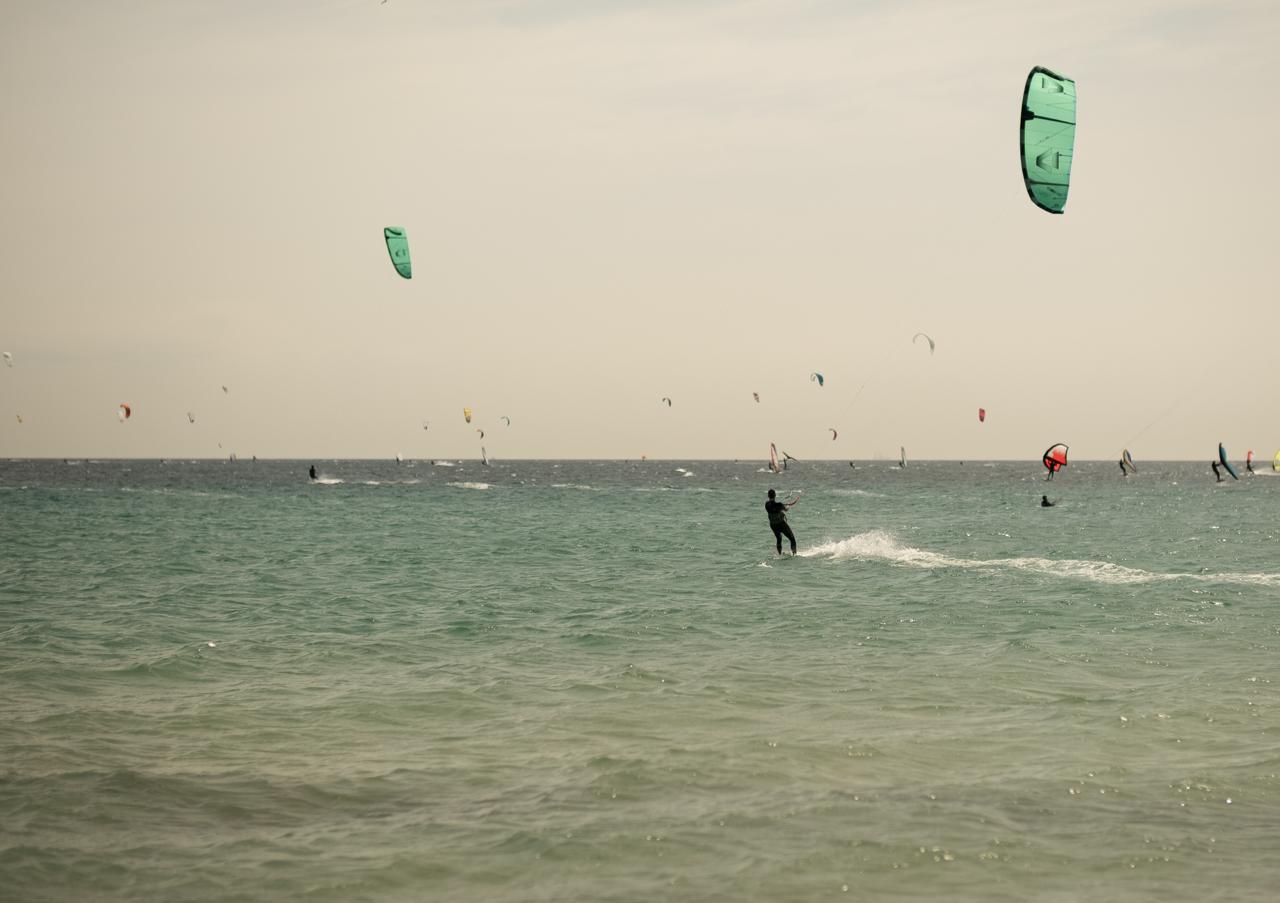
Before your session, check whether kites are flying, whether the sea looks flat or choppy, and whether the kites look smooth or twitchy in the air.
This gives you a better feeling for the day, especially when the forecast looks unclear.
⤷ Check the Valdevaqueros webcam.
Compare Windguru with What Is Happening on the Beach
Windguru is a strong starting point, but it is smart to compare it with another source or with what is happening live.
You might check another forecast app, the webcam, or ask the school what they are seeing at the spot.
This is especially useful when:
| Situation | What to do |
|---|---|
| Models disagree | Compare with live beach conditions |
| Forecast has just updated | Recheck before travelling |
| Wind looks borderline | Ask the school |
| Gusts look high | Do not judge alone |
| Direction looks unusual | Wait for local confirmation |
For beginners, the final question is not “does Windguru look windy?”
It is: does this wind match my lesson stage today?
That is where local judgment matters.
How Far Ahead Should You Trust Windguru?
Windguru is more useful the closer you are to the lesson.
Seven days before, it is only a general idea. Three or four days before, the pattern becomes clearer. One day before, it is more useful for lesson timing. On the same day, it should always be compared with live beach conditions.
Also check when the forecast was last updated. A fresh forecast is more useful than an old screenshot someone sent in a group chat.
Tarifa forecasts can change. That is normal.
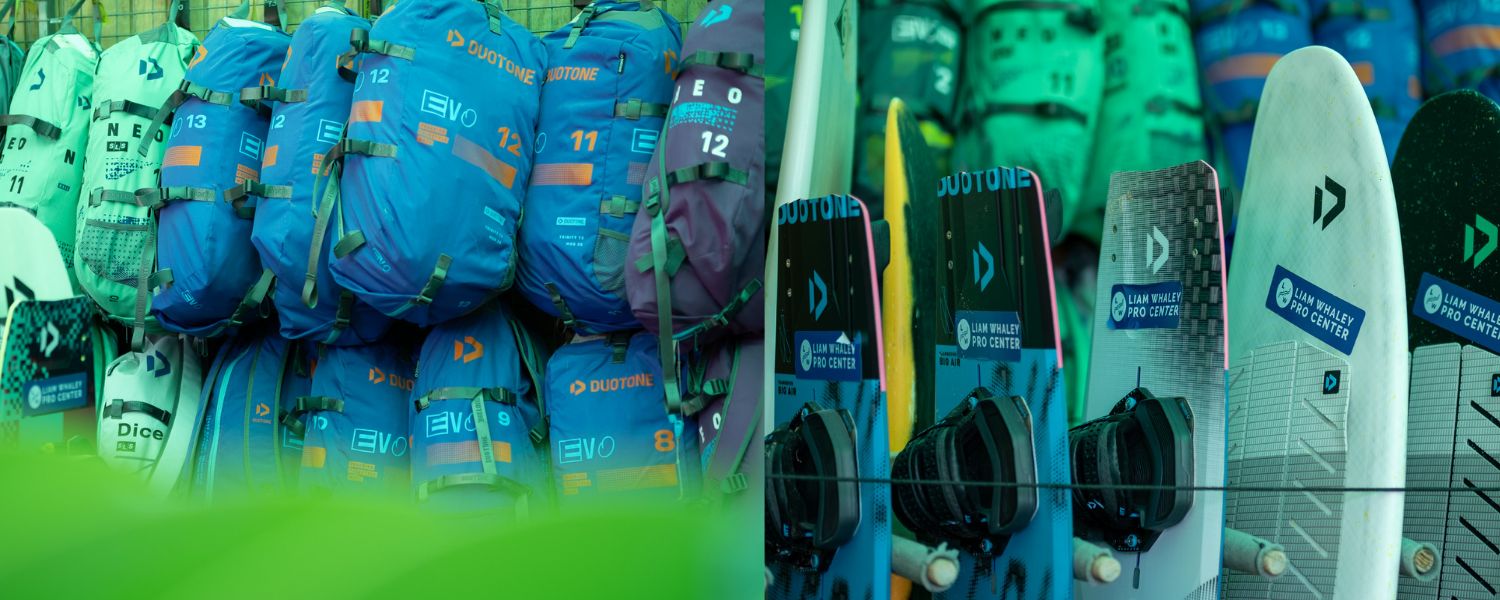
What About Kitesurf Rental in Tarifa?
If you are a complete beginner, do not use Windguru to choose your own kite size. That is part of the lesson process.
But if you are already independent and looking for kitesurf rental in Tarifa, Windguru becomes more important.
You need to understand if the day is light, strong, gusty, or changing.
At a beach centre, the advantage is flexibility. If the wind changes, you may be able to change kite size instead of being stuck with the wrong gear.
Beginner Windguru Checklist
Before your kitesurf lesson in Tarifa, check:
| Question | Why it matters |
|---|---|
| What is the average wind speed? | Shows if the day is light, medium, or strong |
| How big are the gusts? | Shows how stable the wind may feel |
| Is it Levante or Poniente? | Helps explain the direction |
| Is there sun, cloud, or rain? | Helps explain thermal wind |
| What does the webcam show? | Confirms real beach conditions |
| When was Windguru updated? | Avoids relying on old data |
| What does the school say? | Local judgment is the final filter |
Frequently Asked Questions
Is Windguru accurate for kitesurf lessons in Tarifa? +
Windguru is a useful forecast tool, but it is not the final answer. Tarifa has strong local wind effects, so the real beach conditions at Valdevaqueros matter too.
That is why the school compares the forecast with the live conditions before confirming the best lesson plan.
What should beginners check first on Windguru? +
Beginners should first check wind speed, gusts, wind direction, clouds, rain, and the last forecast update time.
The stars can be helpful, but they are not beginner-specific. A strong forecast may be good for advanced riders and too much for a first lesson.
Are Windguru stars important for beginner kitesurf lessons? +
They are useful as a quick signal, but they do not tell you whether the conditions are right for your level.
For beginners, one or two stars may sometimes be more suitable than a three-star forecast if the wind is steadier and easier to manage.
What is more important: wind speed or gusts? +
Both matter, but gusts are especially important for beginners. Wind speed shows the average wind, while gusts show the stronger bursts.
A gusty 18-knot forecast can feel harder to manage than a steadier 22-knot forecast.
How far ahead should I trust Windguru before my lesson? +
Seven days before your lesson, Windguru is only useful as a general idea. Three or four days before, the pattern becomes clearer.
The day before and the same day are the most useful moments to check, but the forecast should still be compared with live beach conditions.
Should I cancel my kitesurf lesson if Windguru looks bad? +
No. Do not cancel based only on one Windguru screenshot.
Forecasts can change, and local conditions at Valdevaqueros may be different from what the model shows. Always check with the school first.
Final Thought
Reading Windguru is a good habit. It helps you understand why the forecast can change, why gusts matter, and why strong wind is not always better.
But as a beginner, Windguru should give you context, not pressure.
You do not need to know everything before your first kitesurf lesson in Tarifa. You only need to understand the basics: wind speed, gusts, direction, sun, clouds, rain, and live conditions.
The rest comes with time on the beach.
⤷ Ready to understand how instructors turn the forecast into a real lesson plan? Read Kitesurf Lessons in Tarifa: How the Forecast Shapes Your Learning Experience.
⤷ Ready to get on the water? Book your lesson.
Latest News
- Kitesurf Lesson Formats in Tarifa: Private, Semi-Private or Group?
- Your First Kitesurfing Lesson in Tarifa: What to Expect
- How to Read Windguru for Kitesurf Lessons in Tarifa
- Kitesurf Lessons in Tarifa: How the Forecast Shapes Your Learning Experience
- Kitesurfing Events in Tarifa: What to Watch During Your Kite Holiday
- What to Do in Tarifa Beyond Kitesurfing: No-Wind Days, After Sessions, and the Best of the Area
- Planning a Kitesurfing Trip to Tarifa: Flights, Transport, Forecast, and the Week Around It
- Tarifa in Spring for Kitesurfing: What to Expect in April, May and June
- Is Tarifa a Beginner-Friendly Spot for Kitesurfing? What to Know Before You Go
- The Liam Whaley Pro Center Reopens in March for the 2026 Season