Kitesurf Lessons in Tarifa: How the Forecast Shapes Your Learning Experience
If you are planning kitesurf lessons in Tarifa, the forecast does more than tell you whether it will be windy. It helps decide what your lesson should focus on.
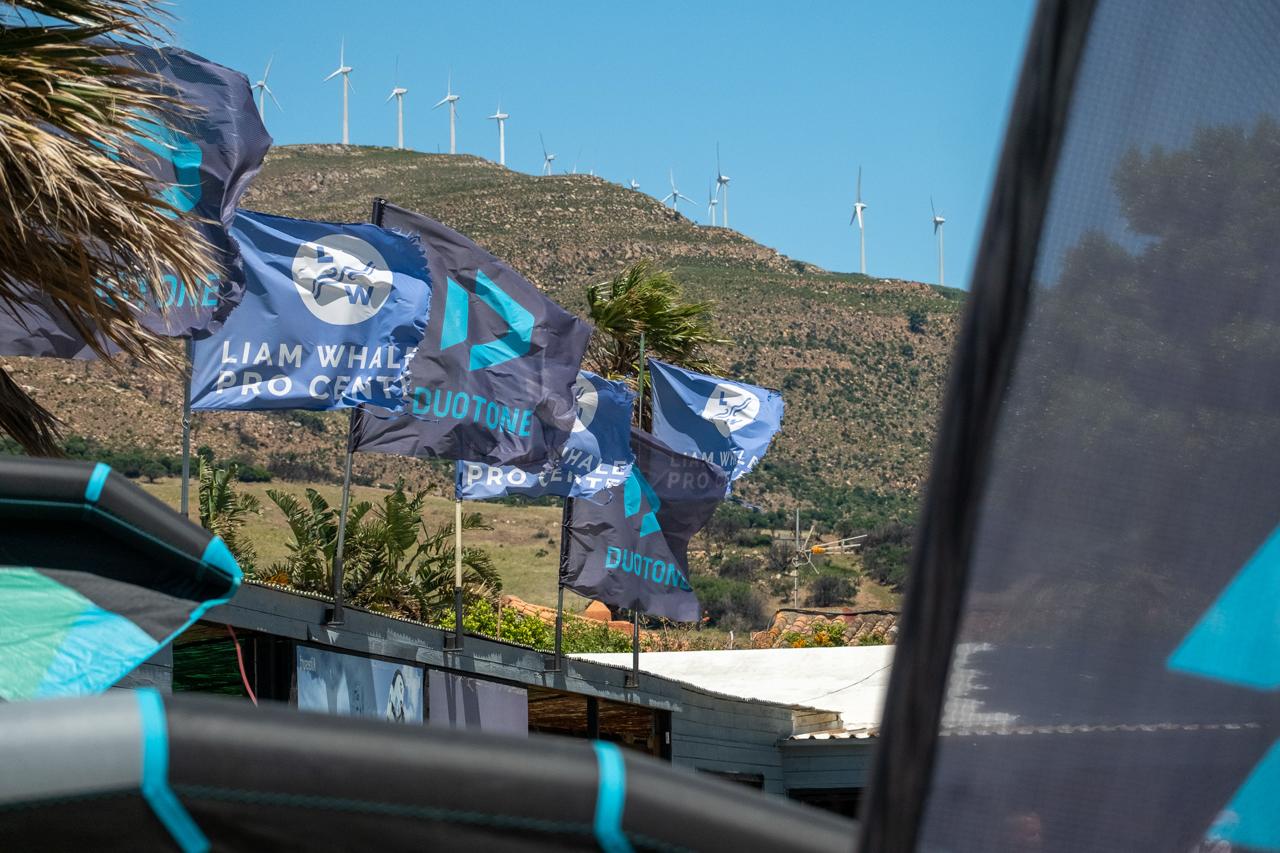
At Liam Whaley Pro Center in Valdevaqueros, every session is matched to your level, your experience, and the real conditions on the beach.
Some days are better for kite control. Others are better for body dragging, water starts, or building confidence on the board.
That is why a light morning is not always a lost day, and a strong forecast does not automatically mean a better first lesson.
Here is how the forecast shapes beginner kitesurf lessons in Tarifa, and why local judgment matters more than one screenshot from Windguru.
⤷ Book your kitesurf lessons in Tarifa or get in touch
Is the Wind Good for My Level?
There is no single “good” wind speed for every beginner. The right forecast depends on your lesson stage.
A first lesson needs different wind from a water-start session. Light wind can be useful for safety and kite control. Stronger wind may help once you are in the water, but it also needs more care.
Will 14 Knots Be Enough for a First Lesson?
Yes, in most cases.
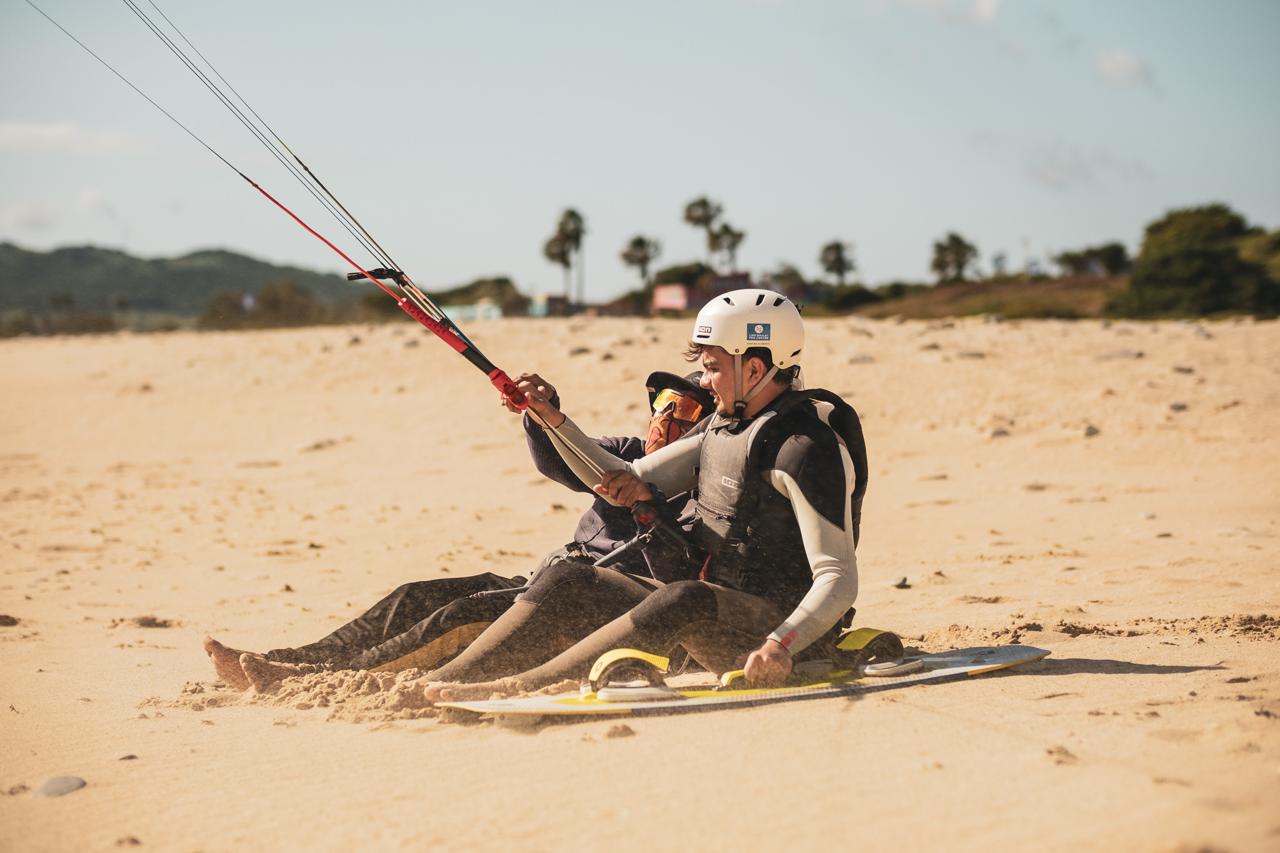
Your first lesson usually starts on land. The focus is the wind window, safety systems, kite setup, and basic kite control. None of that needs a lot of power.
| Wind range | What it may allow |
|---|---|
| Around 10 knots | Basic kite control may begin |
| Around 14 knots | Often comfortable for a first session |
| Light wind | Trainer kite, small kite, or shorter lines may be used |
Light wind is not a problem for a first lesson. It can actually be an advantage because it gives you time to understand the kite calmly.
Is 30 Knots Too Much for a First Lesson?
Thirty knots is strong wind, especially for a first-timer.
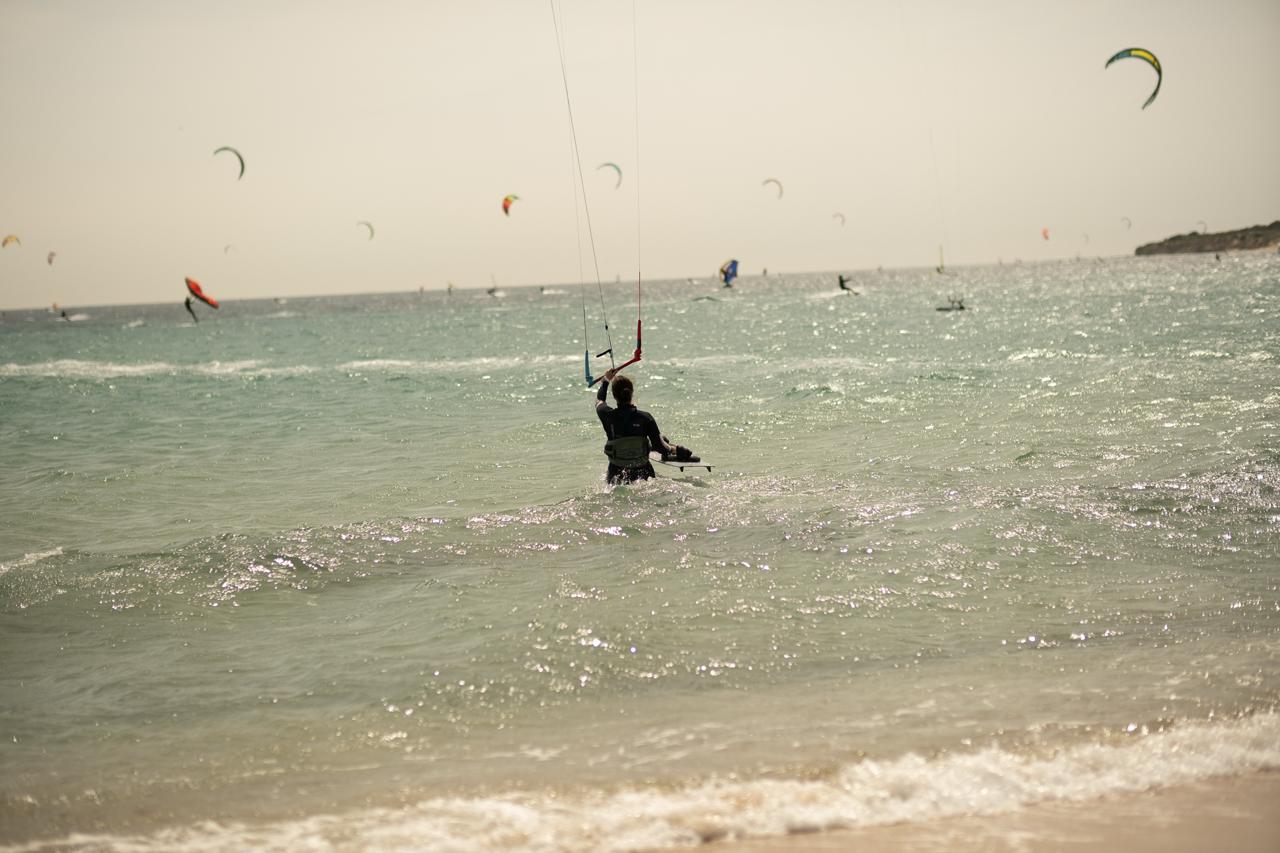
It does not automatically mean the whole day is cancelled, but it does mean the lesson plan needs local judgment. For many beginners, 30 knots may be too much for water work.
Strong wind can make things harder because:
-
You use a smaller, faster kite
-
The water can become choppier
-
Gusts can make the kite feel less predictable
-
Levante can feel stronger than the forecast suggests
The instructor may choose a smaller kite, shorter lines, a safer teaching area, or wait for a calmer window.
The goal is not to ride in the strongest wind possible. The goal is to learn with control.
⤷ Want to understand the forecast yourself? Read: How to Read Windguru for Kitesurf Lessons in Tarifa
What’s the Difference Between Levante and Poniente for a Beginner?
In Tarifa, you will hear two wind names again and again: Levante and Poniente.
Knowing which one is blowing matters because it changes how the kite feels, where the lesson starts, and how the instructor plans the session.
Levante
Levante is the east wind.
For beginners, Levante can feel more powerful because it is often stronger, hotter, drier, and gustier.
What that means for your lesson:
-
It can accelerate through the Strait of Gibraltar
-
The kite may pull in stronger bursts
-
At Valdevaqueros, it blows side-offshore
-
The team may start the lesson further up the beach and let you drift back toward the centre
-
Your instructor may choose a smaller kite, shorter lines, or a more conservative lesson plan
Levante is not automatically bad for beginners. It simply requires more local judgment.
As Matteo explains:
“With side-offshore winds, sometimes gusty, you see the differences. That fills out your training, your experience, your knowledge.”
— Matteo Micheletta, Liam Whaley Pro Center
Poniente
Poniente is the west wind from the Atlantic.
For beginners, Poniente often feels more comfortable because it is usually cooler, steadier, and easier to read.
What that means for your lesson:
-
The kite pull often feels smoother
-
At Valdevaqueros, it blows side-onshore
-
The lesson setup can reverse compared with Levante
-
It can build later in the day because of thermal wind
Poniente is often beginner-friendly, but it still depends on strength, gusts, and timing.
Floor explains it like this:
“With Poniente the forecast might show 5 or 6 knots. But on a sunny day, the thermal wind kicks in around 2pm and the beach ends up at 14, 15, sometimes 20 knots.”
— Floor, Liam Whaley Pro Center
⤷ If you're planning your trip around the forecast, read: Planning a Kitesurfing Trip to Tarifa
Why Gusts Matter
A gust is a sudden burst of stronger wind.
For beginners, gusts often matter more than the main wind number.
| Wind type | Beginner feeling |
|---|---|
| Steady wind | More predictable pull |
| Gusty wind | Pulls harder, then backs off |
| Gusty 18 knots | Can feel harder than steady 22 knots |
| Strong Levante | Often requires extra local judgment |
For your lesson, the wind’s name matters less than how strong it is, which direction it blows, how gusty it is, and how that matches your stage.
⤷ Still deciding whether Tarifa suits a complete beginner? Read: Is Tarifa Beginner-Friendly for Kitesurfing?
Not Sure Whether Tomorrow’s Forecast Is Suitable?
The forecast might look strong, weak, or confusing.
The important question is not whether the forecast looks windy.
The important question is whether it matches your current stage.
⤷ If you're unsure, contact the team directly and we will help you understand whether the forecast is suitable for your lesson.
Why Can Your First Kitesurf Lesson Run in Lighter Wind?
Because your first lesson usually happens on land.
You are not floating in deep water yet, trying to fly the kite without being able to stand. You are on the beach, where you can:
✔ Stop
✔ Reset
✔ Listen to your instructor
✔ Feel how the kite reacts
✔ Learn control without needing strong pull
For lesson one, the goal is not to create enough power to move through the water.
The goal is to understand the kite before adding the board, the sea, deeper water, and stronger pull.
Why 14 Knots Matters More Later
If the kite falls on land, you can simply reset it with your instructor.
In the water, it is different.
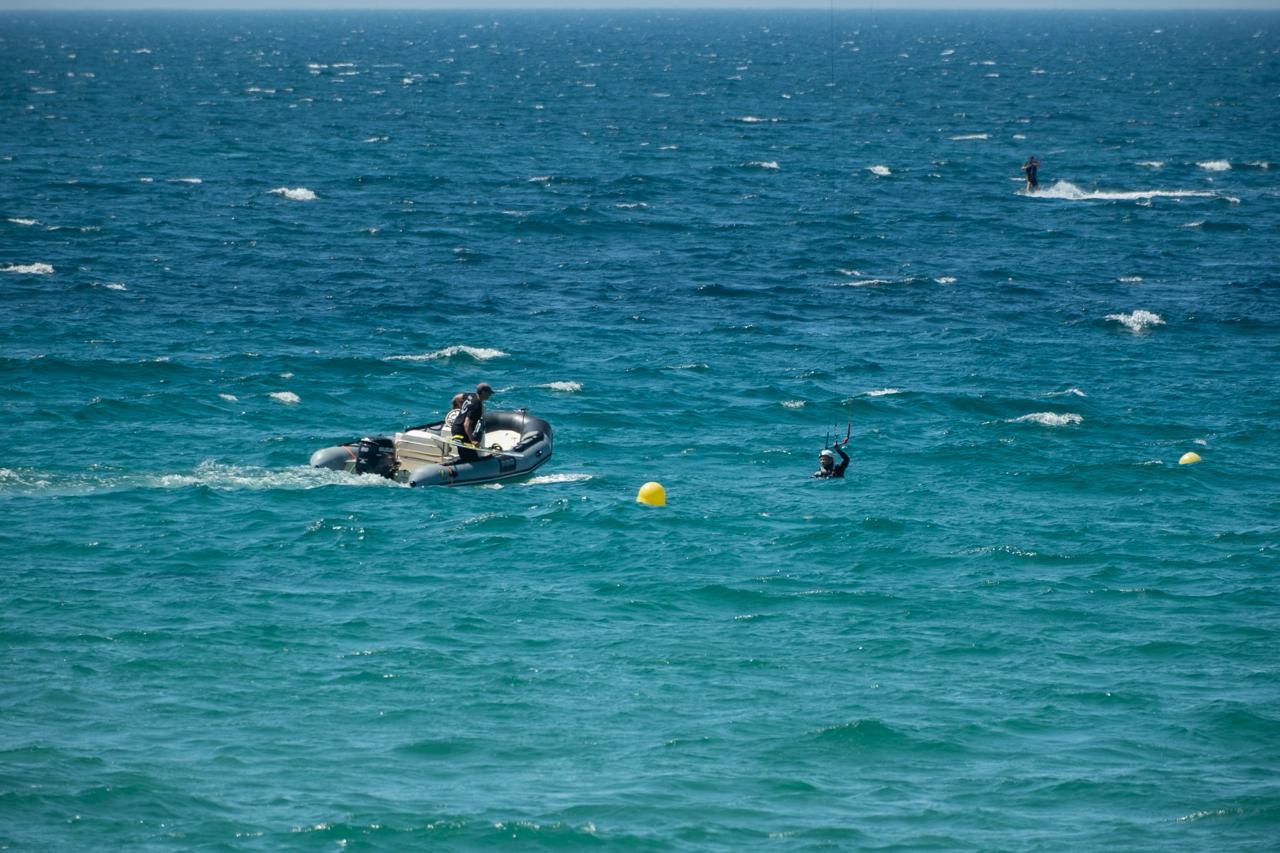
Once you move into body dragging, relaunching, and water starts, the kite needs enough wind to get back into the sky.
That is why around 14 knots becomes more important later in your progression.
What If It Is Under 14 Knots?
Under 14 knots can still work for a first lesson.
You may not have enough wind for:
-
Water starts
-
Reliable water relaunch
-
Strong body dragging
But you can still learn:
✔ Kite control
✔ Safety systems
✔ Wind awareness
✔ Good habits
You do not need riding wind for lesson one.
You need learning wind.
What Changes Once You Go in the Water?
Once you move into the water, the forecast matters differently.
The kite now needs enough wind to:
-
Stay stable
-
Relaunch from the water
-
Pull you through body dragging
-
Support water starts
A useful range for water practice is often around 14–25 knots.
| Forecast | Typical lesson focus |
|---|---|
| 10–14 knots | Safety systems, kite setup, kite control |
| 14–18 knots | Body dragging and kite relaunch |
| 18–25 knots | Water starts and riding progression |
| 25–30 knots | Adapted beginner progression with smaller equipment |
| 30+ knots | Conditions assessed individually |
This is why the forecast does not simply decide whether the lesson runs.
It helps decide what kind of learning makes the most sense.
Why Is Valdevaqueros Set Up for Different Forecasts?
Valdevaqueros works well for forecast-based lessons because the school is directly on the beach.
When the wind changes, the team can quickly:
✔ Check the real conditions
✔ Change kite size
✔ Adjust line length
✔ Modify the lesson plan
⤷ You can also compare the forecast with the live Valdevaqueros webcam. This helps show what is happening on the beach right now, not just what a forecast predicted.
Is a Light Poniente Morning a Waste of a Lesson?
No, not always.
If Windguru shows 5 or 6 knots in the morning, it can look disappointing.
But Poniente often builds later because of thermal wind.
The team looks at:
-
Existing wind
-
Wind direction
-
Sunshine
-
Forecast trend
-
Live beach conditions
That is why lesson times may move throughout the day.
That is not disorganisation.
It is simply good wind management.
What Happens If There Is No Wind?
No-wind days still happen, even in Tarifa.
If the wind is not suitable, the team will help you find the best option according to the booking conditions.
That may mean:
-
Rescheduling
-
Moving the lesson to another day
-
Adjusting the session focus
A lesson should not be forced simply because it is on the calendar.
⤷ For more ideas on what to do while waiting for wind, read: What to Do in Tarifa Beyond Kitesurfing
About the Local Insights in This Guide
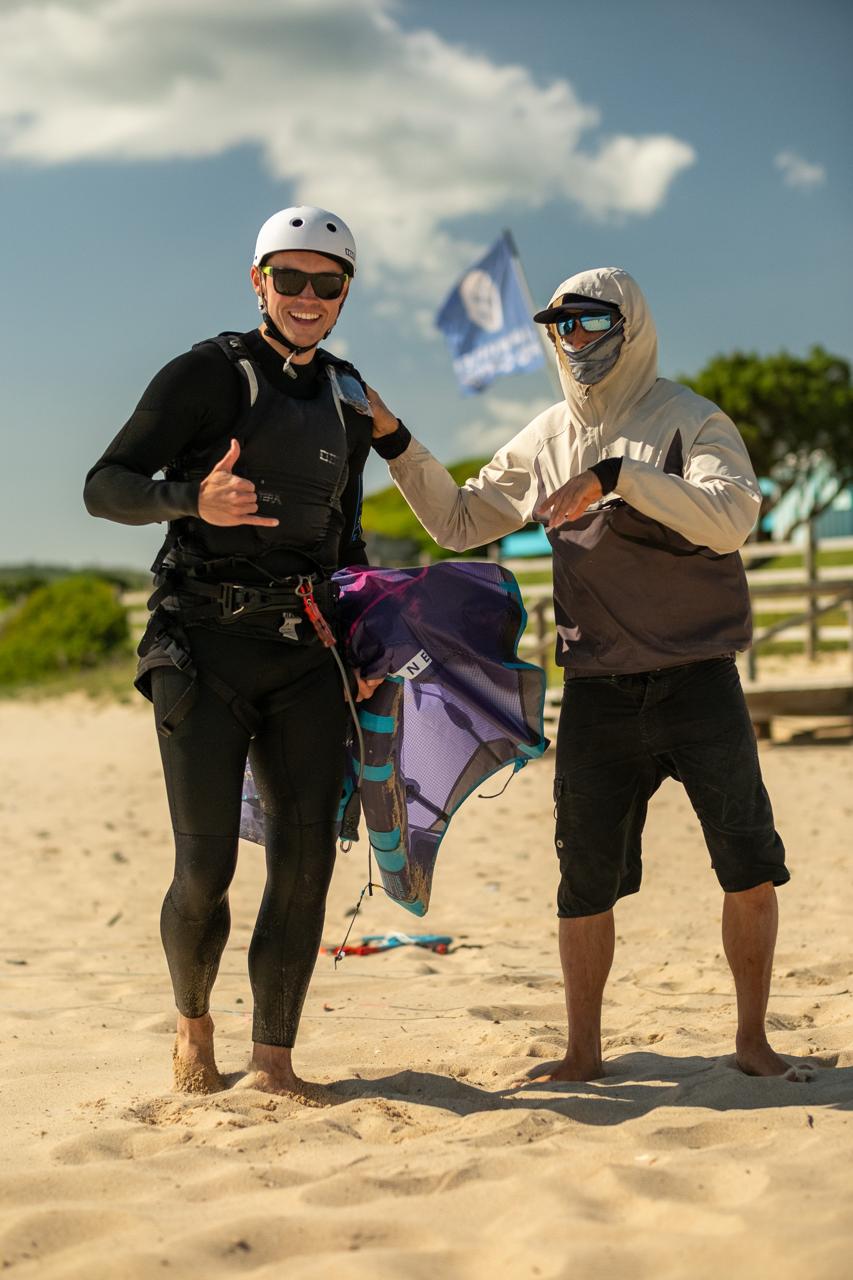
This article includes insights from instructors working daily at Valdevaqueros, including Matteo Micheletta and Floor from Liam Whaley Pro Center.
Forecast examples are based on real teaching conditions commonly experienced in Tarifa.
Frequently Asked Questions
How much wind do I need for beginner kitesurf lessons in Tarifa? +
For a first lesson, around 10–15 knots can already be useful because the session usually starts on land.
Once you move into body dragging, relaunching, and water starts, around 14–25 knots is often a better range.
Is 14 knots enough for a first kitesurf lesson? +
Yes.
For lesson one, around 14 knots is often comfortable for learning kite control, safety systems, and the wind window.
Is 30 knots too much for beginner kitesurfing in Tarifa? +
Thirty knots is strong wind for a beginner.
It may be too much for water practice, but instructors can sometimes adapt equipment and lesson structure depending on conditions.
Should I cancel if Windguru looks bad? +
No.
Always check with the school first. Forecasts are useful, but they are only one part of the decision-making process.
Why can a light Poniente morning still work? +
Because thermal wind may strengthen later in the day.
A light forecast can sometimes become a useful afternoon session.
What happens if there is no wind? +
The team will help you find the best available option according to the booking conditions.
This may include rescheduling or adjusting the lesson.
Final Thoughts
Tarifa is not about finding one perfect forecast.
It is about learning to work with real wind, safely, with a team that reads the day and builds the lesson around it.
A light morning, a strong Levante, or a no-wind afternoon: each one has a plan.
Not sure whether the forecast is right for your level?
That is exactly what the team checks before every session.
Book your kitesurf lessons in Tarifa or contact the team directly.
Latest News
- Kitesurf Lesson Formats in Tarifa: Private, Semi-Private or Group?
- Your First Kitesurfing Lesson in Tarifa: What to Expect
- How to Read Windguru for Kitesurf Lessons in Tarifa
- Kitesurf Lessons in Tarifa: How the Forecast Shapes Your Learning Experience
- Kitesurfing Events in Tarifa: What to Watch During Your Kite Holiday
- What to Do in Tarifa Beyond Kitesurfing: No-Wind Days, After Sessions, and the Best of the Area
- Planning a Kitesurfing Trip to Tarifa: Flights, Transport, Forecast, and the Week Around It
- Tarifa in Spring for Kitesurfing: What to Expect in April, May and June
- Is Tarifa a Beginner-Friendly Spot for Kitesurfing? What to Know Before You Go
- The Liam Whaley Pro Center Reopens in March for the 2026 Season