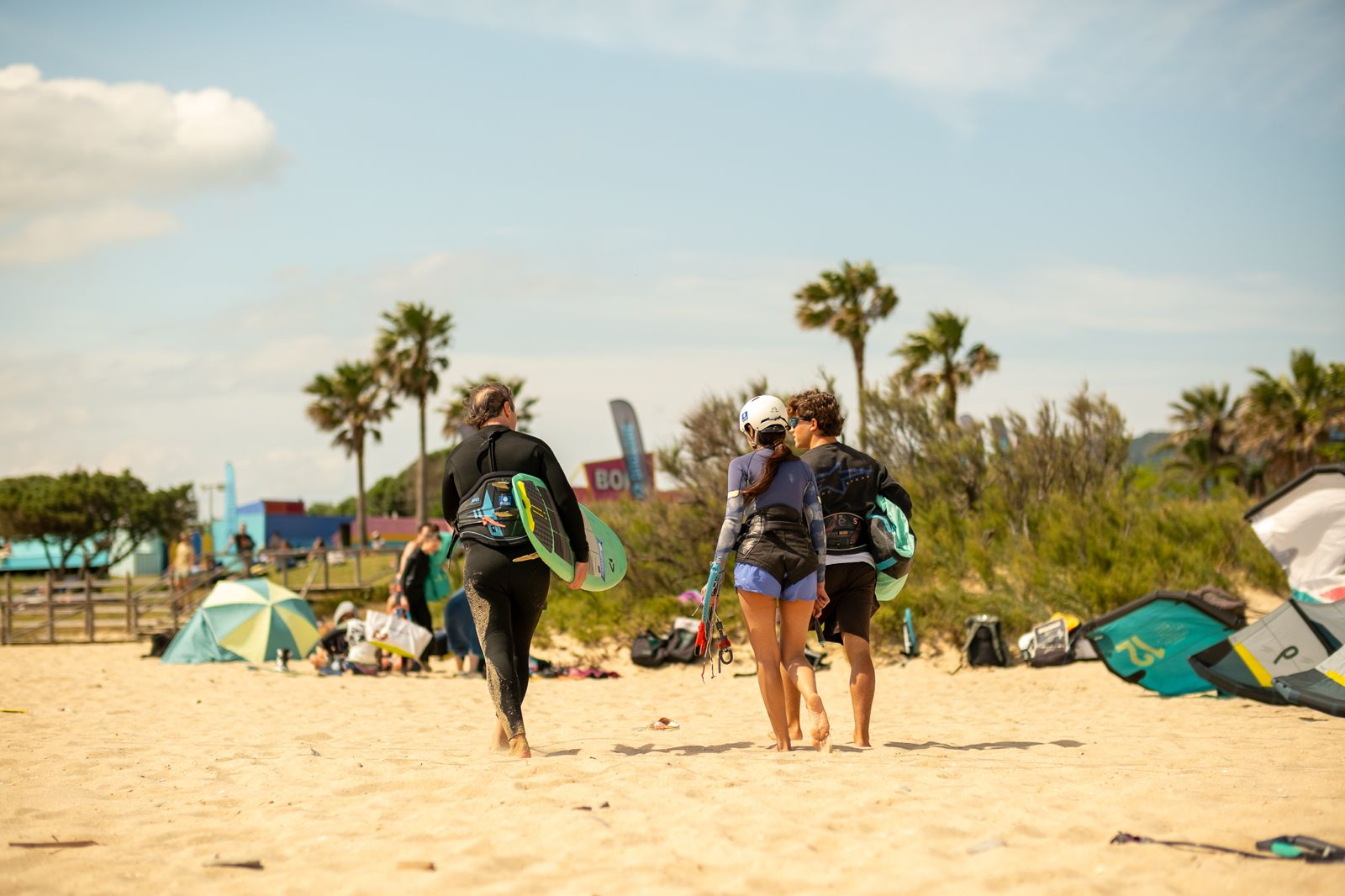
Kitesurf Lesson Formats in Tarifa: Private, Semi-Private or Group?
Choosing a kitesurf lesson format in Tarifa is not only about price. It is about choosing the setup that gives you the right support, confidence, and progression on the water.
Your best option depends on your goal. You may want to progress quickly, learn with a friend, book for a child, feel more confident in deeper water, or simply try kitesurfing before committing to a full course.
Private, semi-private, and group lessons all offer a different learning experience.
A private lesson is usually the fastest way to progress because your instructor focuses only on you. It is often the best choice if you have limited time, want personal feedback, need extra confidence, or are booking for a child.
A semi-private lesson gives you personal guidance while you learn alongside one other student. At Liam Whaley Pro Center, this format is always two students with one instructor. You practise, watch, receive feedback, and learn from the other person’s attempts as well as your own.
A group lesson is usually best if you want a first, low-pressure introduction to kitesurfing. It is a fun and accessible way to learn the wind window, safety system, basic kite control, and what it feels like to fly a kite before booking a longer course.
At Liam Whaley Pro Center, the team also considers the day’s conditions before recommending a format. Tarifa is an amazing place to learn, but the wind can change, the beach can get busy, and once you start practising with the board, lessons naturally move into deeper water.
That is why the team looks at your level, confidence, group setup, and the forecast before recommending the best option.
Below, we compare private, semi-private, and group lessons across the main stages of learning: kite control, body dragging, water starts, first rides, and riding upwind.
Ready to plan your course? Book your kitesurf lessons in Tarifa.
Quick answer: which kitesurf lesson format should you choose?
Choose a private lesson if:
✔ You want the fastest progression.
✔ You feel nervous in deeper water.
✔ You are booking for a child.
✔ You have limited time in Tarifa.
✔ You want your instructor focused only on you.
Choose a semi-private lesson if:
✔ You are learning with a friend or partner.
✔ You both have a similar level.
✔ You want personal feedback.
✔ You enjoy learning by watching.
✔ You are comfortable rotating during parts of the lesson.
Choose a group lesson if:
✔ You want to try kitesurfing for the first time.
✔ You are not ready to commit to a full course yet.
✔ You want a more social and playful introduction.
✔ Your main goal is to understand the basics.
✔ You want a relaxed, social first taste before committing to a course.
You can also check our kitesurf lesson prices before choosing a format.
How does the lesson format affect your progress in Tarifa's conditions?
In some kite spots, choosing between private, semi-private, and group lessons is mostly about budget. In Tarifa, the format also affects how closely your instructor can follow you during the session.
Tarifa is not a flat, shallow beginner lagoon. The wind can be strong or gusty, the beach can get busy, and after the first kite-control steps, most of the lesson happens in the water.
“In Tarifa, we often have difficult wind, the beach is not very wide, and it is often crowded. So in a private course, you are followed all the time by the instructor.”
Matteo, Head of Instructors at Liam Whaley Pro Center
This local experience is important. In Tarifa, smaller lesson formats usually help students progress faster because the instructor can adapt more easily to the conditions, your confidence, and your level.
In a private lesson, the instructor focuses only on your kite, body position, timing, and confidence. This is especially useful when the wind is stronger, the beach is busy, or you need more time before moving to the next step.
In a semi-private lesson, the instructor still has room to adapt. The lesson is always two students with one instructor, but that does not always mean both students are doing the same thing at the same time.
Sometimes you rotate with one kite. Sometimes one student practises while the other watches, listens to the feedback, and prepares for the next attempt. If both students have a similar level and the conditions are suitable, the lesson can become more active for both.
This is the main difference in Tarifa: the lesson format is not only about how many people booked. It changes how closely the instructor can follow you, correct you, and adapt the lesson to the conditions.
⤷ New to the spot? Read more about learning to kitesurf in Tarifa as a beginner.
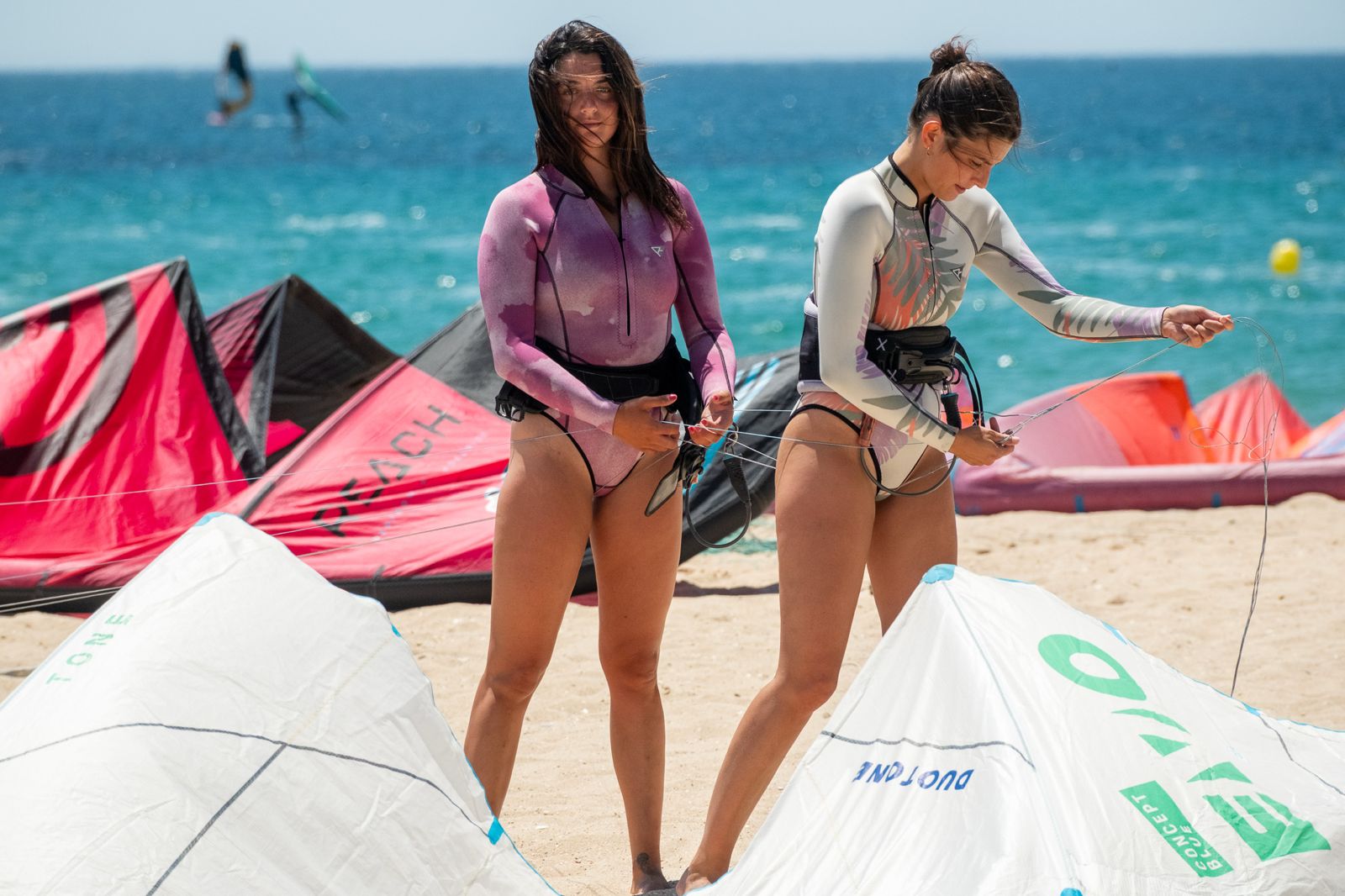
How private, semi-private, and group lessons compare
| Format | How it works | Best for | Main benefit | Main trade-off |
|---|---|---|---|---|
| Private | 1 student, 1 instructor | Fast progression, kids, nervous students, limited time | Maximum feedback and kite time | Higher cost |
| Semi-private | 2 students, 1 instructor | Friends, couples, similar levels | Personal feedback plus learning by watching | Less kite time than private |
| Group | Small group, 1 instructor | First introduction, testing the sport | Fun, social, accessible | Less individual support |
How each format feels during the lesson
Flying the kite
Flying the kite is usually the first moment where you understand if kitesurfing feels right for you.
In a private lesson, the kite is in your hands more often. The instructor can correct small details immediately: where you look, how much you move the bar, how tense your arms are, and where the kite sits in the wind window.
In a semi-private lesson, you still get direct feedback, but you also learn while the other student practises. This is useful because beginners often make similar mistakes. When your partner moves the kite too fast, pulls the bar too much, or loses control of the kite position, you can see the correction before trying again yourself.
In a group lesson, kite flying is more of an introduction. You learn the basics, understand the wind window, practise safety, and get a first feeling for the kite. It is a good way to start, but you should expect less repetition and less detailed correction.
⤷ For a closer look at the first session, see what to expect in your first kitesurfing lesson.
Body dragging
Body dragging is where the lesson starts to feel more like real kitesurfing. You are in the water, using the kite to move your body, learning direction, power control, and awareness.
In a private lesson, the instructor can focus on your position and give feedback through the radio helmet. You get more attempts, more direct correction, and more time to build confidence in the water.
In a semi-private lesson, rotation becomes valuable. One student body drags while the other watches from close by, listens to the feedback, and sees what changes the result. You are not just waiting. You are learning from the other person’s body position, kite movement, and mistakes.
In a group lesson, body dragging can work as a first experience, but the instructor has less time to correct each student in detail. This is why many students start in a group for the basic kite-control stage, then move into semi-private or private lessons once the course moves deeper into the water.
⤷ Conditions can change the rhythm of the lesson, so it helps to learn how the forecast can affect your lesson.
Water starts and first rides
Water starts are one of the key moments where the lesson format really matters.
At this stage, you are trying to combine the kite, board, body position, timing, and power. A small mistake can change the whole attempt. You may send the kite too hard, stand up too early, keep the board too flat, or lose tension before the kite gives you power.
In a private lesson, the instructor can focus on every attempt. This usually makes progression faster because the feedback is immediate and specific.
In a semi-private lesson, watching the other student can be very helpful. When your partner tries a water start, you can see the timing, the mistake, and the correction. Then, when it is your turn, the idea is clearer.
This is one of the biggest benefits of semi-private lessons. You get less kite time than in a private lesson, but more time to stop, think, watch, and understand.
In a group lesson, water starts are possible, but students usually need more patience. The instructor has more people to manage, and the correction is less personal. If your goal is to ride as soon as possible, private or semi-private is usually a better option.
First rides and learning to stay upwind
Once you start riding your first metres, the lesson becomes more individual. Every rider has different timing, different balance, and different reactions to the kite.
This is also when the lesson naturally moves into deeper water. You need space to try, fall, recover the board, relaunch or reset, and go again.
In a private lesson, the instructor can follow your line more closely and adjust the session around your exact problem. Maybe you need a better board angle. Maybe you are riding too far downwind. Maybe your kite is too high. Maybe you are losing speed because you are not edging.
In a semi-private lesson, the instructor can still adapt, especially if both students are at a similar level. The rotation gives you time to understand what happened before your next attempt.
In a group lesson, this stage can become harder because each rider needs more specific feedback. Group lessons are useful for the first experience, but once you are trying to ride and stay upwind, smaller formats usually make more sense.
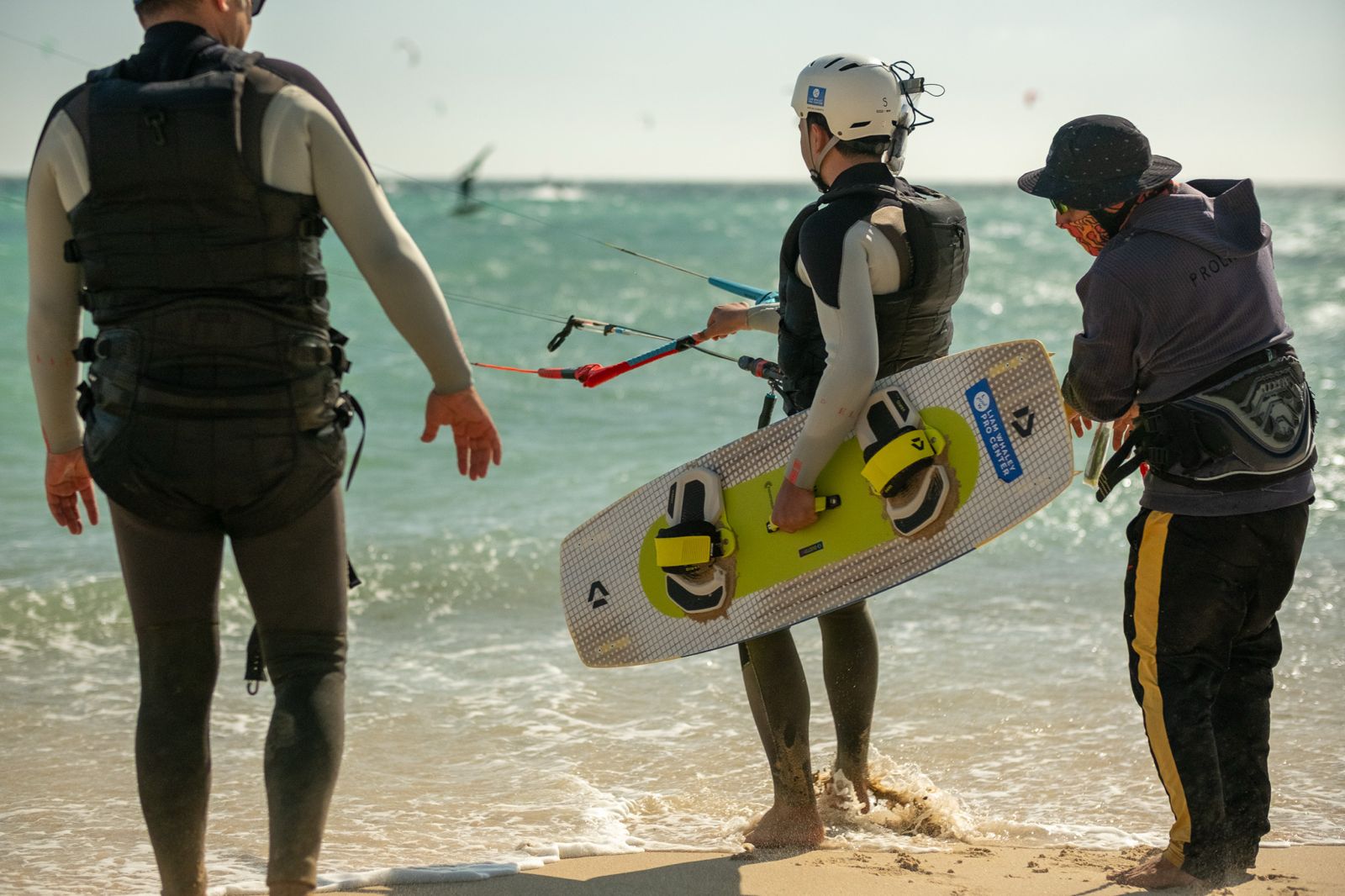
Can you take kitesurf lessons with a friend or partner?
Yes. If you are learning with a friend or partner, semi-private lessons are usually the best option.
At Liam Whaley Pro Center, semi-private means two students with one instructor. This format works best when both students have a similar level, similar confidence, and similar goals.
It can be a great format because you share the experience without losing the structure of a proper lesson. You see each other progress, make mistakes, and improve.
It also makes the course feel less intimidating. Many beginners feel more relaxed when they are not alone, especially during the first water sessions.
The important thing is honesty. If one person is much more confident, much lighter, much stronger, or much more advanced, the instructor may recommend a different setup so both students can progress safely.
What about kids?
For kids, private lessons are usually the best choice.
Children are lighter, so kite size and control matter even more. The instructor needs to manage the lesson carefully, choose the right kite, adapt the pace, and keep the experience fun.
The goal is not to rush a child into riding. The goal is to help them understand the kite, feel safe, and enjoy the process.
At Liam Whaley Pro Center, around 12 years old is often a realistic age to start, depending on the child’s size, confidence, and the conditions of the day.
In Tarifa, because of the wind strength, beach activity, and deeper water, private tuition usually gives the instructor the safest and clearest way to guide a young student.
Is a group lesson still worth it?
Yes, if your goal is to test the sport.
A group lesson is a good way to understand what kitesurfing feels like before booking a longer course. You can learn the wind window, see how the safety system works, fly the kite, and decide if you want to continue.
It is also more social and more accessible.
The trade-off is simple: you get less time with the kite and less personal feedback. That does not make it bad. It just means it has a different purpose.
A group lesson is great for the first step. For real progression on the water, private or semi-private lessons usually work better.
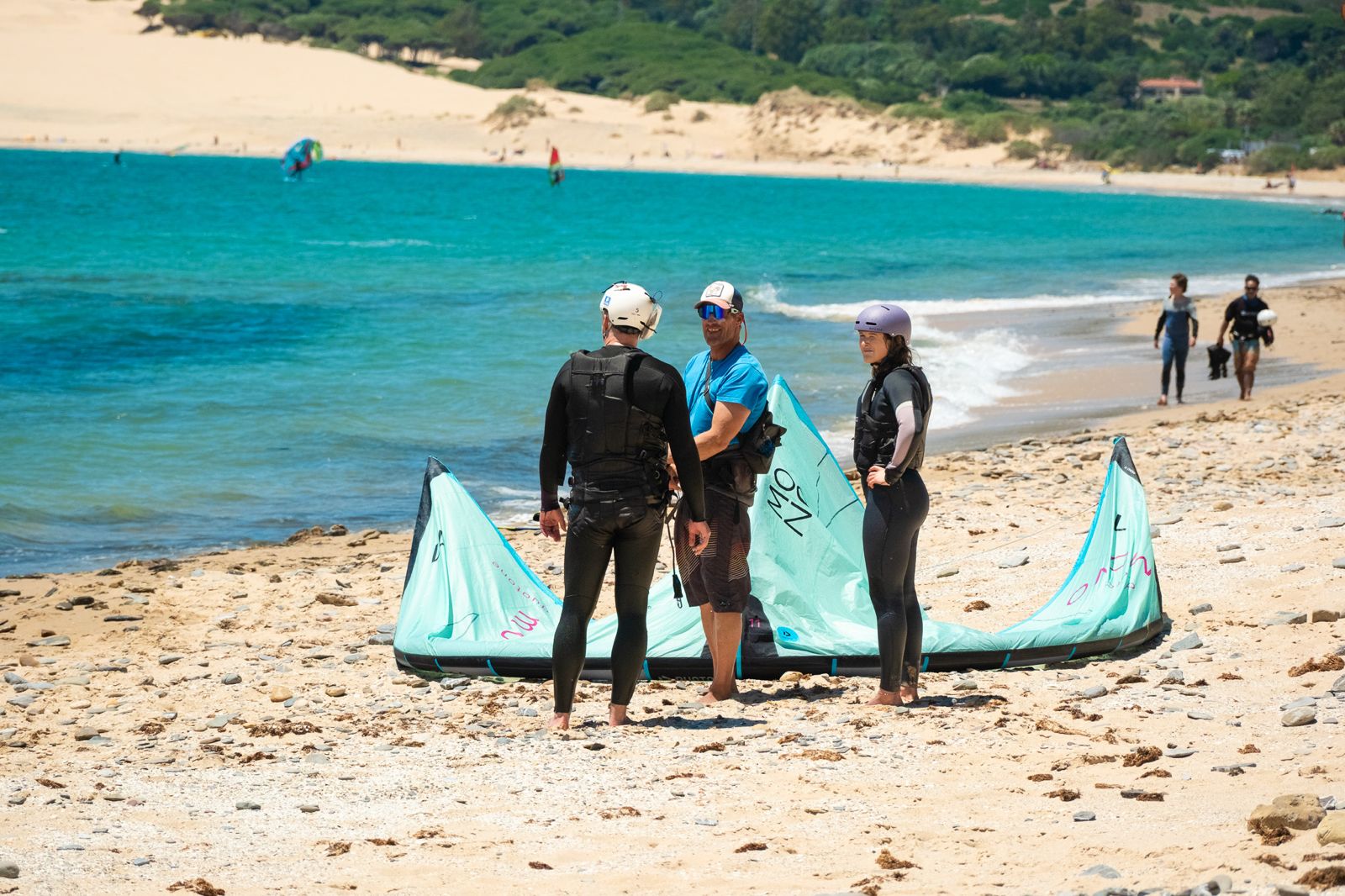
So, which lesson format should you book?
The best format depends on your goal.
If you want the fastest progression, book a private lesson.
If you are learning with a friend or partner and both of you have a similar level, book a semi-private lesson.
If you want to try kitesurfing before committing to a full course, start with a group lesson.
And if you are not sure, ask the team before booking. The right format depends on your level, confidence, who you are coming with, and the forecast during your stay.
Tarifa is one of the best places in the world to learn kitesurfing, but it is also a real kite spot. Choosing the right lesson format helps you get more from every session.
⤷ Before your trip, you can also learn how to check Windguru before your lesson.
FAQs: Kitesurf Lesson Formats in Tarifa
What is the best kitesurf lesson format in Tarifa? +
Are private kitesurf lessons worth it in Tarifa? +
How many people are in a semi-private kitesurf lesson? +
Can I learn kitesurfing with my partner or a friend? +
Are group kitesurf lessons good for beginners? +
Which kitesurf lesson format is best for kids? +
Why does the lesson format matter more in Tarifa? +
Can I start with a group lesson and switch to private later? +
What is the cheapest kitesurf lesson format? +
Which format is best for water starts? +
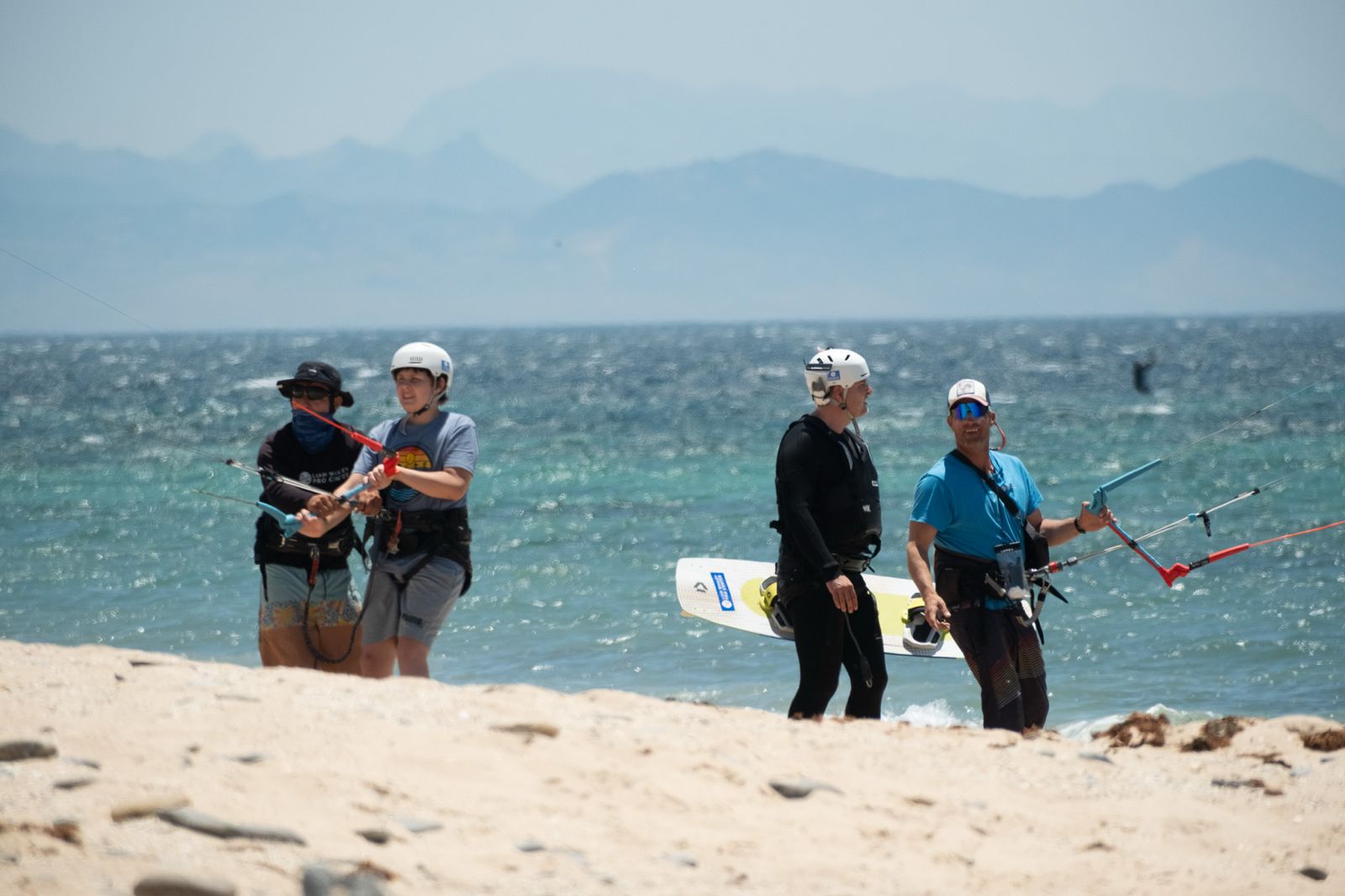
Ready to choose your kitesurf lesson format?
Tell us your level, who you are coming with, and when you will be in Tarifa. We will help you choose the right lesson format based on your goals, confidence, and the forecast during your stay.
Latest News
- Kitesurf Lesson Formats in Tarifa: Private, Semi-Private or Group?
- Your First Kitesurfing Lesson in Tarifa: What to Expect
- How to Read Windguru for Kitesurf Lessons in Tarifa
- Kitesurf Lessons in Tarifa: How the Forecast Shapes Your Learning Experience
- Kitesurfing Events in Tarifa: What to Watch During Your Kite Holiday
- What to Do in Tarifa Beyond Kitesurfing: No-Wind Days, After Sessions, and the Best of the Area
- Planning a Kitesurfing Trip to Tarifa: Flights, Transport, Forecast, and the Week Around It
- Tarifa in Spring for Kitesurfing: What to Expect in April, May and June
- Is Tarifa a Beginner-Friendly Spot for Kitesurfing? What to Know Before You Go
- The Liam Whaley Pro Center Reopens in March for the 2026 Season