
Beginner Kitesurfing Course in Tarifa: From Day One to Independent Riding
You’ve made the call: you want to learn to kitesurf in Tarifa. Good choice.
Now you’re probably wondering the same things every beginner does: What actually happens in a course? Will I suck at this? And how long until I can ride on my own without someone hovering nearby?
Here’s the straight-up truth.
Kitesurfing isn’t one giant intimidating jump. It’s a chain of small, manageable steps that click together. You begin on the sand, feeling like a bit of a clown while you get to know the kite. You end up cruising back to the beach under your own power, stoked and proud. The messy, awkward, brilliant stuff in between is what most schools forget to tell you about before you sign up.
That’s what this guide is here for.
We’ll walk you through every stage of a proper beginner course in Tarifa, from those first shaky moments holding the kite to the day you’re riding by yourself. You’ll see what each step actually involves, how you know when you’ve nailed it, and what “independent riding” really looks like once you get there.
If you’re also wondering what to actually bring (and what we hand you when you arrive), we cover that in what’s included in a kitesurfing lesson.
And yeah, we’ll be honest with you about Tarifa too. It’s not the gentlest learning spot in Europe. But for a lot of people, it’s the most rewarding.
If you’re weighing it up, here’s an honest look at whether Tarifa is beginner-friendly.
What does learning to kitesurf in Tarifa actually involve?
At its core, learning to kitesurf is about mastering two very different things at the same time: flying the kite and riding the board. A good course doesn’t throw everything at you at once. It breaks it down into clear stages so you’re only ever focusing on one new skill at a time. No one’s tossing you in the deep end and yelling “good luck!”
It also means proper coaching, not winging it on your own. You’re hooked up to a powerful kite in open water, so safety isn’t optional (it’s baked in from the very first minute). At Liam Whaley Pro Center, you learn at Valdevaqueros with an instructor talking directly into your ear through a radio helmet and a rescue boat always close by. That setup gives you the confidence to push yourself a bit further each session without doing anything stupid.
Then there’s the wind, the big Tarifa character in this story. This place is one of the windiest spots in Europe, and it can change mood from one day to the next. Some days it’s smooth and forgiving, others it’s punchy and playful. Your instructor reads the conditions like a book and adjusts the session and your gear so you’re always training at the right level for you.
Want to understand how the wind shapes your kitesurfing experience? We break it down in how the forecast shapes your learning experience and how to read Windguru. You can also check the live webcam at Valdevaqueros to see what the wind is doing right now.
The best part? There’s no fixed script. Everyone learns at their own pace, and that’s completely normal. What stays the same is the journey: you start on the sand, you move into the water, and you gradually build up to riding on your own. Here’s exactly what that path looks like, stage by stage.
Wondering whether your fitness or strength will affect how quickly you progress? Read our "How fit you need to be to learn kitesurfing in Tarifa" guide.
What are the stages of a beginner kitesurfing course?
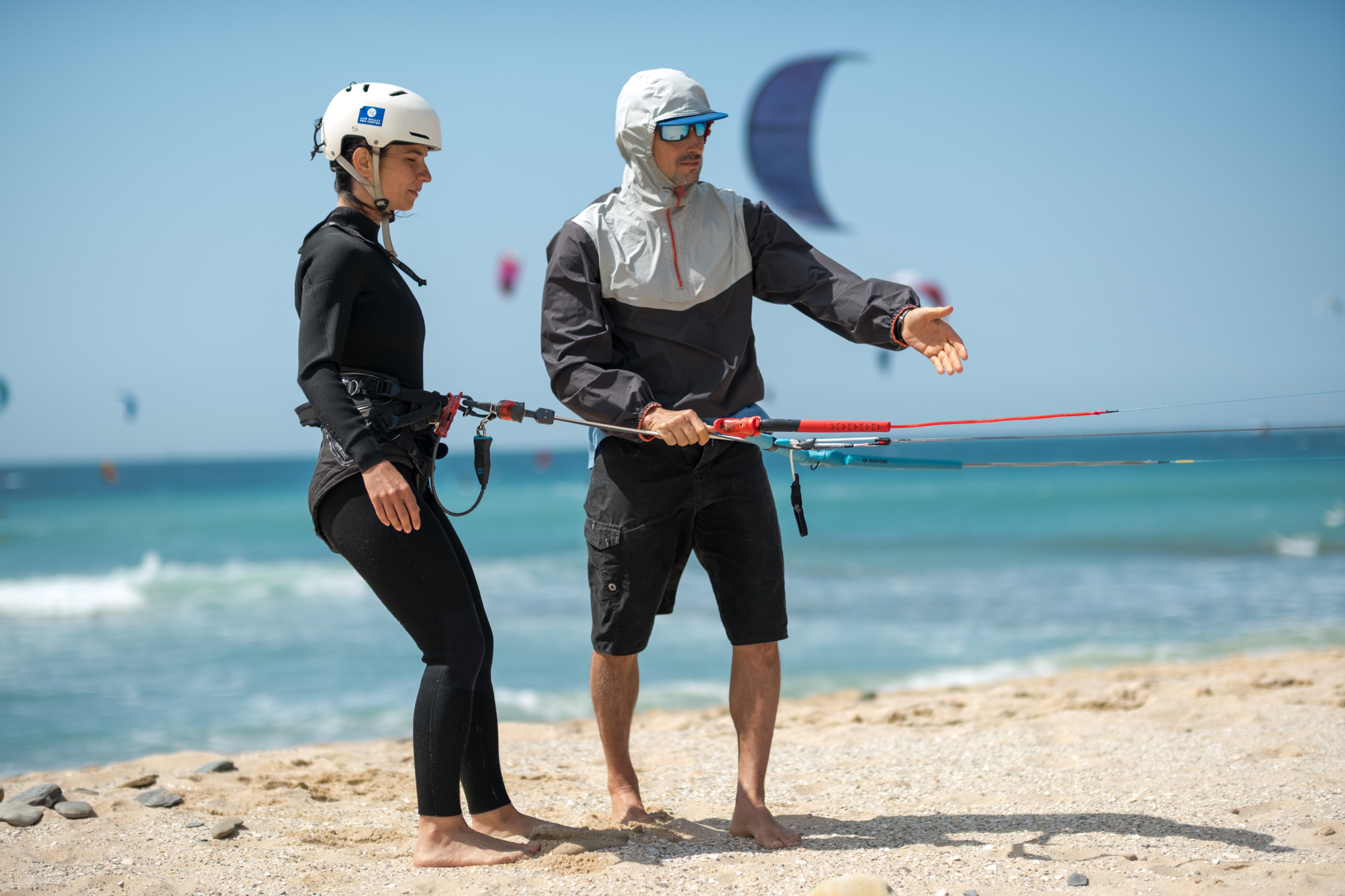
Every beginner follows the same rough path, and each stage builds on the one before it. You can’t really skip steps. The kite skills you learn on the beach are the same ones that save you in the water, and the body-dragging you grumble about early on is exactly what lets you get your board back later.
Here’s the catch: the order isn’t always identical. On a calm day you’ll start on the sand. When a strong Levante is blowing, your instructor might skip the long beach session and take you straight into the water on a leash, because that’s genuinely safer and easier in that wind. Same destination, slightly different route.
These are the stages you’ll move through. How fast you move through them depends a lot on how you learn, one-on-one, semi-private, or in a group.
Learning to control the kite on land
Everything starts here, with a smaller kite and your feet on the sand. You learn the wind window (the patch of sky where the kite flies and makes its power), how to steer with smooth inputs instead of panicky yanks, and how to use the safety systems that kill the kite’s pull in a second. You’ll fly it one-handed, walk around with it, and get used to the thing tugging on you. Boring? A little. But it’s the foundation everything else sits on.
⤷ If you want a minute-by-minute look at that very first session, here’s what to expect in your first kitesurf lesson, or watch a first kitesurf session filmed at the center.
Body dragging in the water
Now the kite goes into the water, but the board stays on the beach. Lying in the water, you use the kite to pull yourself along, first with both hands, then one. You learn how the kite really behaves in the water and how much power it makes when you steer it down through the window. It’s also where you get comfortable with falling, resetting, and carrying on, which, if we’re honest, is most of kitesurfing.
Getting your board back
Sooner or later your board ends up downwind of you, and you need to reach it without trudging out of the water. That’s the upwind body drag: pulling yourself across and into the wind, one hand on the bar, the other reaching for the board. It sounds minor. It’s the skill that means you never have to do the walk of shame back up the beach.
Managing the kite and board together
This is the juggling stage. Kite flying with one hand, board on your feet with the other, and for a while it feels like you’ve got one limb too many. You learn to hold the kite steady at the edge of the window while you slot your feet into the straps and get your body into position. Get this dialed and the waterstart is right around the corner.
The waterstart: standing up on the board
This is the one everyone’s been waiting for: the moment you actually stand up and the board starts moving. You dip the kite through the power zone, let it pull you up onto the board, and ride that energy forward. The first few will launch you off the front or fizzle out halfway. Then one of them just works, and you’ll understand why people fall for this sport.
Your first rides
Once the waterstart clicks, you start stringing real rides together. A few metres, then more. You work on controlling your speed, keeping the board flat, and steering where you want to go instead of where the kite drags you. It’s wobbly and brilliant in equal measure.
Riding upwind
This is the big one. Riding upwind means coming back to where you started instead of drifting down the beach and walking back. It’s what separates someone who can “sort of kitesurf” from someone who can actually go out and ride on their own. As Matteo, who manages our instructors, puts it:
“The moment you go to any other kite spot, you’ll already feel confident enough to be out there on your own.”
Once you’ve got it, you’ve crossed the line into independent territory, which is exactly what the next sections are about.
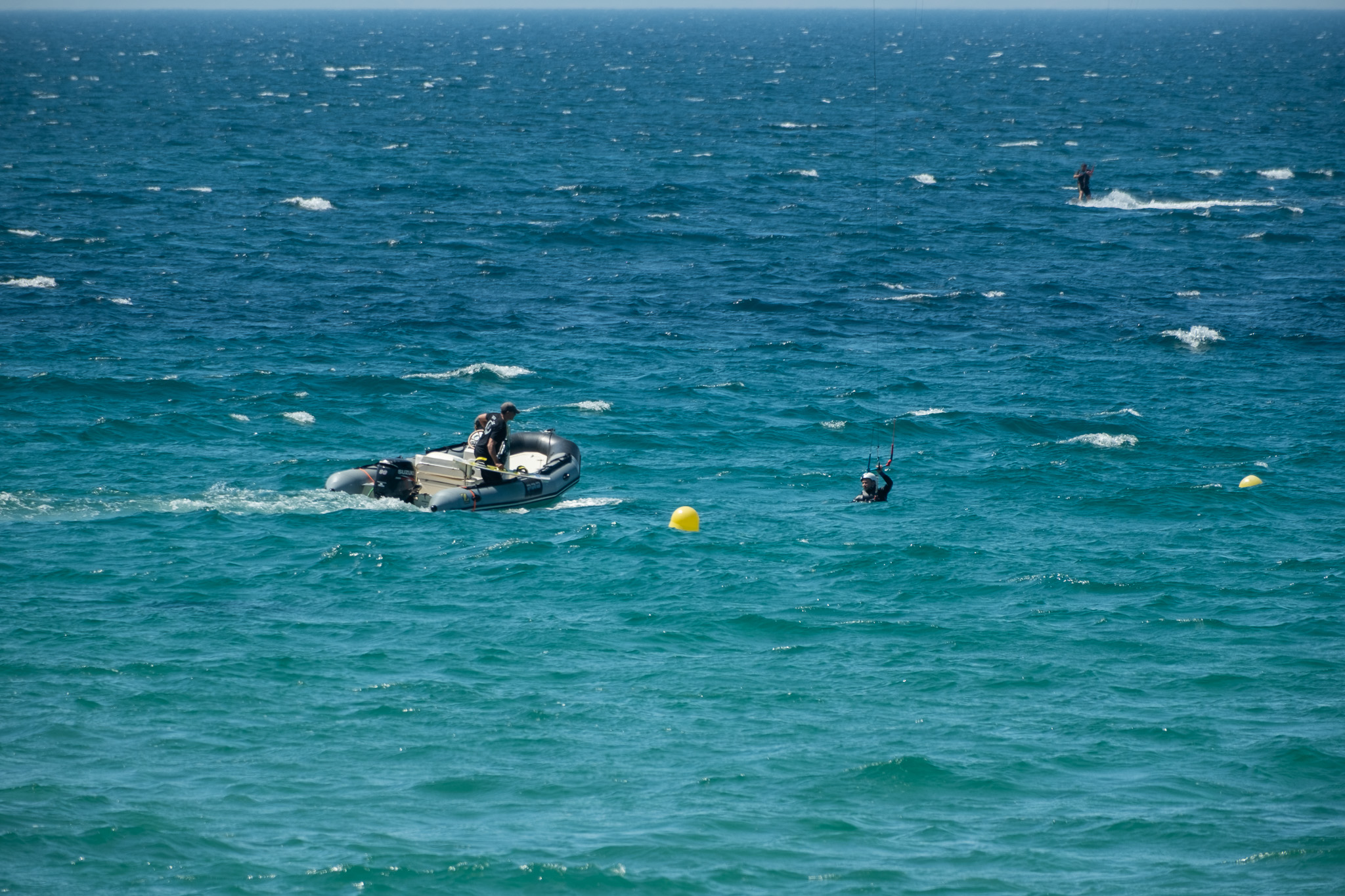
How do you know when you’ve moved from one stage to the next?
Time isn’t the best way to measure progress in kitesurfing. Some people breeze through the early stages and then get stuck on the waterstart. Others take longer to trust the kite, then suddenly everything clicks. What actually tells you you’re ready to move on isn’t how many hours you’ve logged, it’s whether you can do a few specific things without having to overthink them. (Wondering about timing specifically? Our full guide on how long it takes to learn is coming soon.)
Your instructor is always watching for these signs before bumping you up. Here’s how you can spot them yourself. And here’s a bit of reassurance: there’s no prize for rushing. Trying to move on before a skill feels solid is the quickest way to get frustrated. Staying on a stage until it feels easy is what makes the next one fall into place.
-
Kite control on land: You can park the kite at the edge of the window and hold it there, relaunch it cleanly off the ground, and find the safety release without fumbling around.
-
Body dragging: You can pull yourself through the water in the direction you want, steering the kite smoothly instead of letting it crash.
-
Getting your board back: You can body-drag upwind and actually reach your board, instead of just standing up and wading over to it.
-
Managing kite and board: You can hold the kite steady with one hand while you get both feet into the straps and sort yourself out.
-
The waterstart: You pop up and ride away more often than you sink or faceplant.
-
Your first rides: You can hold a steady line for a decent distance, control your speed, and stop when you want to, in both directions.
-
Riding upwind: You finish a run level with or above where you started, instead of getting swept down the beach.
That last one is the big milestone everything’s been building toward. Nail it consistently and you’re right on the doorstep of independent riding. So what does “independent” actually mean? That’s next.
What does it actually mean to be an independent rider?
“Independent” is the word every beginner is chasing, but it gets thrown around loosely. It doesn’t mean you finished a course. It doesn’t mean you stood up on the board a few times. Being an independent rider means you can take yourself out on the water, look after your own safety, and come back in, without an instructor next to you.
Here’s the honest part: most people don’t hit that level the day their course ends. You’ll have the skills and the knowledge, but real independence usually comes after a bit more practice, once those skills stop needing your full concentration. That’s normal, and it’s worth being patient for. Going out alone before you’re ready is how people scare themselves (or others).
What do you need to be able to do to rent kitesurf gear?
Renting gear is the practical line between supervised and independent, so it’s the clearest way to define it. At Liam Whaley Pro Center, before you can rent and ride on your own, you need to show three things, every time, not just once:
-
Ride upwind and hold your position, so you stay roughly where you started instead of drifting down the beach.
-
Recover your own board, getting back to it and onto it without help.
-
Launch and land the kite safely, and handle yourself safely in and out of the water.
“To rent with us, you have to stay upwind the whole time without drifting, get your own board back every time, and stay safe launching and landing.”
– Matteo, who manages our instructors
⤷ Not sure you’re there yet? We’re putting together a full breakdown of how to know when you’re ready to stop taking lessons and start renting, with all seven milestones to tick off.
You don’t necessarily need a formal license. What matters is that you can actually do these things, which is why the team runs a quick level check on the beach: they help you set up, watch you launch and ride, and clear you once they see you holding height and staying safe. If you’re close but not quite there, there’s a supervision option, the last step before full independence, where you ride your own gear with the team watching from the beach.
Once you’re cleared, you can rent gear and ride on your own.
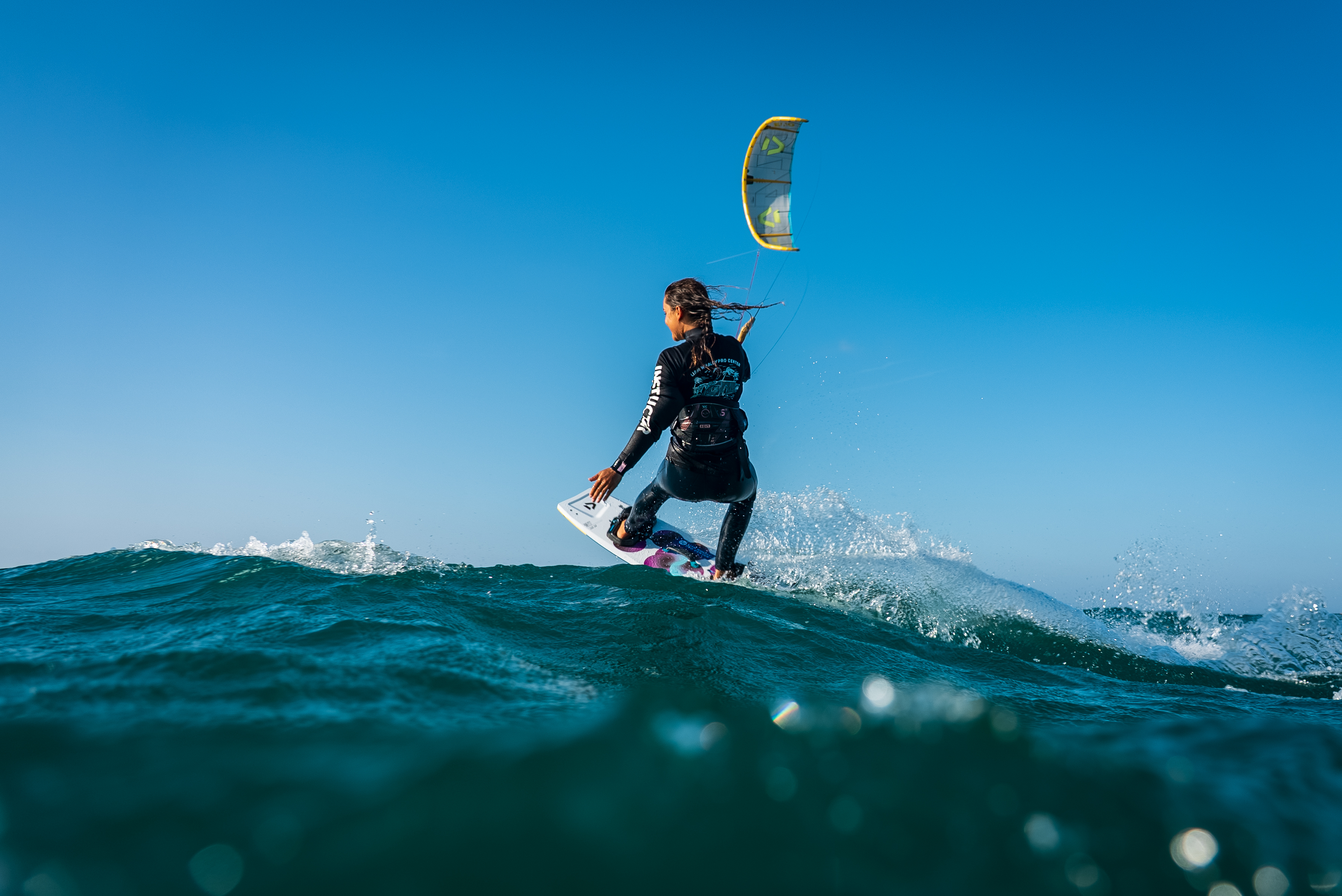
What’s the difference between a beginner and an independent kiteboarder?
The simplest way to see it: a beginner needs someone watching, an independent rider doesn’t.
As a beginner, you’re learning under supervision. An instructor is in your ear on the radio, the rescue boat is close by, and someone else is making the calls about conditions, kite size, and when to come in. That’s exactly how it should be while you build the basics.
As an independent rider, you make those calls yourself. You read the wind, pick your kite, launch and land, ride upwind, and get yourself out of trouble if something goes sideways. That’s the whole point of the journey: not just riding, but being able to ride on your own terms, here in Tarifa or anywhere else in the world.
How does learning in Tarifa shape how you progress?
Where you learn affects how you learn. Tarifa, especially Valdevaqueros, is different from a calm, shallow lagoon. The water gets deep quickly, and the wind can change from strong easterly conditions to smoother westerly wind.
This can feel challenging at first. But it also helps you build useful skills early.
Because you cannot stand in shallow water for long, you learn how to control the kite and body-drag from your first sessions. These are essential skills for kitesurfing. As the wind changes, you also learn to read the conditions, choose the right kite size, and stay calm when the wind gets stronger.
⤷ You are not left to manage this alone. Your instructor supports you throughout the lesson, and a rescue boat is on the water. You can read more about how we keep beginners safe.
There’s a reason the school is based here. As founder Liam Whaley puts it:
“This is the beach I’ve kitesurfed the most, growing up here from the age of eight.”
That is the trade-off. You may progress more slowly in your first few sessions than you would in a flat-water lagoon. But you can finish the course with more confidence and skills that help you kite in a wider range of conditions.
Why do beginners progress better at a performance-led school?
It’s a fair question. If you’re a total beginner, why should it matter that the school is run by a world champion? You’re not dreaming of podiums, you just want to stand up on the board and actually ride. The answer is that the high level of coaching shows up strongest in the fundamentals, not the flashy tricks.
Liam Whaley Pro Center is founded and run by Liam Whaley, a freestyle world champion and big air vice world champion, and one of the most respected riders of his generation. He’s competed at the absolute top: World Tour, Red Bull King of the Air, the whole thing. That same elite standard runs through every instructor on the team. When the instructors are held to those same high standards, they catch the small mistakes early, before they turn into bad habits you’ll have to unlearn later.
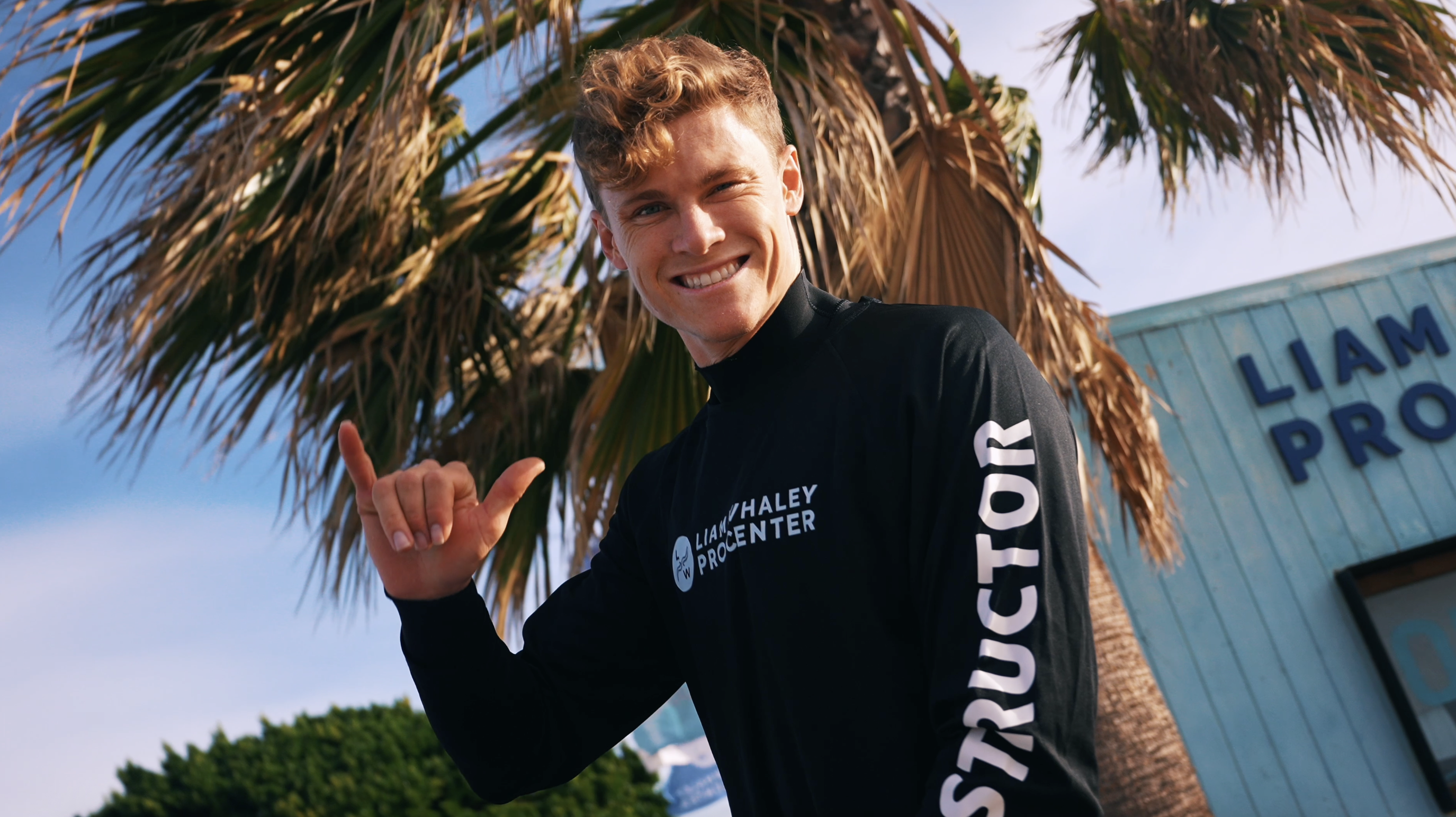
And this isn’t by accident. Liam brought the same relentless drive he had in his own career into building the center. You see it in the choice of Valdevaqueros (one of the best spots in Tarifa), the facilities, the latest and best gear, and the instructors and managers he personally hand-picked. His name is on the door, so your experience is his reputation, whether you’re a nervous adult, a ten-year-old kid, or anything in between. What he expects from the team is simple: treat every lesson with the same seriousness he brought to his own career.
All of this actually takes a lot of the fear out of learning. As Liam says:
“When you take your first lesson and start the first steps, everything comes together. You realize it’s a lot simpler and easier to learn than you think, especially when you’re guided by the right team.”
That guidance isn’t random. We carefully match each student with the instructor who suits them best: their level, their pace, even their personality. Because the right fit is half the battle when it comes to progressing quickly. A nervous first-timer and a confident young athlete don’t need the same coach, and they won’t get the same one.
None of this makes the sport feel more serious or intimidating. A performance-led school simply means your fundamentals are built properly from day one. So when you progress, you do it on solid ground, with less frustration and a lot more fun along the way.
How does a semi-private kitesurfing course work in Tarifa?
Booking a semi-private course means you’ll be learning with one or two other people (usually a partner or friend) and sharing one instructor between you. A lot of people think of it as just “a cheaper lesson,” but it actually works differently and is worth understanding before you book.
Here’s how it goes in practice. You start together on the beach with one shared briefing and setup walkthrough. Everyone learns the wind window and safety systems at the same time. Then you take turns in the water. While one person is riding, the instructor is right there coaching through the radio helmet, and the others watch from the beach or the shallows.
That watching time isn’t wasted at all. Seeing someone else overfly the kite, mess up a waterstart, then finally nail it teaches you a surprising amount before it’s your turn. You also get proper rest between goes, which matters more than most beginners expect. Kitesurfing is tiring, and a fried brain doesn’t learn very well. On a busy Valdevaqueros day with a strong Levante up, that rest also lets you watch how the wind is behaving before your next turn, which is its own kind of learning.
The trade-off is real: your actual water time is shared, so you get fewer continuous minutes on the kite per session than in a private lesson. Some people love the relaxed rhythm and the company. Others prefer maximum personal attention and go for private. Most of our semi-private courses are couples or friends learning together at Valdevaqueros.
⤷ Not sure what’s best for you? We lay all three options out side by side (private, semi-private, and group). Learning with someone? Just tell us who’s joining you and we’ll build the sessions around your group.
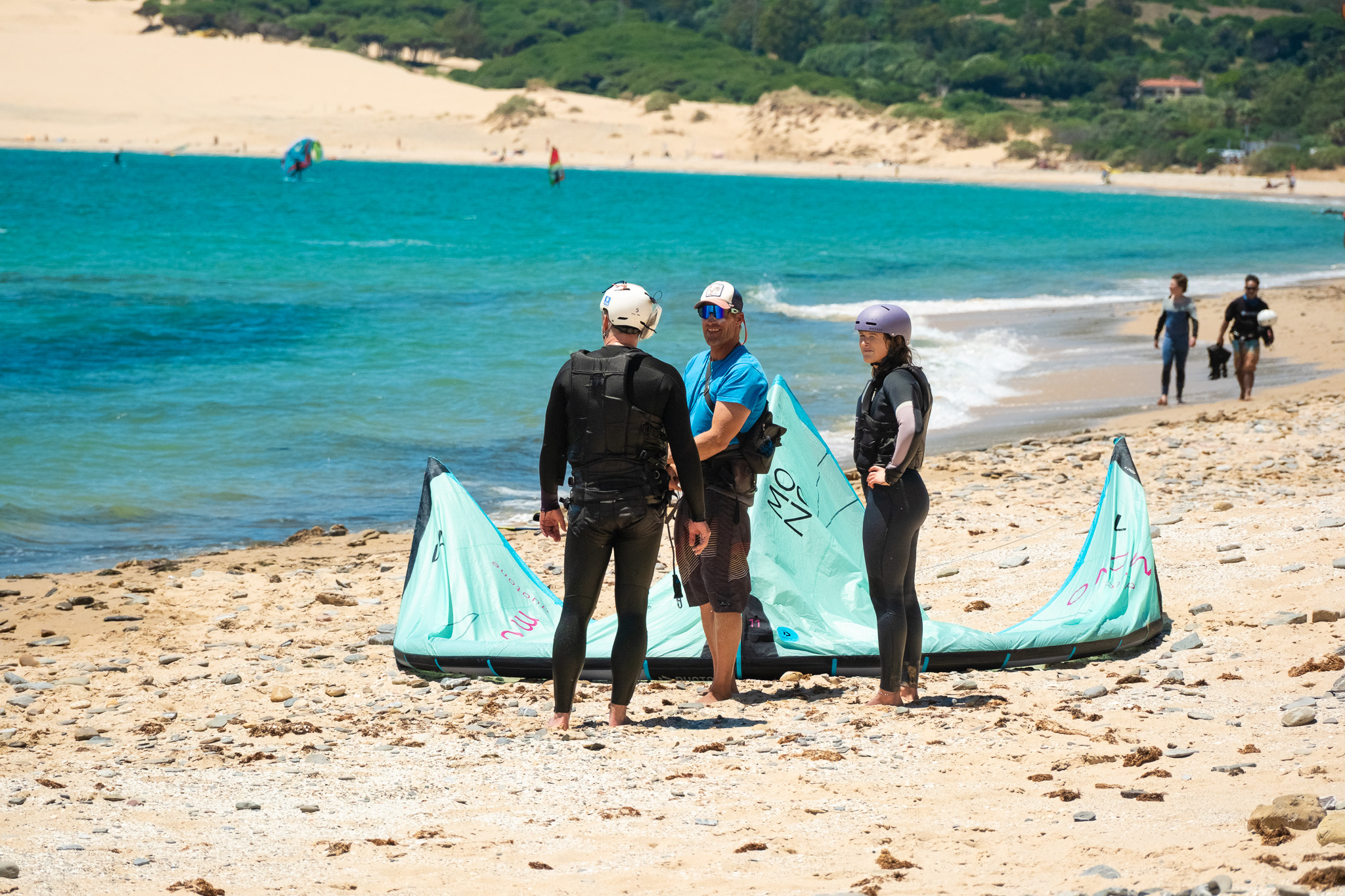
How does a kid learn to kitesurf in Tarifa?
Tarifa is a real family kitesurfing spot, and kids learn here all the time.
As our center manager Floor puts it,
“it’s mostly families, and the kids of families who trust us.”
Most kids are ready somewhere around 10 to 12 years old, but age is only part of the picture. Weight, how well they swim, and how comfortable they are in deeper water matter just as much, because Valdevaqueros gets deep pretty quickly. A confident, water-loving ten-year-old is often more ready than a cautious older kid.
The course follows the same core path as for adults: kite control on the beach, body dragging, waterstarts, first rides, and eventually riding upwind. What changes is how we do it. Kids use smaller, lighter kites on shorter lines so the power stays manageable and low. Every kite is carefully sized to the child’s weight and the day’s wind conditions, which we explain in what’s included in a kitesurf lesson. The instructor stays on the radio throughout, with the rescue boat close by.
Being lighter actually works in their favor on lighter wind days. Kids can often get going in less wind than adults, which means they can have a great session when it’s too calm for grown-ups. The flip side is strong Levante days: when the wind gets too powerful for a light rider, we simply postpone and wait for better conditions instead of forcing it.
Kids also learn differently, so the lessons are built around that. Sessions are kept shorter because their focus tends to drop before their energy does. A bored kid stops absorbing anything, so we mix solid technique with plenty of fun. At the end of a session you’ll often see the instructor let the kid hold onto their harness and tow them downwind, powering the kite so they both get pulled along, maybe even catching a little jump. It’s pure stoke, and it quietly builds a great feel for the kite’s power.
None of this works without the right instructor. We have team members with real experience teaching kids, and we deliberately match them up. For children, that means someone who can keep things playful, read their mood, and know exactly when to push and when to just have fun. Getting the right instructor with the right kid is something we plan carefully, never leave to chance.
⤷ Thinking about getting your child started, or learning together as a family? Just tell us their age and swimming level and we’ll recommend the best way to begin, along with the right instructor to get them excited.
FAQ about learning to kitesurf in Tarifa
Is kitesurfing hard to learn? +
It has a learning curve, mostly because you're managing two new skills at once: flying the kite and riding the board. But it's far more about technique and good coaching than strength or talent.
With proper lessons, most people are riding their first metres within a beginner course.
Do you need to be fit or strong to kitesurf? +
No. The harness takes the kite's pull through your body, not your arms, so brute strength isn't the point. Balance, staying relaxed, and listening to your instructor matter far more.
People of all ages and fitness levels learn here.
How long does it take to learn to kitesurf? +
It depends on the person, the conditions, and how often you practise, which is why we measure progress in skills rather than hours.
Many people get up and riding short distances within a few days, so a week is enough to make real progress, though full independence usually takes more practice beyond that. Our full guide on timing is coming soon.
Is Tarifa too windy for a complete beginner? +
Not with the right setup. Your instructor sizes the kite to the day and the conditions, and on a strong Levante a first session may move into the water early or wait for a friendlier window.
Beginners learn here in a wide range of wind, just not in everything.
What's the minimum age for kids to learn? +
Usually around 10 to 12 years old, though it depends as much on the child's weight, swimming ability, and comfort in deep water as on their age.
Ready to start your kitesurfing journey in Tarifa?
You now know the whole path, from your first minutes with the kite on the sand to riding upwind and coming back on your own. The only thing left is to get on the water.
At Liam Whaley Pro Center you’ll learn at Valdevaqueros with a world champion’s team, full beach facilities, radio coaching, and a rescue boat on the water the whole time. Whether you’re a nervous first-timer, a family with kids, or someone restarting after a stalled lesson somewhere else, we’ll meet you exactly where you are and build from there.
Ready when you are. See the beginner course and book your spot.
Planning the trip around it? Here’s everything you need to know before you go.
Latest News
- Levante vs Poniente for Wingfoil Lessons in Tarifa
- Levante vs Poniente for Kitesurf Lessons in Tarifa
- Is September a Good Month to Learn Kitesurfing or Wingfoiling in Tarifa?
- Am I Ready to Rent Kitesurfing Gear in Tarifa? (Or Do I Need More Lessons?)
- Wingfoiling for Kids in Tarifa: What Parents Should Know Before Booking
- Kitesurfing or Wingfoiling for Kids in Tarifa: Which Should They Try First?
- What Will You Learn in Wingfoil Lessons in Tarifa? From Day One to Independent Riding
- Is Tarifa a Good Place to Learn Wingfoiling? What We Tell Beginners Before They Book
- What Happens in Your First Wingfoil Lesson in Tarifa? We Get Asked This a Lot
- Am I Too Old to Learn Kitesurfing at 50 or 60 in Tarifa?