
How Fit Do You Need to Be to Learn Kitesurfing in Tarifa?
“Do I need strong arms to learn kitesurfing? What about my legs?”
We hear these questions at the school all the time (and most kitesurfers have been asked some version of them). From the beach, the sport looks like a fight against the wind.
The short answer is no... you do not need to be especially strong to start. The harness carries the main pull through your body. Your hands steer the kite and adjust its power, so timing, balance and coordination matter far more than brute force.
That does not mean your first kitesurfing lesson in Tarifa feels effortless. Ordinary mobility, water confidence and enough stamina for repeated attempts all help once you move from the beach to body dragging and waterstarts.
Tarifa adds another layer. At Valdevaqueros, kite size, line length, water conditions and lesson pace can completely change how physical a session feels. The aim is not to prove that you can handle every condition. It is to find the setup in which you can understand the kite and keep learning.
If you are still wondering whether your age, strength or fitness might affect the lesson, message us or call. Tell us a little about yourself and we will happily answer your questions before you book.
Do you need to be strong to learn kitesurfing?
No... not in the way most people imagine. Trying to muscle the bar usually makes learning harder: the shoulders tense, the grip tightens and every correction becomes too big.
You need enough energy to move comfortably, balance, reset and stay focused. That is very different from passing a strength test at the gym.
Big air and high-performance freestyle are physically demanding. Learning kite control and working toward your first ride is a more patient job. Timing and technique come first. If you are thinking about starting, see the beginner kitesurfing lessons in Tarifa available at the center.
Why doesn’t the kite pull directly through your arms?

Think of the kite, lines, bar and harness as one connected system. The kite creates the pull, the lines carry it and the harness receives most of the load through the center of your body. The bar stays in your hands, but it is a control tool... not a pull-up bar.
Where the kite sits in the wind window changes the power. Beginner lessons make that system predictable: where the pull builds, where it softens and how to return the kite to a controlled position. Once that becomes familiar, the sport feels less like resisting the wind and more like guiding it.
What does the harness actually do?
The harness connects your body to the kite and spreads the pull around your waist or hips. Your hands no longer have to hold the main load.
You still balance, move and respond to the kite, but you can lean against steady tension without doing a permanent biceps curl. The harness puts the force where your body can manage it efficiently.
Why doesn’t controlling the kite depend on arm strength?
Your hands have two lighter jobs: steering and moving the bar in or out to regulate power. A good grip is a relaxed grip.
Light hands let you feel the bar pressure and the wind before making a correction. For normal beginner riding, steering should require about as much force as turning a car wheel. Advanced one-handed tricks are different, but beginners do not need strong hands. They need clean inputs.
What does the neutral zone mean?
The neutral zone is the calmer edge of the wind window, where the kite produces comparatively little pull. It is the position you return to when you need to listen, breathe or reset.
Neutral does not mean powerless. A gust or unnecessary steering input can still add power quickly. It simply gives you time to stay ahead of the kite instead of reacting after it moves.
What actually gets tired during a beginner kitesurfing lesson?
Most beginners expect their arms to tire first. Usually, fatigue comes from repeating unfamiliar movements while organising the kite, board and body at the same time. Your legs and core keep adjusting, and your concentration stays switched on through every reset.
The neck and hands are often noticed first. Looking up at the kite uses an unfamiliar neck position, while beginners tend to grip the bar too hard. Both usually improve quickly: the neck adapts, and by the second or third lesson most riders begin to trust the bar.
A beach session, body drags and waterstarts ask different things from the body. You can follow those stages in the step-by-step beginner course. The common thread is repetition and coordination... not holding the kite with your arms.
What feels physical on the beach?

At our school in Tarifa, much of the first lesson happens sitting in the sand. The instructor supports you from the harness while you learn to steer, move the bar in and out and release pressure instead of gripping harder. That support lets you focus on the kite before your body has to create the full counterweight.
We often practise with one hand so you can feel how little force is needed. Once you stand, the work becomes balance: lean back when the kite pulls, then bring your weight forward when the pull softens.
You may also walk a short distance with the kite, sometimes zigzagging slightly upwind. Your hips and core absorb some tension, but the exercise is still about timing, coordination and balance.
What feels physical during body dragging and board recovery?
During the body dragging stage of the beginner course, one hand controls the bar while your free arm and body point in the direction you want to travel. Your core keeps you stable while water moves around you. At first, the position feels strangely specific because those muscles have never had to organise themselves in quite that way.
Board recovery feels more tiring because it may take several passes. You body drag towards the board, change direction and reset if you miss it. No single movement is heavy... the repetition is what accumulates.
As your muscles learn the position, the same body drag costs less energy. Calm hands and a clean body angle let the kite do most of the work.
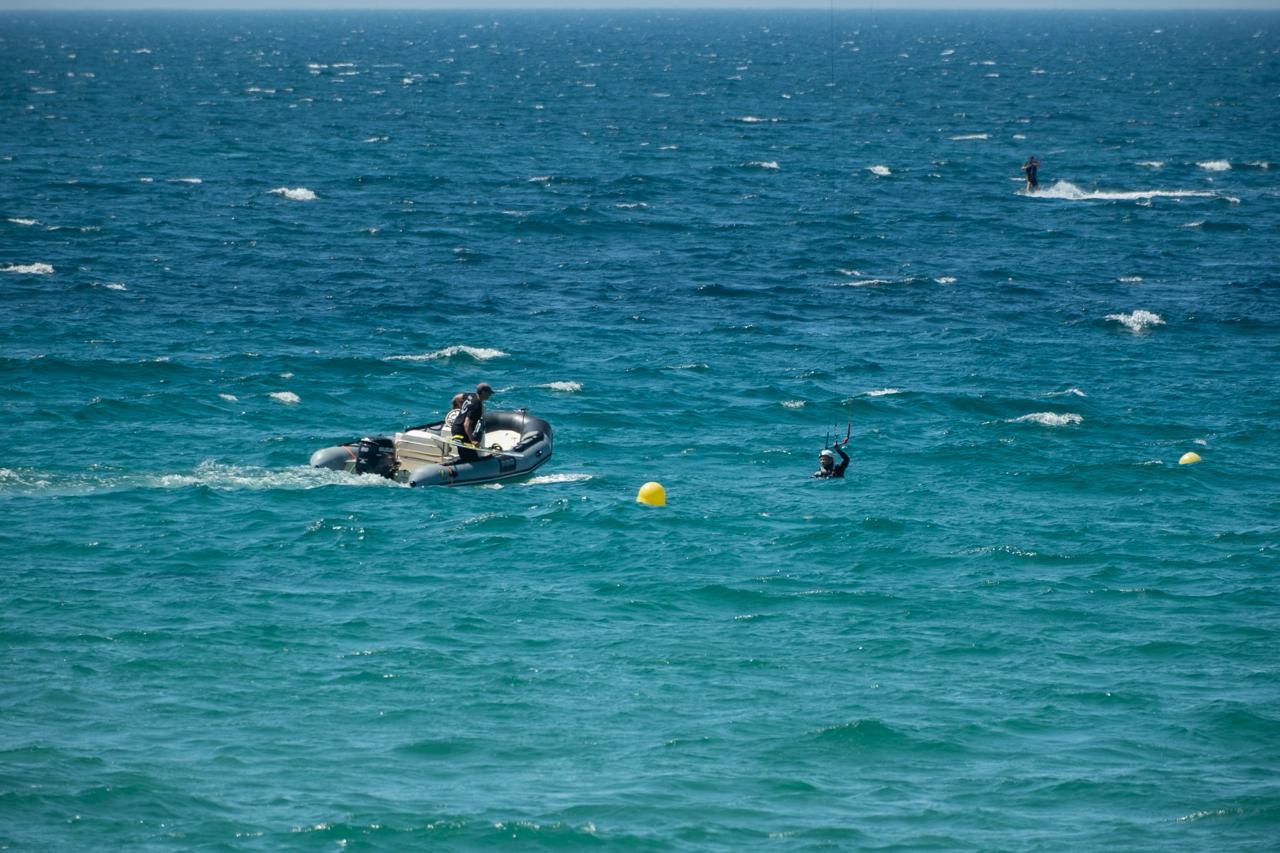
What feels physical during waterstarts and first rides?
Waterstarts combine several new actions: positioning the board, bending the knees, controlling the kite and allowing its pull to bring you onto your feet. Your legs and core organise the movement, but the kite supplies the power.
The resets create most of the fatigue. After each attempt, you recover the board, reposition your feet, steady the kite and go again. Moderate stamina helps more than maximum strength.
Once you ride a few metres, the legs absorb the board’s movement and the core keeps the upper body centred. At first, every muscle tries to help because your body has not yet learned what it can relax.
You can watch a real first kitesurfing experience to see how normal that repetition looks. As the timing improves, every movement becomes smaller. The kite creates the power. You balance it.
How much stamina, mobility and water confidence do you need?
Think in practical terms, not fitness-test terms. You should be able to walk over sand, bend, stand, handle equipment and repeat attempts without becoming exhausted immediately. You do not need an athletic body or a training programme.
Water confidence matters differently. Once your lesson progresses into deeper water at Valdevaqueros, you may not be able to simply put your feet down. Staying calm while you float, reset and listen makes the lesson easier. If deeper water or swimming concerns you, tell the team before booking so they can explain what the lesson involves.
Fatigue tightens the hands and makes timing less precise, so breaks and sensible pacing matter. This is one reason how long learning kitesurfing usually takes varies between students.
Dominic Green, who described himself as a beginner, put it simply: “Kitesurfing is not a quick win sport.” If you have a meaningful injury or medical concern, speak with a healthcare professional and the school before the lesson.
Does age or body size change how a kitesurfing lesson is taught?
Age and body size can change the setup... but neither decides alone whether somebody can learn.
The instructor can adapt the kite, board, line length, conditions and pace. Private, semi-private and group lesson formats also provide different levels of attention, which can matter for children, anxious learners or anyone who needs more time between attempts.
The objective stays the same. The route can change.

How are lessons adapted for younger learners?
Younger learners need a lesson that feels clear, controlled and fun. That may mean a smaller kite, shorter explanations, more pauses and closer instructor attention.
At Valdevaqueros, private tuition is often best because the instructor can react immediately to the wind, beach activity and the child’s confidence. The goal is good kite control first... not rushing toward the board. A child who finishes wanting to come back has learned something important too.
How are lessons adapted for older beginners?
Age tells the instructor less than mobility, recovery, balance, water confidence and previous experience. An older beginner may benefit from calmer conditions, more time between attempts and a private format.
Giovanni Colombo returned after a two-year break caused by an accident. After ten hours of private lessons, he said his instructor brought him back “in a very professional, safe, and confidence-building way.”
You do not need to keep up with somebody younger. You need a pace that lets you learn with control.
How are lessons adapted for smaller and lighter riders?
A smaller or lighter rider usually needs less kite power. The instructor can choose a smaller kite, adjust the line length and select a stable board.
In strong Tarifa wind, a small kite can react quickly. The answer is not asking the rider to hold more force. It is controlling the power, slowing the exercise down and choosing conditions in which each movement is still readable.
Matteo Micheletta describes this as changing the kite size, line length and equipment so the lesson stays “safe, enjoyable and learnable for everyone.”
How do Tarifa’s conditions change the physical demand?
At Valdevaqueros, wind strength, gusts, chop, temperature and repeated attempts change how tired a lesson feels. The same student can have a relaxed session one day and work much harder the next.
The instructor chooses the kite, board, lines, teaching zone and plan for the conditions in front of them. Reading how the Tarifa forecast shapes beginner lessons explains why your session may look different from the one you imagined. Tarifa teaches adaptation early... and the equipment should adapt with you.
How does Levante affect a beginner lesson?
Levante is Tarifa’s easterly wind. It can be strong, hot and gusty, which often means smaller kites and shorter lines.
The kite may react faster, so the lesson focuses on relaxed hands, small inputs and the neutral zone. If a normal beach exercise is not the safest choice, the instructor can change where or how it happens.
Levante is not simply good or bad for learning. The question is whether the strength and setup suit the student. You can see current lesson conditions at Valdevaqueros on the center’s Instagram.
How does Poniente affect a beginner lesson?
Poniente comes from the west and often feels cooler and steadier, giving beginners more time to repeat a movement. But it is not a guarantee of easy conditions: thermal wind can build and the water can still be choppy.
The instructor reads the beach, not only the forecast. You can see the center and lesson environment in Tarifa before your trip.
How do chop, temperature and repeated resets affect fatigue?
Chop asks your body to make more corrections and makes board recovery or waterstarts harder to reset. Temperature and repetition matter too.
A comfortable two-hour session with useful pauses feels very different from repeating movements while cold, tense or rushing. Sometimes the environment changed... not your fitness.
Should you train before your first kitesurfing lesson?
No training programme is required. Walking, swimming, balance work and comfortable hip, ankle and shoulder mobility may make repeated attempts easier, but none is a pass-or-fail test.
Arrive rested, let the first lesson show you how your body responds and be honest about limitations. Preparation should give you confidence... not create another barrier.
When should you speak to the school before booking?
Speak to the school if deeper water worries you, you have an injury or mobility limitation, you are booking for a younger student, or you are unsure which format fits.
Send the team your dates, experience and any physical concerns, plus your approximate size and water confidence. The school can explain what it can adapt, although it cannot provide medical clearance or guarantee that every day will be suitable.

What else do beginners ask about kitesurfing fitness?
Do you need to be a strong swimmer to learn kitesurfing?
You should be comfortable in the water and honest about your swimming ability. Lessons include safety equipment and instructor support, but still take place in moving water. Ask the team to confirm suitability for the lesson stage and conditions.
Is kitesurfing a good workout?
It can be. Recreational riding uses your legs, core, balance and endurance. But learning is not a gym test, and big air or freestyle creates a very different physical demand from cruising and making your first small jumps.
How fit do you really need to be to start?
You do not need big arms or a highly trained body. You need ordinary mobility, enough stamina to repeat attempts, water confidence for the lesson stage and the ability to listen and adapt.
The harness carries the pull, relaxed hands control the kite and the instructor adapts the equipment and pace. Fit enough is not a number... it means learning safely while staying mentally present.
How can the school recommend the right first lesson?
If you are still wondering whether your age, size, strength or water confidence is enough, you do not have to decide alone.
Tell the team when you will be in Tarifa, whether you are a beginner and whether there is any injury or limitation they should know about. They can recommend the lesson format, setup and conditions most likely to suit you.
Message or call with your questions... or book a suitable first session and include the relevant details. You are not expected to diagnose your own suitability before starting the conversation.
The best first lesson is not the hardest one. It is the one that gives you enough control to want the second.
Latest News
- Private, semi-private or group wingfoil lessons in Tarifa: which should you choose?
- How Fit Do You Need to Be to Learn Kitesurfing in Tarifa?
- How long does it take to learn kitesurfing in Tarifa?
- Beginner Kitesurfing Course in Tarifa: From Day One to Independent Riding
- How to Choose the Right Kitesurf Setup for the Day in Tarifa
- What Is Included in a Kitesurfing Lesson in Tarifa (and What to Bring)?
- Duotone Kite Demo Day in Tarifa: Testing the Latest Kites at Liam Whaley Pro Center
- Kitesurf Lesson Formats in Tarifa: Private, Semi-Private or Group?
- Your First Kitesurfing Lesson in Tarifa: What to Expect
- How to Read Windguru for Kitesurf Lessons in Tarifa