What Will You Learn in Wingfoil Lessons in Tarifa? From Day One to Independent Riding
“What will I actually learn during a wingfoil course, and how do I get from my first lesson to riding on my own?”
At Liam Whaley Pro Center, you start by learning to control the wing and balance on a floating board. Then you bring those skills together: moving across the water, choosing your direction, turning and eventually lifting onto the foil.
We teach at Valdevaqueros, directly in front of our beachfront center. That means learning in the sea, where the wind and water can change between sessions. Understanding those changes becomes part of your progression, alongside the movements themselves.
Matteo Micheletta, our instructor manager, breaks the learning down into three parts:
“One is stability, one is wing control and one is flying technique.”
We can practise those skills separately, then combine them as you become more comfortable. This guide follows the course step by step, explaining what you learn and what tells us you’re ready for the next challenge.
Planning your course? Explore our wingfoil lessons in Tarifa. If you’ve already started, tell us what you can comfortably do and we’ll build from there.
Step 1: Get to know the equipment and the spot
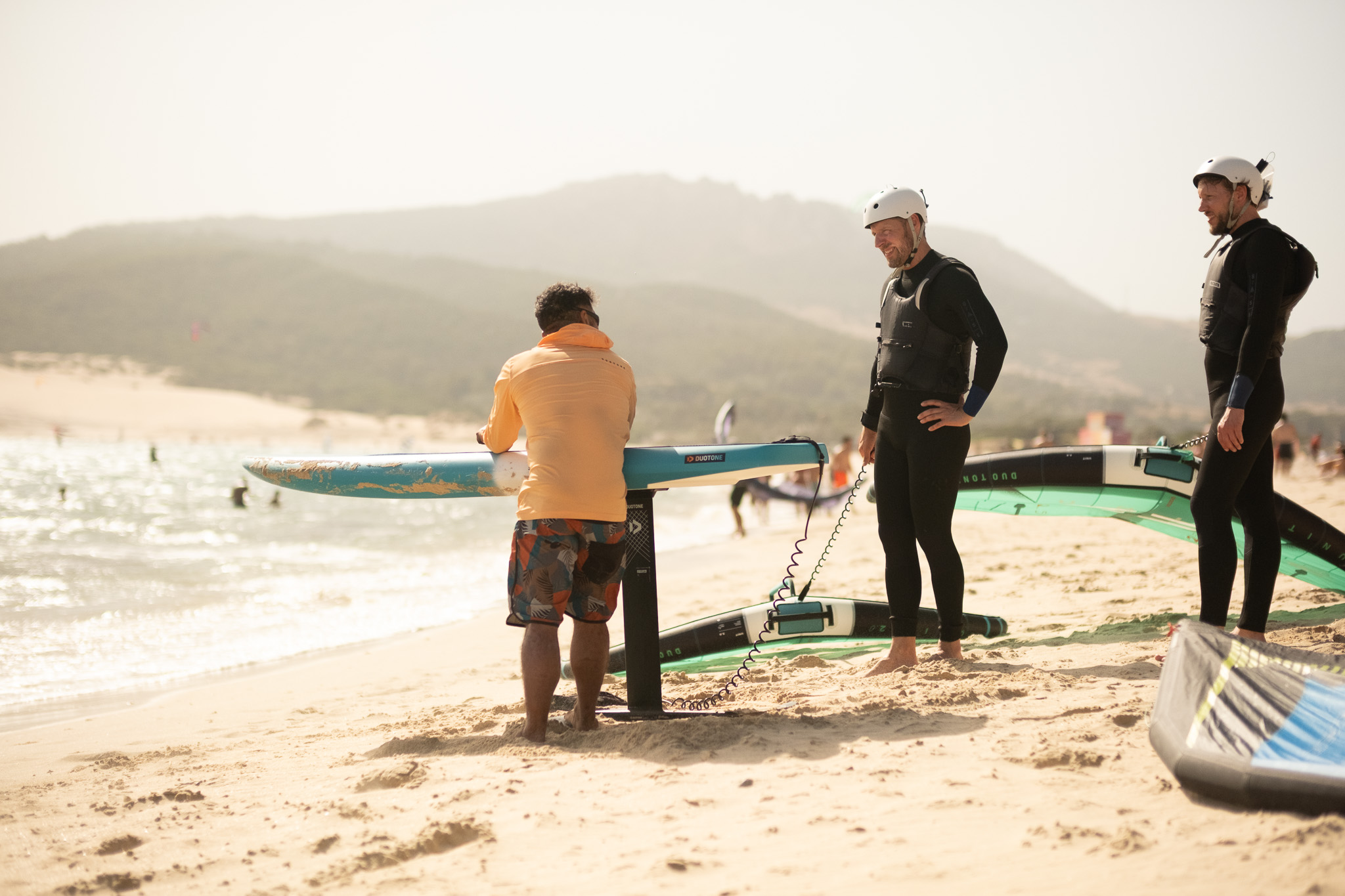
Your course begins at the Pro Center, where you meet your instructor and choose equipment for your weight, experience and the conditions outside.
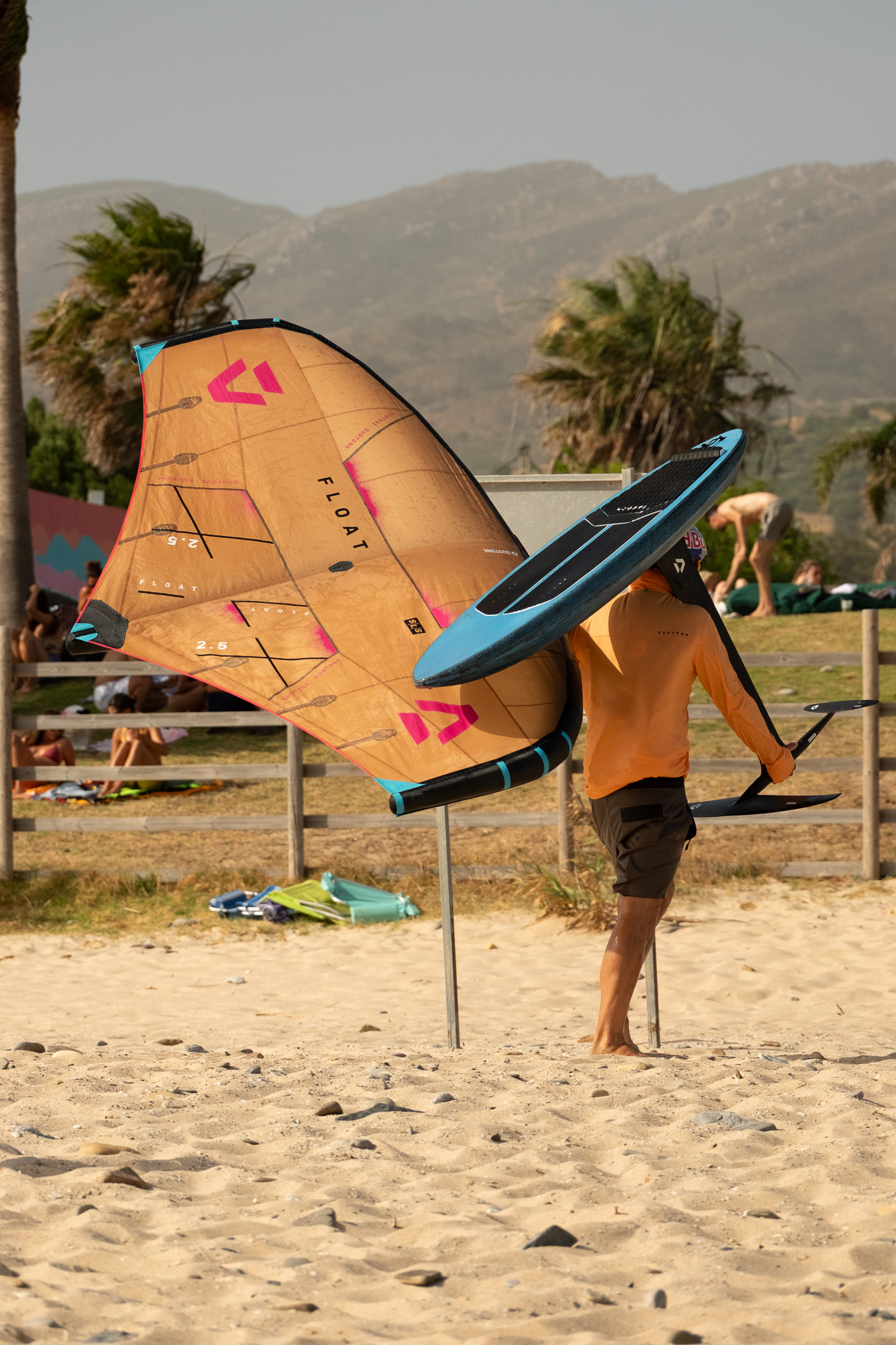
You get involved in preparing it: inflating the wing, identifying its parts and learning how to carry the wing and board. These are skills you’ll eventually use before your own sessions.
Then we look at the practice area together. Where is the wind coming from? Where will it push you? Where should you enter and leave the water?
At Valdevaqueros, water depth and space matter as much as wind strength. The foil extends beneath the board, and you need room to fall, restart and drift while learning. Your instructor identifies a suitable area for that day.
Being based directly on the beach helps us make those decisions from what we can see. If the wind changes, we can also return to the center and adjust the equipment.
For a closer look at arrival, preparation and the first session, read what happens in your first wingfoil lesson in Tarifa.
Step 2: Learn to control the wing on the beach
Before adding board balance, you need to feel how the wing responds to the wind.
On the sand, you practise holding it, changing hands and moving it between a powered position and a position with little pull. You begin to understand how small adjustments change the force you feel.
We also rehearse movements you’ll use when changing direction. That gives your hands something familiar to do once your attention is divided between the wing and your feet.
Previous experience can help. Gastón has seen windsurfers moving into wingfoiling here in Tarifa, and the relationship between wind, sail and body position can feel familiar to them. We still check which movements you understand before moving on.
The aim is to control the wing well enough to give some attention to the board. You don’t need perfect technique, but you need movements you can repeat without fighting the wing every time.
Step 3: Find your balance and make your first rides
Now you bring the wing onto the water.
We use buoyant beginner equipment so you can concentrate on learning. One teaching setup Matteo describes is a 170-litre board with a large front foil. The foil can already be attached while the board stays on the surface, letting you get familiar with the equipment before trying to fly.
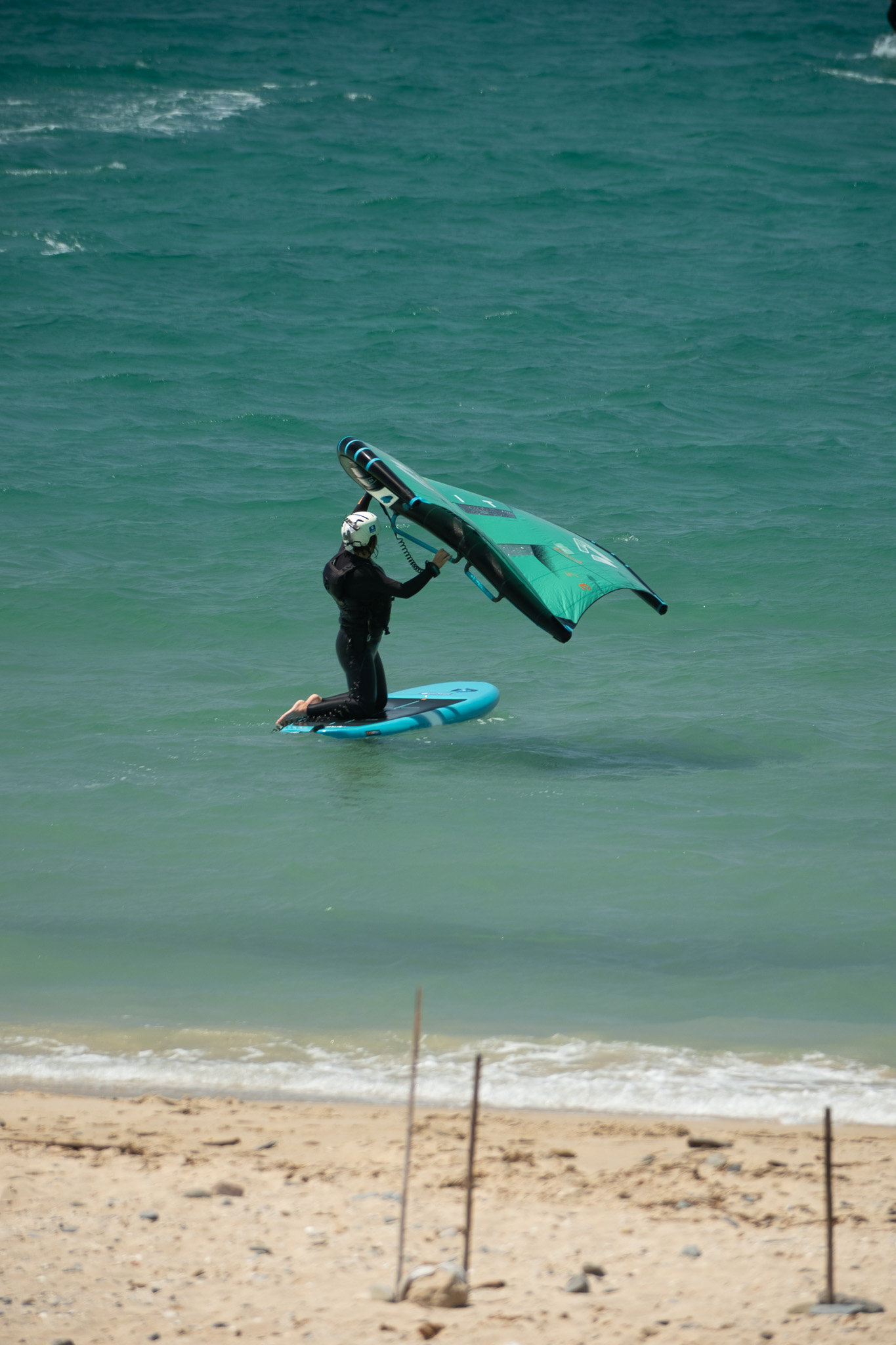
You may begin on your knees, then work towards standing while keeping the wing under control.
Sometimes we separate the skills again. A SUP can be useful for practising balance without also managing the wing. Once that feels easier, we bring the movements back together.
At Valdevaqueros, the water adds another challenge: small waves and chop move the board beneath you. You’re learning to balance on something that keeps responding to the sea.
The first rides are usually short. You get settled, find the pull and travel a little way before stopping, falling or resetting, with your instructor watching and helping you adjust.
You’re already riding when the wing moves you across the water. Flying on the foil comes later.
Why do I keep drifting downwind?
Because you’ve learned to create movement before fully controlling its direction.
An early run may take you farther down the beach than you intended. In suitable conditions, you and your instructor can come ashore, walk back upwind with the equipment and try again.
Those walks also give you time to discuss the last attempt. Was the wing pulling you out of position? Were you looking down at your feet? Did you manage to keep moving for longer?
The next goal is to choose your course well enough to reduce how much ground you lose.
What if I keep falling and don’t feel like I’m improving?
We work out which part is causing the problem.
If the wing keeps pulling you off balance, we can return to wing handling. If standing up is the difficult part, we simplify that movement. If the chop has increased, we consider whether the exercise still suits the water.
We can also adjust the equipment or give you a break. Being tired can turn a movement you almost understand into one you struggle to repeat.
Sometimes the most useful step forward is spending a little more time on one basic skill. You don’t have to keep attempting the whole sequence every time.
Step 4: Control your direction, turn and stay upwind
Once you can get moving, you work on choosing where you go.
You learn how your stance, the board’s direction and the wing’s position affect your course. Instead of following whichever direction the board takes, you begin making deliberate adjustments.
Turning becomes part of that control. You practise changing direction and repositioning the wing so you can travel back the other way.
You can learn these movements with the board floating on the water. A turn doesn’t need to stay on the foil to help you get around.
Why do we put so much emphasis on staying upwind?
Because travelling away from your starting point is only half the job.
Riding upwind means making progress towards the direction the wind comes from, travelling at an angle to it. It helps you recover the ground lost during starts, falls and early runs.
In our teaching progression, holding your position is an important foundation before concentrating on flight. You practise maintaining a course, noticing when you’re drifting and adjusting your position.
That matters at Valdevaqueros, where a successful run can still leave you well down the beach. As your directional control improves, you spend more time practising and less time getting back into place.
Step 5: Build speed and make your first foil flights
Once wing handling and board control are coming together, you start working towards lift.
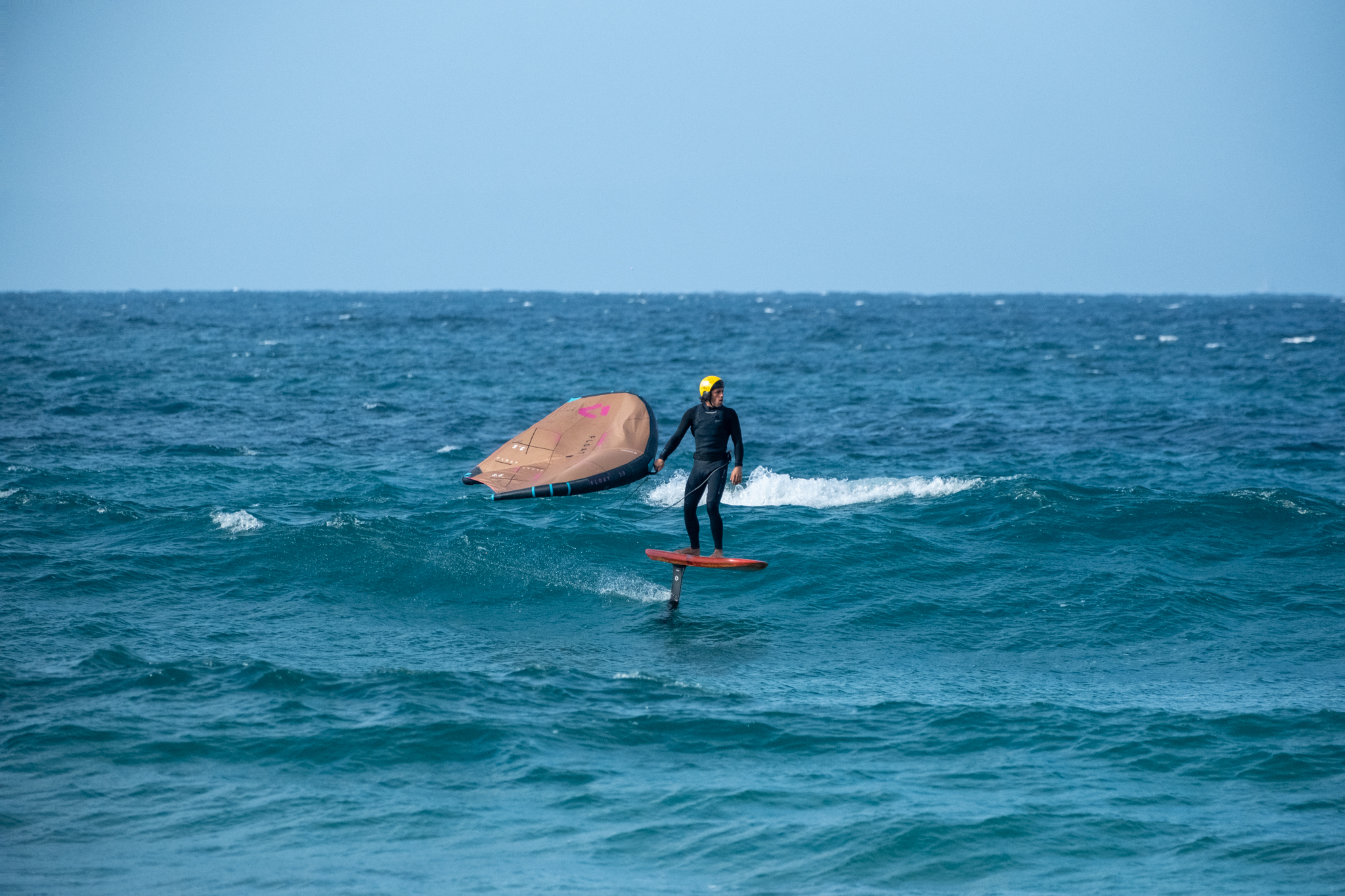
You learn to build enough speed for the foil to support you. The board begins to rise, and suddenly you’re controlling height as well as direction.
Your first flight might last only a moment. You lift, react and touch down again. Your instructor helps you adjust your stance, manage the wing’s power and make smaller movements as the board rises.
The first objective is a small, controlled lift that you can repeat.
How do Tarifa’s conditions affect those first flights?
Liam points out that having enough wind can make the first lift easier. An experienced rider can use technique to take off in lighter wind; a beginner hasn’t developed that coordination yet.
That’s why the lightest day isn’t automatically the easiest day for every stage of the course. It may work well for wing handling but leave you struggling to create enough speed for flight.
We look for usable power that matches your equipment and control. Strong, gusty Levante can become too demanding, while increasing chop can make it harder to settle on the board before taking off.
Our guide to learning wingfoil in Tarifa’s conditions explains those local differences in more detail.
Does previous foil experience help?
Yes. When Liam first tried wingfoiling in Madagascar, he already had experience on kitefoils and surf foils. The foil felt familiar; handling the wing was the new challenge.
That gives us a useful distinction when planning your lessons. You might understand foil balance but need time with the wing. Or you might handle the wing comfortably while finding the lift completely unfamiliar.
We spend the lesson on the skills you need, rather than assuming everyone starts from the same place.
Step 6: Turn short lifts into controlled flights
Now the challenge is staying up.
You work on keeping the power steady, controlling the board’s height and making smaller balance adjustments. As you improve, you begin recognising changes before they end the flight.
You also practise touching down and restarting. A flight ending doesn’t have to mean the whole run is over.
Progress means making flights more repeatable and controlled, in both directions. One long run is exciting; reproducing it gives you something dependable.
How does the instructor help while I’m riding?
At the Pro Center, we use a radio helmet or headset so you can hear corrections on the water. You don’t have to remember every instruction from the beach while learning a new movement.
The instructor follows your progress from the beach or the water, depending on the exercise and the help you need. If a movement needs closer assistance, they can come into the water.
Our instructors also carry VHF radios to communicate directly with the rescue boat if help is needed, including a lost board or difficulty returning. Rescue support is included during lessons.
That communication becomes especially useful as your runs get longer: you can practise farther from the instructor while continuing to receive guidance.
When will I learn to turn while staying on the foil?
Once straight-line flight becomes consistent, maintaining flight through a turn becomes another skill to develop.
You’re combining direction, wing handling and balance while keeping enough speed. It asks for more coordination than turning with the board on the water.
You can keep progressing by touching down, turning and setting off again while working towards flying turns. We choose the next challenge from what you can already control.
Step 7: Learn to manage a session independently
Independent riding means managing the whole session, including getting back when something doesn’t go to plan.
By this stage, you should be taking more responsibility for preparing the equipment, checking the area and judging whether the conditions suit your ability.
You also need to know how to stop, recover after a fall, restart and return if you can’t continue riding.
Before recommending independent practice, we look at questions such as:
-
Can you control your direction and return near your starting point?
-
Can you recover and restart without instructions at every attempt?
-
Do you know how to get back if riding becomes impossible?
-
Can you identify suitable depth, space and entry and exit points?
-
Can you recognise conditions beyond your current level?
-
Can you prepare and handle equipment suited to the session?
Being independent includes knowing when to ask for help or choose another day.
Am I ready to rent equipment after the course?
At our center, staying upwind is a key part of the rental assessment. We also judge your ability against the conditions you’ll actually be riding in.
For example, someone who can manage a beginner setup in light wind and flat water may still need instruction when strong Levante arrives. Being comfortable in one set of conditions doesn’t automatically prepare you for the other.
If the assessment shows that more instruction would help, we explain the skill to work on before recommending rental.
Our wingfoil rental in Tarifa becomes the next step when your ability, equipment and the day’s conditions fit together.
How many lessons should I plan for this progression?
Around six hours is a useful first block for learning the foundations and beginning to connect wing control, balance and riding. Our sessions usually last 1.5 to 2 hours, so that means roughly three or four lessons.
Liam uses six hours as a reference for getting a feel for the sport and beginning to ride. It isn’t a fixed completion point for the whole progression.
After that first block, we plan from what you can do. Are you still working on standing and moving? Can you stay upwind? Are you making short flights but struggling to repeat them?
The lesson format affects your practice time, too. In a private session, the attempts and feedback focus on you. In a shared session, you alternate practice with watching and learning from the other person.
Our guide to private, semi-private and group wingfoil lessons in Tarifa explains those differences.
Will every lesson follow the same plan?
The progression stays connected, but the exercises change with your needs and the conditions.
At Valdevaqueros, Poniente can build during the afternoon, and stronger wind may come with more movement in the water. We may change the wing, adjust the exercise or choose a different time rather than repeat yesterday’s setup automatically.
Light wind can be useful for handling and balance. Even at zero knots, some hand-change and balance exercises remain possible in a suitable setting. Sustained wind-powered riding and foil flights need wind.
Tell us how many days you have and how flexible you can be. That helps us organise sessions around the skills you’re ready to practise.
Ready to start or continue your wingfoil course in Tarifa?
Tell us what you’d like to learn and what you can already do. “I can ride on the board but keep drifting downwind” tells us more than simply “I’ve had three lessons.”
If you’re completely new, we’ll start with the foundations. If you’ve already begun, we’ll help you work on the stage that needs attention here at Valdevaqueros.
Ready to start or continue your wingfoil course?
Tell us your dates, approximate weight and previous experience, and we’ll help you plan the right next step in your wingfoil progression.
Already know your next step? Book your lessons directly and send us your experience level when you reserve.
KEEP EXPLORING
Related guides for your trip to Tarifa
Choosing your sport
Kitesurfing vs Wingfoiling: Which Should You Learn in Tarifa? →
Compare the learning experience and decide which sport better matches your goals, time and trip.
Planning your stay
Planning a Kitesurfing Trip to Tarifa →
Practical advice on flights, transport, accommodation, forecasts and getting to Valdevaqueros.
Latest News
- Wingfoiling for Kids in Tarifa: What Parents Should Know Before Booking
- Kitesurfing or Wingfoiling for Kids in Tarifa: Which Should They Try First?
- What Will You Learn in Wingfoil Lessons in Tarifa? From Day One to Independent Riding
- Is Tarifa a Good Place to Learn Wingfoiling? What We Tell Beginners Before They Book
- What Happens in Your First Wingfoil Lesson in Tarifa? We Get Asked This a Lot
- Am I Too Old to Learn Kitesurfing at 50 or 60 in Tarifa?
- Is Tarifa a Good Place for Kids to Learn Kitesurfing? Age, Safety and What Parents Should Know
- Kitesurfing vs Wingfoiling: Which Should You Learn in Tarifa?
- Private, semi-private or group wingfoil lessons in Tarifa: which should you choose?
- How Fit Do You Need to Be to Learn Kitesurfing in Tarifa?