
Levante vs Poniente for Kitesurf Lessons in Tarifa
Poniente is usually easier for your first kitesurf lessons in Tarifa. The wind tends to be more consistent and less gusty, which helps when you’re getting used to controlling the kite.
You don’t need to wait for Poniente, though. We teach in both winds at Valdevaqueros. A Levante day can work well for a beginner too, depending on the gusts, the waves and what you’re learning.
You’ll often hear “Poniente for beginners, Levante for experienced riders.” It isn’t that simple. The wind can be consistent while waves make things difficult, or a lighter Levante day can give you a good session.
What’s the difference between Levante and Poniente for a kitesurf beginner?
Levante blows from the east, Poniente from the west. At Valdevaqueros, that changes the wind and water you’re learning in, and which way you drift.
| Comparison | Poniente | Levante |
|---|---|---|
| Wind direction | Side-onshore: across the beach and towards shore | Side-offshore: across the beach and away from shore |
| Wind conditions | Usually more consistent and less gusty | Often stronger and gustier |
| Kite control | Fewer gusts to deal with while you practise | Gusts mean you have to manage more changes in the kite's power |
| Water conditions | Can bring chop and waves | Can be flatter close to shore, but strong Levante or incoming swell can still bring chop and waves |
Gusts are short bursts of stronger wind that make the kite pull harder, between them, the wind drops. Chop is small, closely spaced waves. Swell is waves arriving from weather systems farther out at sea.
Flat water doesn’t always mean easier conditions. In Levante, you might have less chop but more gusts. In Poniente, the kite may be easier to control while waves make it harder to get the board on your feet.
We change where we start too. When the wind switches, so does the direction you drift, so we use a different part of the teaching area.

Not sure what either wind means for your lessons?
Send us your questions. We’re happy to help.
Prefer to talk? Call us at +34 681 286 516.
Why is Poniente often easier for learning kitesurfing?
Poniente usually makes kite control easier because the wind is more consistent. You can practise holding the kite in one place or flying it with one hand without so many gusts interrupting. It’s easier to feel how the kite responds when you move the bar.
That helps with water starts, when you use the kite to pull yourself up onto the board. You’re getting the board on your feet, moving the kite and trying to stand. Consistent wind gives you one less thing to deal with while you work out the timing.
When does Poniente stop being the easier option?
Poniente can bring chop and waves. How much depends on how strong the wind is, how long it’s been blowing and any incoming swell. Even with light wind, swell can bring shorebreak, waves breaking close to the beach. You might be comfortable controlling the kite but still struggle to get through those waves or keep the board in place.
Poniente can be strong too. Add waves, and it may be harder for a beginner than a lighter Levante day. We look at both the wind and water before deciding what to practise.
Will I feel cold during the lesson?
Poniente generally brings cooler air than Levante. The water can feel cool even on a sunny day, especially when you’re spending a lot of your lesson in it.
While you’re learning, you spend plenty of time body dragging, using the kite to pull you through the water without riding the board, and trying water starts. A wetsuit that fits well helps you stay comfortable. Wetsuits are included in our lessons, so you don’t need to bring your own.
Can beginners learn to kitesurf in Levante?
Yes. We teach beginners in Levante at Valdevaqueros when the wind and water let you practise safely. Levante doesn’t automatically mean too much wind for a lesson. A lighter day can work well, even if you’re starting from zero.
The gusts are often the difficult part: the kite pulls harder, then less as the wind drops. We choose your gear and what to practise around those changes and what you can comfortably handle.
Levante can bring flatter water near shore, which helps you get the board in place for a water start. Stronger wind can still build chop, and swell can bring waves into the bay.
What does the wind direction mean for your lesson?
At Valdevaqueros, Levante blows side-offshore, diagonally away from the beach. That means you can drift farther from shore while you practise.
In Levante, we walk farther along the beach before starting the water exercises. That gives you more room to practise within our teaching area as the wind carries you along.
We always have rescue boat support during lessons, in both winds. Your instructor carries a radio to contact the captain if you need help. You can hear your instructor through the radio headset in your helmet.
When would we wait for better conditions?
If the wind or waves make it too hard to control the kite and practise, we change the exercise or wait. Even with the rescue boat there, we’ll wait if it’s too difficult to practise. You still need to be able to repeat the exercise and learn from each try.
Read more about how the forecast shapes your kitesurf lesson.
What can you learn from practising in both winds?
Practising in both winds helps you get used to the changes. An exercise you’ve managed one day can need more practice when the wind changes. That’s a normal part of learning.
Say you were practising water starts in consistent Poniente. The next day brings stronger, gustier Levante and chop. Your instructor might start with some upwind body dragging before you try the board again.
Upwind body dragging lets you work your way towards the direction the wind comes from. You travel at an angle to the wind, rather than straight into it, to reach your board when it ends up upwind of you after a fall.
You’ll fall while learning, so getting back to your board matters. You need to reach it while keeping control of the kite, then get ready to try again. Gusts and chop can make that harder than it was the day before.
A little more practice helps you get comfortable with the new conditions before trying to get onto the board again. Over time, you’ll be able to use those skills in different winds.
Our beginner kitesurfing progression guide explains how body dragging and board recovery fit into learning to ride.
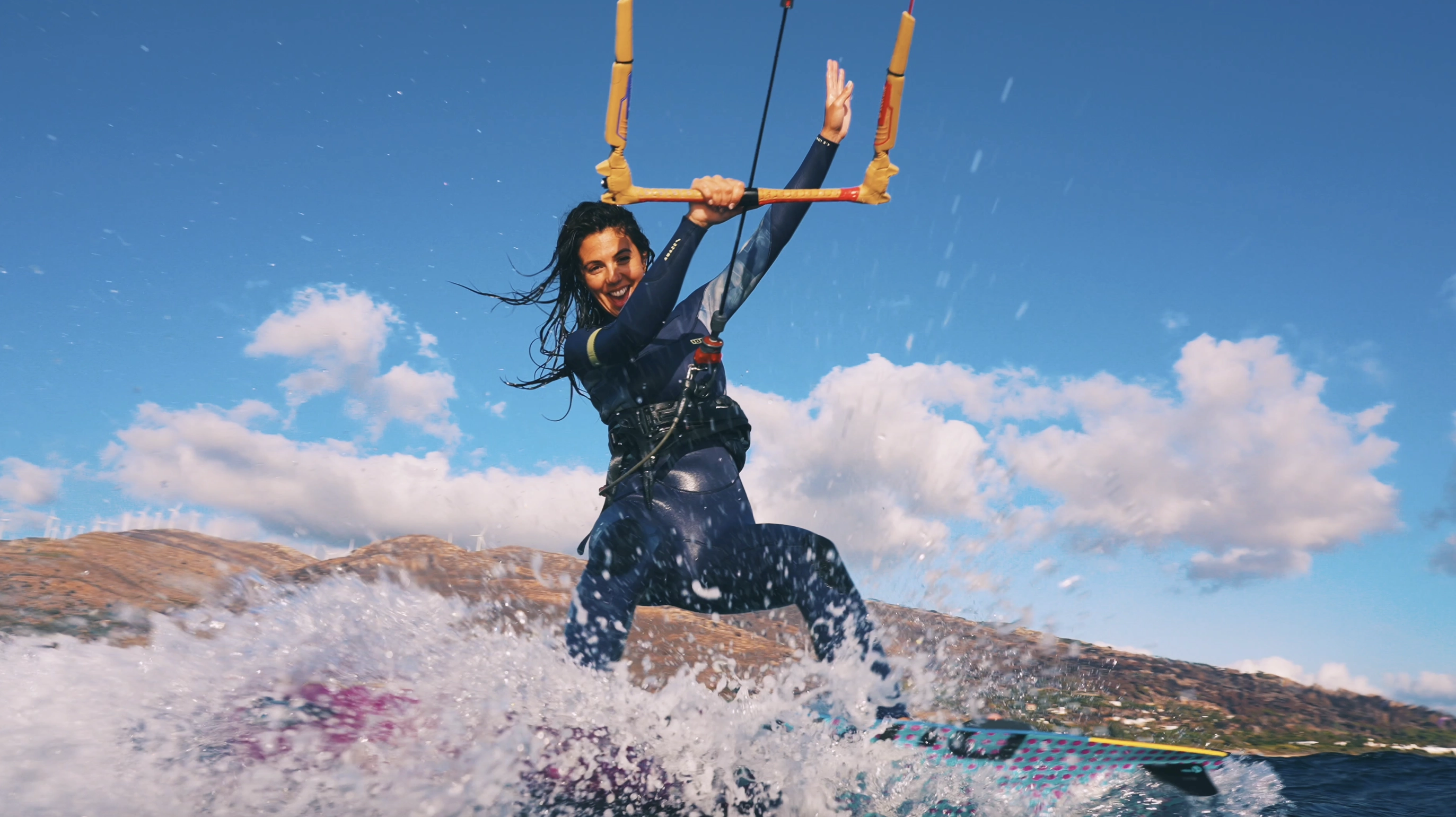
What do visitors say about Tarifa’s wind?
Our visitors have had weeks of great wind, gusty Levante and fewer windy days than they hoped for. Here’s how they describe their trips.
Pieter had a great week:
“Again a great week! With perfect wind, equipment and service!”
Michael was returning to kitesurfing after an eight-month break:
“the feedback I was getting was empowering and after 4 days I was able to ride in gusty Levante”
Ties visited during a week with less wind:
“Thanks to him, during a week with little wind, we were still able to get on the water at the right moments to learn kitesurfing.”
Translated from Dutch.
And Noor enjoyed the quieter days with her friends, too:
“Even on days without wind, we still had so much fun: we could use the SUP boards to play in the water”
SUP boards are stand-up paddleboards.
Should you plan your lessons around Levante or Poniente?
You don’t need to wait for a Poniente forecast to book your first lesson. We teach in both winds and check what you can comfortably practise that day.
Keep a few days free for lessons if you can. That gives us more options if one day is too windy, too light or too wavy. It won’t guarantee a lesson every day, but it helps if we aren’t relying on one afternoon.
If you’re checking the forecast yourself, our Windguru guide for kitesurf lessons in Tarifa explains what the numbers and arrows mean.
For children, we may suggest a wing session when the wind doesn’t work for their kite lesson. A wing is an inflatable sail you hold in your hands, without long kite lines. If the conditions allow, we can start with simple wing exercises on the beach. They get to learn about the wind and try another sport. If it’s still too strong, we wait.
Our guide to kitesurfing or wingfoiling for kids explains how we help you choose their first experience.
Ready to plan your kitesurfing lessons in Tarifa?
Tell us your travel dates, whether you're a complete beginner or what you've already practised, and any questions about the forecast. We'll help you choose the right starting point and suitable conditions for your lessons.
Prefer to talk? Call us at +34 681 286 516.
KEEP EXPLORING
Related guides for learning kitesurfing in Tarifa
Understanding the conditions
How the Tarifa Forecast Shapes Your Kitesurfing Lessons →
Learn how wind strength, gusts and changing conditions affect beginner lessons at Valdevaqueros.
Reading the forecast
How to Read Windguru for Kitesurf Lessons in Tarifa →
Understand wind speed, gusts and direction so you can better interpret the forecast before your trip.
Learning in Tarifa
Is Tarifa Beginner-Friendly for Kitesurfing? →
Explore what makes Valdevaqueros suitable for beginners, including wind conditions, teaching areas and safety support.
Latest News
- Levante vs Poniente for Wingfoil Lessons in Tarifa
- Levante vs Poniente for Kitesurf Lessons in Tarifa
- Is September a Good Month to Learn Kitesurfing or Wingfoiling in Tarifa?
- Am I Ready to Rent Kitesurfing Gear in Tarifa? (Or Do I Need More Lessons?)
- Wingfoiling for Kids in Tarifa: What Parents Should Know Before Booking
- Kitesurfing or Wingfoiling for Kids in Tarifa: Which Should They Try First?
- What Will You Learn in Wingfoil Lessons in Tarifa? From Day One to Independent Riding
- Is Tarifa a Good Place to Learn Wingfoiling? What We Tell Beginners Before They Book
- What Happens in Your First Wingfoil Lesson in Tarifa? We Get Asked This a Lot
- Am I Too Old to Learn Kitesurfing at 50 or 60 in Tarifa?