
Am I Too Old to Learn Kitesurfing at 50 or 60 in Tarifa?
No. Being 50 or 60 does not automatically make you too old to learn kitesurfing.
When someone asks us this at the Liam Pro Center, age is rarely the first thing we want to know. We care much more about how comfortable you are in the water, how you move, how you recover between attempts and how confident you feel learning something completely new.
Kitesurfing can look intimidating from the beach, but you do not learn everything at once. You learn to understand the wind, control the kite and connect the different pieces gradually.
For someone starting later in life, we may change the pace, choose the conditions more carefully or recommend more individual attention. What we do not change is the goal: helping you become a safe, confident and independent rider.
You do not need to keep up with someone who is 25.
You need a learning process that works for you.
Is 50 or 60 actually too old to start kitesurfing?
No. Your age on its own tells us very little about whether you can learn.
Two people can both arrive in Tarifa at 60 and have completely different starting points. One may swim regularly, have windsurfing experience and feel relaxed in the ocean. The other may be trying a wind sport for the first time and need more time to become comfortable in deeper water.
The same is true with younger beginners. Being 30 does not automatically make someone coordinated or quick to learn, and being 60 does not automatically make someone slow.
Age can still matter. Recovery may take longer, mobility can change and repeated attempts may feel different than they did twenty years ago. But those are things we can work with, not an automatic reason to stay on the beach.
What matters more is the person in front of us: water confidence, mobility, balance, previous experience, energy and how they respond as the lesson progresses.
A more useful question than “Am I too old?” is: “What kind of learning approach will give me the best chance to progress safely and enjoy it?”
What matters more than my age when I learn kitesurfing?
When you start kitesurfing later in life, a few things matter much more than your age.
Do I need to be comfortable in the water to learn kitesurfing?
You do not need to be an elite swimmer, but you should feel reasonably comfortable in the sea.
As lessons progress at Valdevaqueros, you may be body dragging, recovering your board or resetting in water where you cannot simply stand up. Staying calm while you float, listen to your instructor and organise the kite makes a big difference.
If deeper water makes you nervous, tell the team before your lesson so we know where you are starting from.
How much mobility do I need to learn kitesurfing?
You do not need exceptional flexibility or strength. You do need enough everyday mobility to walk on sand, bend your knees, get into position with the board and move comfortably while wearing a harness.
For some people at 60, none of this is an issue. For someone younger with an old knee or back problem, it may matter much more.
How important is recovery between kitesurfing attempts?
A beginner lesson involves repetition. You try something, reset, listen to feedback and try again.
The goal is not to force as many attempts as possible into one session. It is to keep making useful attempts without fatigue turning relaxed movements into rushed ones.
That may mean taking more time between repetitions or continuing the next day.
That is still progression.
If you want the full physical breakdown, read How Fit Do You Need to Be to Learn Kitesurfing in Tarifa?
How will my kitesurfing lessons change if I'm over 50 or 60?
Usually, the skills do not change. You still need to understand the wind, control the kite, learn the safety systems, body drag, recover your board and work toward your first rides.
What can change is how we get you there.
Does the lesson pace change if I need more repetitions?
There is no advantage in moving to the next exercise simply because another student reached it faster.
If your kite control is becoming consistent, we progress. If you need a few more repetitions, we stay there longer. Sometimes one more controlled body drag teaches you more than ten rushed waterstart attempts.
What happens if I get tired during a kitesurfing lesson?
When you get tired, movements often become less precise. Hands tighten on the bar, reactions become bigger and concentration drops.
So we do not measure a good lesson by how exhausted you are at the end. A useful pause or finishing at the right moment can put you in a better position for the next session.
Can the equipment and lesson setup be adapted for me?
Kite size, board choice, line length, wind strength and the state of the water all affect how demanding the lesson feels.
At Valdevaqueros, the wind can change considerably from one part of the day to another. The objective is not to prove you can handle the strongest conditions in Tarifa. It is to give you a setup where the kite feels understandable enough to learn.
Some older beginners are comfortable learning alongside someone else. Others benefit from more individual attention.
The standard stays the same. The route can change.
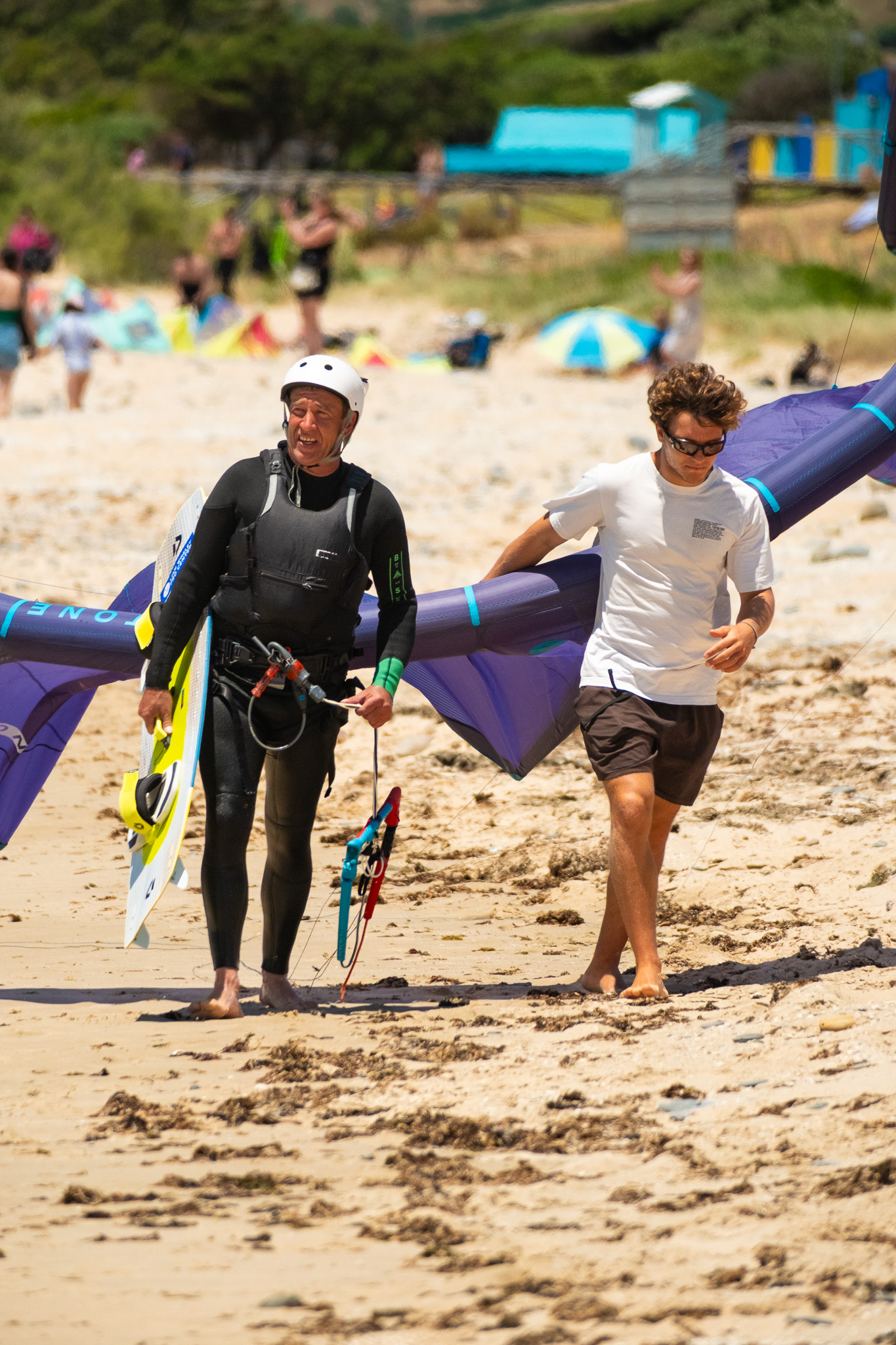
Is Tarifa's strong wind too much for me if I'm learning at 50 or 60?
If you're coming to Tarifa to learn kitesurfing at 50, 60 or beyond, strong wind is often one of the first things that looks intimidating at Valdevaqueros.
The answer is: not necessarily. What you need are conditions that make sense for the skill you are working on.
Levante, Poniente, gusts, chop and wind strength can all change how demanding a lesson feels.
Is Levante too strong for me as an older beginner?
Not automatically.
Levante is Tarifa's easterly wind. It can be strong and gusty, which can make the kite react more quickly.
That does not mean someone at 60 cannot learn in Levante. The instructor looks at the actual wind strength, your level, your confidence and the exercise you are doing. We can use a smaller kite, adapt the line length, change the exercise or choose a different moment of the day.
If the conditions are not right for useful learning, we do not need to force the session.
Is Poniente better if I'm learning kitesurfing later in life?
Poniente often feels cooler and steadier than strong Levante, which can give a beginner more time to feel what the kite is doing.
But it is not automatically easy. The water can still be choppy and the wind can build.
The important question is whether the conditions give you enough control to understand what you are practising.
If you want to understand this in more detail, read Kitesurf Lessons in Tarifa: How the Forecast Shapes Your Learning Experience.
If you're planning your first lessons and the Tarifa forecast looks strong, send us your dates rather than trying to judge the numbers alone. We can explain which conditions make sense for the stage you're starting at.
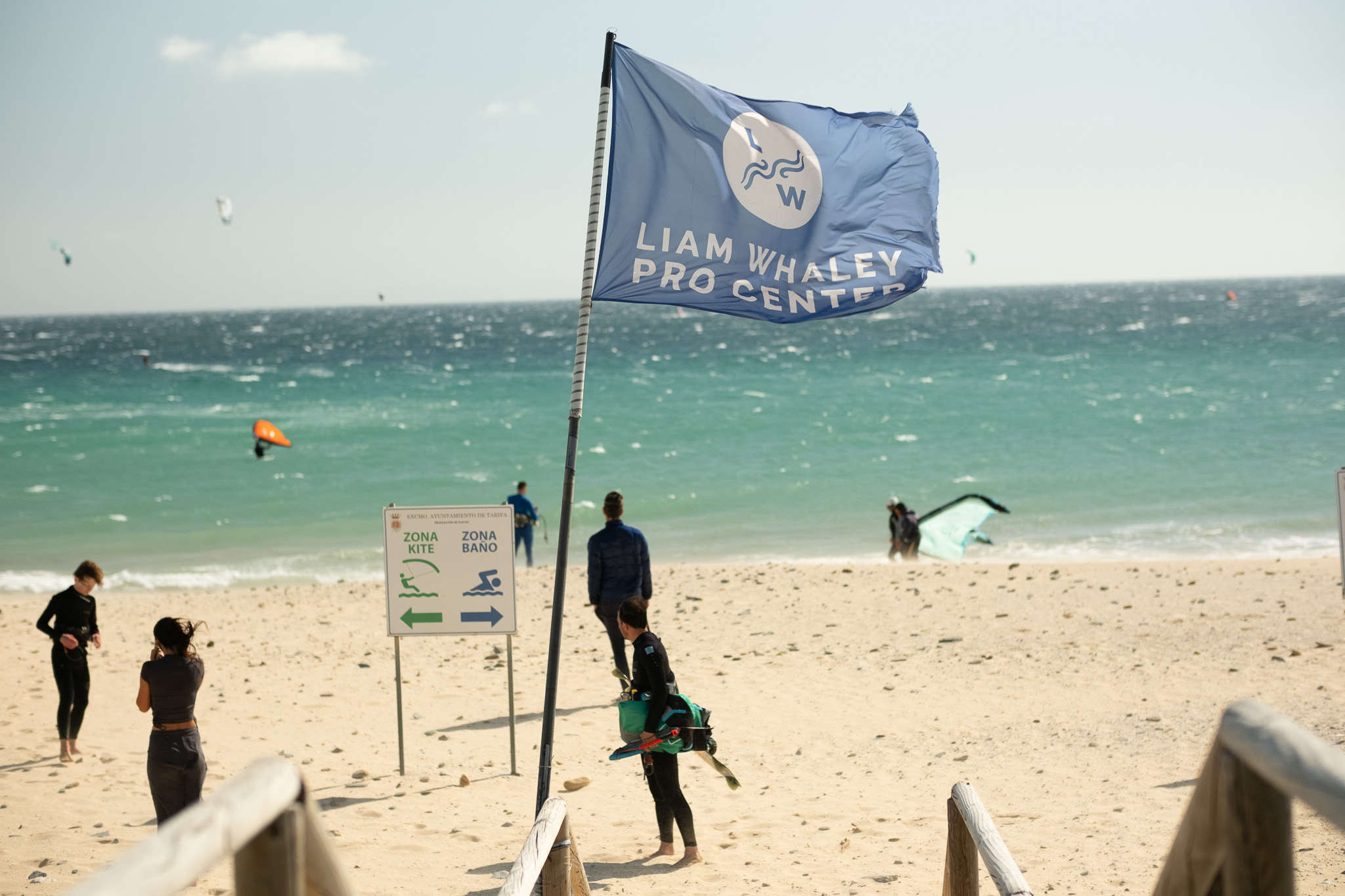
Do I need to keep up with younger kitesurfers when I'm learning?
No. A younger beginner does not automatically learn faster, and you do not need to match somebody else's pace.
At Valdevaqueros, you may be learning next to someone half your age or watching experienced riders make the sport look easy. That comparison does not tell you whether your own lesson is going well.
A useful comparison is with your previous attempt: is the kite more controlled, are your movements calmer, and are you becoming more independent?
Your next step is determined by what you can control now, not by the age or level of the person beside you.
That is a much better measure of progress.
Do I need to be strong to learn kitesurfing later in life?
No.
The harness carries most of the kite's pull through your body, while your hands steer the kite and regulate its power. Technique, balance, coordination and relaxed control matter much more than upper-body strength.
Learning still requires ordinary mobility and enough stamina to walk on sand, body drag, recover your board and repeat waterstarts.
If fitness is your main concern, read How Fit Do You Need to Be to Learn Kitesurfing in Tarifa?.
You do not need to overpower the wind. You need to learn how to work with it.
Should I take a private kitesurfing lesson in Tarifa if I'm starting at 50 or 60?
If you're starting kitesurfing at 50 or 60 in Tarifa, a private lesson can be useful, but age alone is not a reason to book one.
Some people are comfortable learning in a semi-private lesson with a partner or friend. Others prefer having one instructor focused entirely on them.
Because conditions at Valdevaqueros can change with Levante, Poniente and the state of the water, one-to-one instruction also gives the instructor more freedom to change the rhythm of the session around you.
When does a private lesson make sense?
A private lesson can make sense if you want the instructor to adapt every part of the session around you, if you feel nervous about starting, have limited time in Tarifa or simply learn better with one-to-one feedback.
The advantage is not that the lesson becomes easier. It becomes more flexible.
Can I learn kitesurfing with my partner or a friend?
Yes. If you are at a similar level and comfortable learning at roughly the same pace, a semi-private lesson can work well.
Age differences are not necessarily a problem. A 55-year-old and a 40-year-old may be a good match, while two people of exactly the same age may need different pacing.
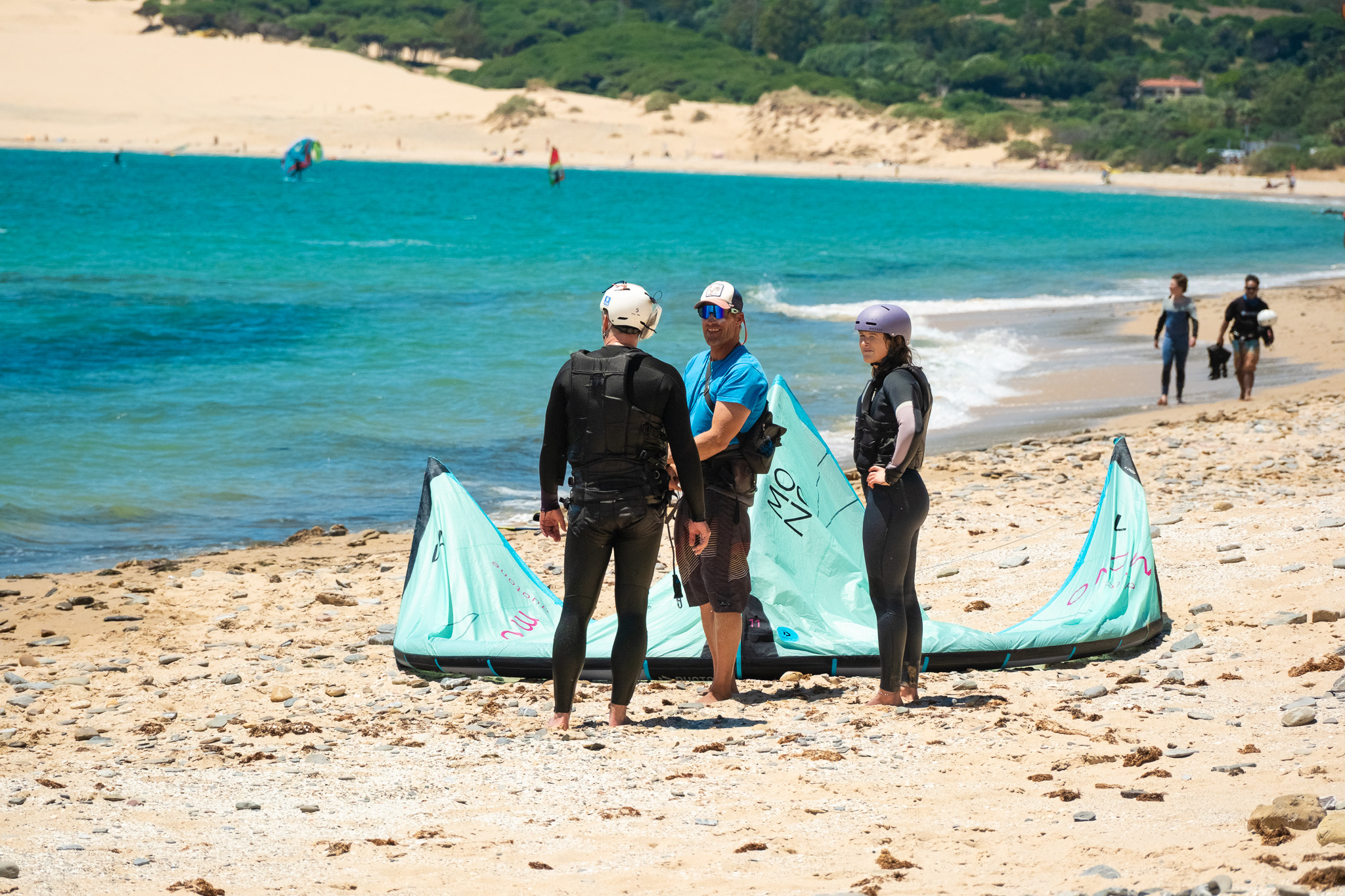
Will I learn faster with a private kitesurfing lesson?
It can give you more individual practice and immediate feedback, but it does not automatically make you progress faster. Kitesurfing still takes repetition.
If you are unsure which format would suit you, read Kitesurfing Lesson Formats in Tarifa: Private, Semi-Private or Group?.
If you're choosing between private and semi-private lessons, compare the formats before booking so the amount of instructor attention matches how you want to learn.
Will it take me longer to learn kitesurfing if I start later in life?
Maybe, but age alone cannot tell us how quickly you will learn.
A 60-year-old with years of windsurfing, sailing or board-sport experience may understand parts of the wind, balance or water environment quickly. Someone younger with no relevant experience starts from a different place.
For some older beginners, the main difference is how much useful repetition they can do before they need a break. That may mean fewer attempts in one session, but fewer controlled attempts can be more valuable than continuing once technique starts to fall apart.
We would not give somebody a different fixed number of hours simply because they are 50 or 60.
If you want the full breakdown of realistic learning timelines, read How Long Does It Take to Learn Kitesurfing in Tarifa?.
Your age may influence the rhythm.
It does not determine the outcome.
When should I wait before starting kitesurfing?
There are situations where the right answer is not, “Just give it a go.”
What if I have an injury or medical concern?
If you have a significant knee, back, shoulder or other medical issue that could affect the lesson, tell us before booking.
We can explain what the lesson involves, but a kitesurfing instructor cannot give you medical clearance. If you are unsure whether an existing condition makes kitesurfing appropriate for you, speak with a healthcare professional first.
What if I'm not comfortable in the water yet?
As the lesson progresses, there will be moments when you are floating, body dragging or recovering your board rather than standing comfortably on the bottom.
If deeper water creates a level of fear that prevents you from listening or staying calm, it may make sense to work on that confidence first or talk with the team about what the first stages involve.
What if the conditions or my energy are not right?
Being ready to learn does not mean every day in Tarifa will be right for your lesson.
If the wind is too strong, too gusty or the water is not suitable for your stage, the smart decision may be to change the time, adapt the session or wait for another window.
The same applies when fatigue starts affecting technique.
Sometimes the best coaching decision is to stop at the right moment.
How should I plan my first kitesurfing lessons in Tarifa if I'm over 50?
Start by being honest about where you are now.
You do not need to arrive at the Liam Pro Center already knowing whether you are fit enough, need a private lesson or can handle Tarifa's wind. That is part of what we help you figure out.
Before your first lesson, it helps if we know:
-
whether you have kitesurfed before
-
whether you have experience with windsurfing, sailing, surfing or other board sports
-
how comfortable you are in open water
-
whether there is an injury or physical limitation we should know about
-
how many days you will be in Tarifa
-
whether you are learning alone or with someone else
From there, we can recommend a lesson format and look for conditions that make sense for your starting point.
You do not need to prove anything on your first day. The first objective is simpler: make the kite, the wind and the safety system feel more predictable than they did when you arrived.
At 50, 60 or beyond, the question is not whether you can learn exactly like someone who is 25. It is whether the conditions, pace and lesson format can give you a useful way to learn. Tell us a little about your starting point and your dates, and we can help you work that out.
Explore our Kitesurfing Lessons in Tarifa, or tell the team your dates, experience and any concerns so we can help you choose a sensible first session.
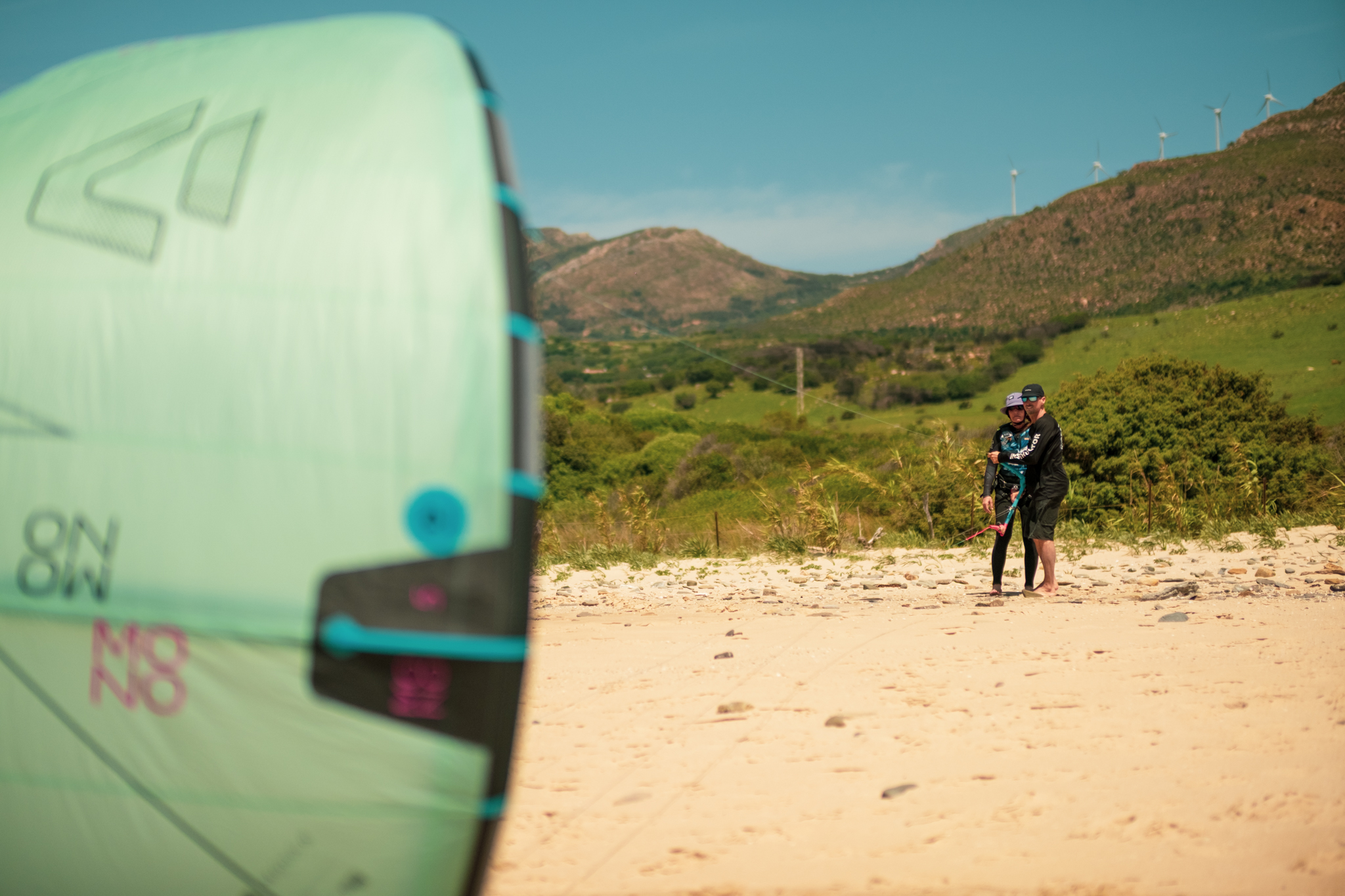
Frequently asked questions
Is there a maximum age limit for learning kitesurfing? +
There is no universal maximum age that automatically rules somebody out from learning kitesurfing.
What matters more is individual mobility, water confidence, recovery, general health and whether the lesson can be adapted appropriately. If you have a medical condition or significant injury, speak with a healthcare professional and tell the school before booking.
Is it better to learn kitesurfing over several days if I'm older? +
Often, spreading lessons across several days can help because it gives your body and mind time to recover and absorb what you practised.
There is no fixed schedule that works for everyone. Wind conditions, available time, fatigue and how quickly the skills settle all affect the best rhythm.
What should I tell the kitesurf school before my first lesson if I am over 50? +
Tell the team whether you are a complete beginner, what previous water or board-sport experience you have, how comfortable you are in open water, how many days you will be in Tarifa and whether there is any injury or physical limitation they should know about.
That gives the instructor much more useful information than your age alone.
Latest News
- Levante vs Poniente for Wingfoil Lessons in Tarifa
- Levante vs Poniente for Kitesurf Lessons in Tarifa
- Is September a Good Month to Learn Kitesurfing or Wingfoiling in Tarifa?
- Am I Ready to Rent Kitesurfing Gear in Tarifa? (Or Do I Need More Lessons?)
- Wingfoiling for Kids in Tarifa: What Parents Should Know Before Booking
- Kitesurfing or Wingfoiling for Kids in Tarifa: Which Should They Try First?
- What Will You Learn in Wingfoil Lessons in Tarifa? From Day One to Independent Riding
- Is Tarifa a Good Place to Learn Wingfoiling? What We Tell Beginners Before They Book
- What Happens in Your First Wingfoil Lesson in Tarifa? We Get Asked This a Lot
- Am I Too Old to Learn Kitesurfing at 50 or 60 in Tarifa?