
Am I Ready to Rent Kitesurfing Gear in Tarifa? (Or Do I Need More Lessons?)
You’ve had lessons and can get up on the board. Or you used to kite regularly, but it’s been a while. Now you’re heading to Tarifa and wondering: should I rent gear, or book another lesson first?
The answer depends on what you can do consistently today, in the conditions you’re about to ride. Staying upwind, recovering your board and handling the kite safely matter more than how many lessons you’ve taken or what you could do a few years ago.
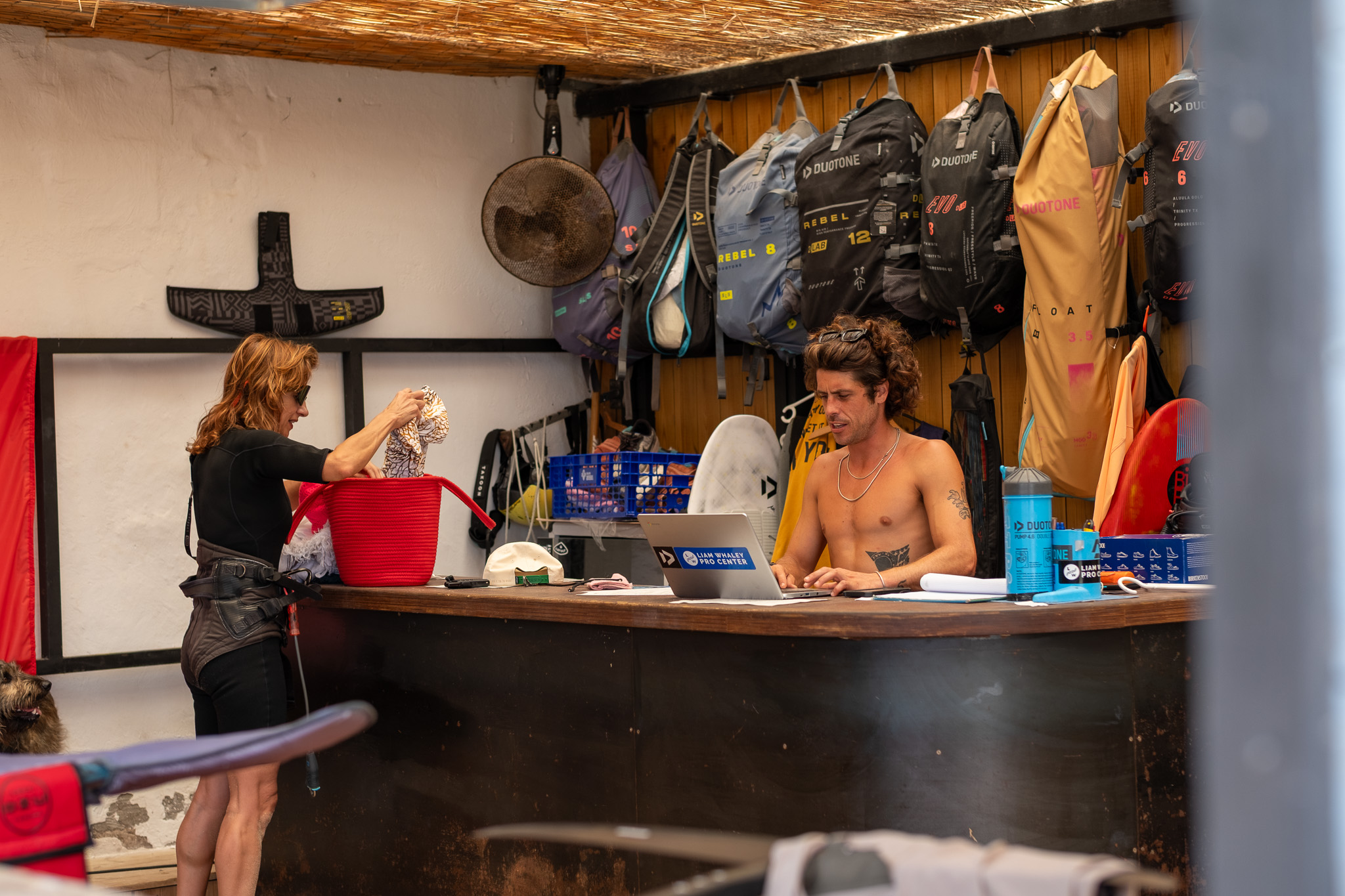
At Liam Whaley Pro Center, we check your level against the conditions at Valdevaqueros before approving a rental.
Not sure if you’re ready to rent?
Tell us when you last kited, what you’re comfortable doing and your dates in Tarifa. We’ll help you work out whether rental or another lesson makes sense.
1. Can you consistently stay upwind?
If you can’t comfortably and consistently ride upwind, you’re not ready to rent. You need to be able to ride in both directions and hold your position, rather than lose ground with every run and walk back up the beach.
We see this often at the center: someone arrives at the desk saying they can ride upwind, make transitions and even do small jumps. Once they’re on the water, though, they struggle with the basics they described.
Be honest with yourself and with us about where you are today. A few successful runs aren’t the same as comfortably staying upwind throughout your session. If that skill isn’t consistent yet, keep working on it with an instructor before renting.
For the stages leading up to this point, see our beginner kitesurfing progression guide.
2. Can you recover your board without your instructor?
Falling off is part of kitesurfing. Can you get back to your board while keeping control of the kite, without waiting for your instructor to bring it to you?
You need to be comfortable body dragging upwind to recover your board. You need to be able to do it during a session without someone talking you through every movement.
In Tarifa, chop can make your board harder to spot between the waves. You need enough control of the kite to watch where the board is, rather than spending the whole time looking up at the kite.
If your instructor still regularly retrieves your board for you, this is a skill to work on before renting.
3. Can you manage your kite, including relaunching it?
Can you prepare your kite and check your setup, or has your instructor always done that part for you? You need to understand the equipment you’re taking onto the water and how its safety systems work.
Rental gear may feel different from the setup you learned on. If you’re unfamiliar with the bar or quick release, ask us to go through it with you before launching.
For launching and landing, you need to stay in control of the kite and communicate clearly with the person assisting you. Being independent doesn’t mean launching or landing alone.
And if your kite falls onto the water, can you relaunch it without your instructor talking you through each step? If you still depend on that guidance, practise with an instructor before renting.
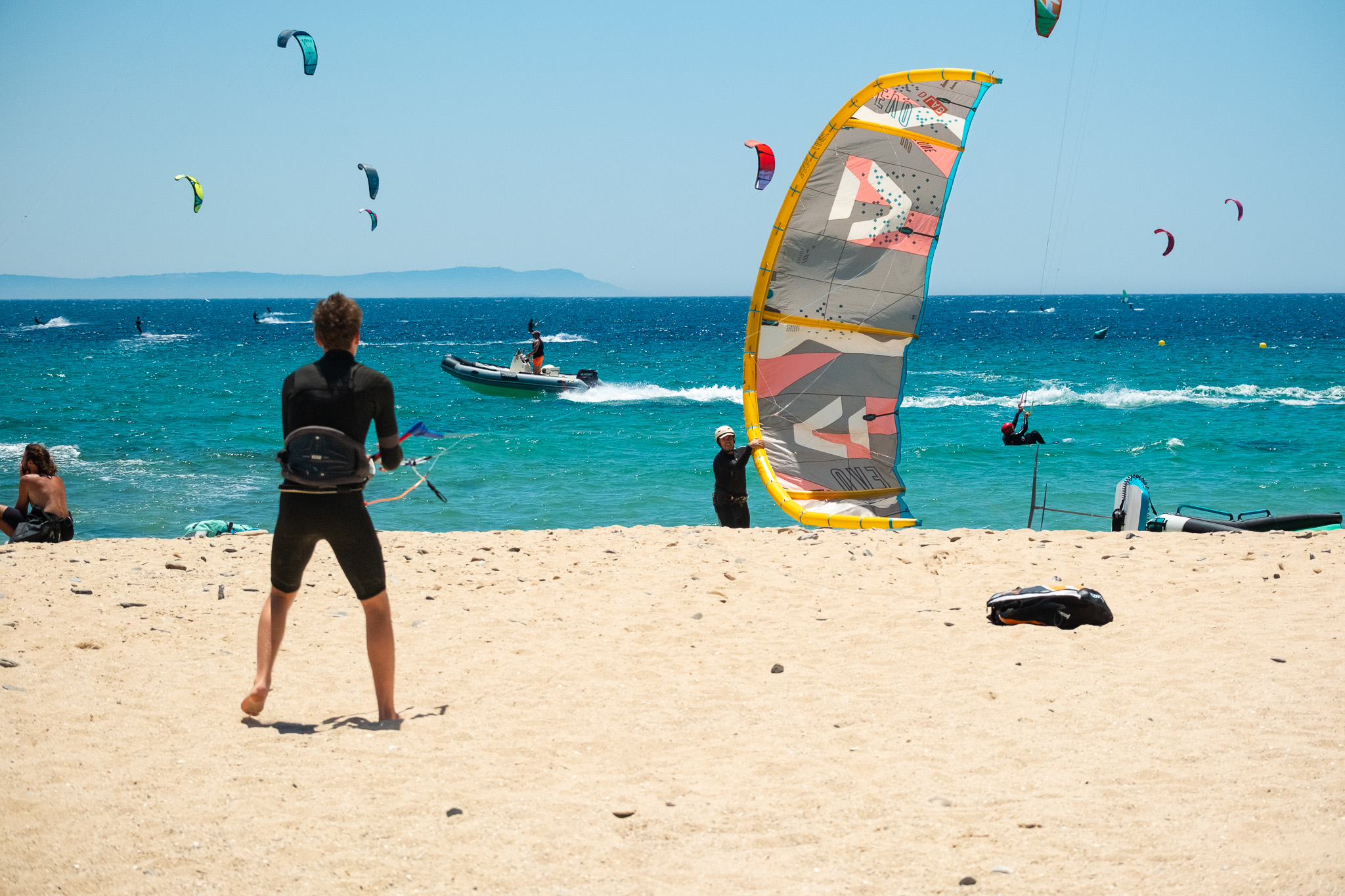
At Valdevaqueros, beach space can be limited, so preparation, launching and landing deserve just as much attention as your riding. We help with setup and launching as part of our kitesurf rental service.
4. Have you ridden in conditions like Tarifa’s?
If you’ve only kited on flat water with steady wind, we recommend starting with a lesson in Tarifa. You already have skills to build on, but you’ll need time to get used to the spot.
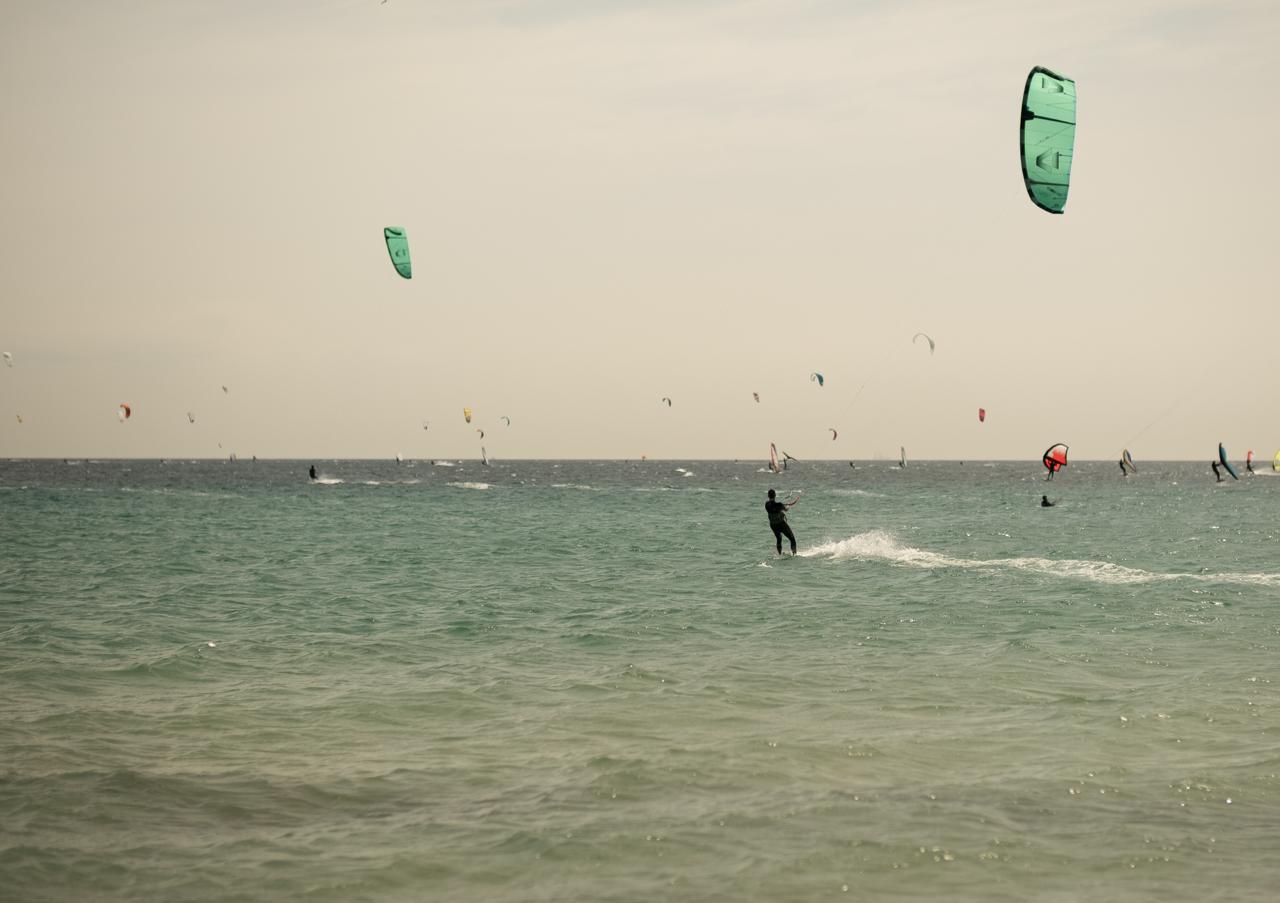
In gusty conditions, particularly with Levante, you can feel short of power one moment, comfortably powered the next, then pulled much harder by a gust. Add chop under your board, and staying upwind takes adjustments you may not have needed on a sheltered lagoon. Waves and shore break can make getting out more demanding too.
Perhaps you did your course on a 10 or 12 m² kite and felt comfortable by the end. That experience doesn’t necessarily prepare you for a much larger kite in light wind or a small kite on a strong-wind day.
A bigger kite in light wind
On a light-wind day, you might be using a 14 or 15 m² kite. Keeping it flying and getting it back off the water can take skills you haven’t had much chance to practise.
A relaunch that felt straightforward in stronger wind may be difficult when the wind drops. If you can ride but can’t reliably relaunch in those conditions, a lesson is the right next step.
A smaller kite in strong wind
A 6 or 7 m² kite can feel much quicker and more responsive than the larger kite you learned on. In strong, gusty wind, that demands control you may not have developed yet, especially with chop or waves to manage at the same time.
These sizes are examples, not a guide to choosing your kite. The right setup depends on the rider, equipment and conditions.
You might be ready to rent on a day with familiar, steady wind and need a lesson on another day. When you speak to us, describe the spots, wind and kite sizes you’ve ridden. An instructor can help you get used to what’s different before you head out independently.
For more local context, read about how Tarifa’s conditions affect your session.
5. Does your current riding match the level you remember?
Maybe you remember riding upwind in your last kitesurfing lesson. You’d even started working on transitions or your first jumps. But that was months ago, perhaps years ago, and you haven’t been on the water since.
Now you’re coming to Tarifa and wondering whether you can pick up where you left off.
A break doesn’t automatically mean you need to start again. We’ll want to know what you could comfortably do when you stopped and what feels uncertain now. Is it handling the kite, recovering your board, staying upwind, or getting back out there?
Giovanni returned after a two-year break following an accident and booked 10 hours of private lessons. In his Google review, he wrote:
“My instructor brought me back into the sport in a very professional, safe, and confidence-building way.”
For some returning riders, a refresher is mostly time on the water with an instructor watching and giving pointers where needed. If you’ve brought your own equipment, the session can also help you get comfortable with that setup again.
One lesson may be enough, depending on how you ride. You might feel nervous and find that your riding comes back quickly. An instructor can check how you’re doing as you settle in.
Our kitesurf lessons are tailored to your level, so we can focus on what you need to practise now.
If you’re deciding how much instructor attention you need, compare private, semi-private and group kitesurf lessons.
What if I’m not sure?
You don’t need to arrive with a definite answer. Tell us about your experience, and we’ll help you work out whether rental or a lesson makes sense for your first session.
If we need to check your level, we’ll look at how you prepare and handle the kite, then how you ride in the conditions that day. If you’re not ready, we’ll explain what needs work.
Bring your kitesurfing certificate if you have one. We prefer riders to have proof of their level, but if you don’t, we can assess your riding directly.
Rescue support doesn’t replace instructor supervision. It’s there for when something goes wrong.
Still unsure whether to rent or take a lesson?
Tell us when you last kited, where you’ve ridden and your dates in Tarifa. We’ll help you choose the right starting point.
KEEP EXPLORING
Related guides for your kitesurfing trip to Tarifa
Understanding the forecast
How to Read Windguru for Kitesurf Lessons in Tarifa →
Understand wind speed, gusts and direction before your trip, and what those numbers can mean for your session in Tarifa.
Planning your trip
Planning a Kitesurfing Trip to Tarifa →
Plan your flights, transport, accommodation and what to pack before your kitesurfing trip to Tarifa.
Latest News
- Am I Ready to Rent Kitesurfing Gear in Tarifa? (Or Do I Need More Lessons?)
- Wingfoiling for Kids in Tarifa: What Parents Should Know Before Booking
- Kitesurfing or Wingfoiling for Kids in Tarifa: Which Should They Try First?
- What Will You Learn in Wingfoil Lessons in Tarifa? From Day One to Independent Riding
- Is Tarifa a Good Place to Learn Wingfoiling? What We Tell Beginners Before They Book
- What Happens in Your First Wingfoil Lesson in Tarifa? We Get Asked This a Lot
- Am I Too Old to Learn Kitesurfing at 50 or 60 in Tarifa?
- Is Tarifa a Good Place for Kids to Learn Kitesurfing? Age, Safety and What Parents Should Know
- Kitesurfing vs Wingfoiling: Which Should You Learn in Tarifa?
- Private, semi-private or group wingfoil lessons in Tarifa: which should you choose?