
Is Tarifa a Good Place to Learn Wingfoiling? What We Tell Beginners Before They Book
Yes. Tarifa can be a very good place to learn wingfoiling, but not because every windy day is beginner-friendly.
From the beach, Tarifa can look intense. You see strong wind, experienced riders and boards flying above the water. If you have never tried wingfoiling before, it is reasonable to wonder whether this is really the right place to start.
The answer depends less on how much wind Tarifa has and more on whether the conditions match what you need to learn that day.
A beginner needs usable wind, manageable water, enough space and depth, and equipment suited to their weight and level. At Valdevaqueros, those factors can change throughout the day.
That is why we do not simply look at a forecast and say, “There is wind, so the lesson is on.”
Sometimes we change the equipment. Sometimes we change the exercise or lesson time. And sometimes waiting for a better learning window is the smarter decision.
More wind does not automatically mean better learning conditions.
What matters is whether the conditions help you understand what you are doing.
Is Tarifa actually good for complete wingfoil beginners?
Yes, it can be.
One of Tarifa's biggest advantages is that wind is a regular part of life here. For somebody learning a wind sport, that creates many opportunities to practise.
But not every day is equally useful for a complete beginner.
Some days the wind is steady enough that you have time to feel what the wing is doing and make small corrections. On others, stronger gusts or more movement in the water can add difficulty to something that is already new.
A good beginner session is one where you can make an attempt, understand what happened, listen to your instructor and try again without spending the whole session reacting to the environment.
At Valdevaqueros, we can look at the actual wind and water from the beach and decide what makes sense for your level.
You can see how we structure our Wingfoil Lessons in Tarifa around different levels and conditions. If you want to understand how those lessons progress beyond the first session, our wingfoil progression in Tarifa guide follows the course from wing control and first rides through upwind riding, foil flights and independent sessions.
So instead of asking: “Can I handle Tarifa?”
A more useful question is: “Can today's conditions be matched to what I need to learn?”
That is the question that matters.

What conditions are best for learning wingfoil?
A good wingfoil location is not simply somewhere with a lot of wind.
For a beginner, the environment needs to give you enough stability and repetition to understand what is happening.
Do beginners need consistent wind?
Consistent wind helps because it makes the wing easier to read.
When the power stays relatively predictable, you have more time to understand how changes in your hands and body position affect the wing.
That does not mean you need the strongest wind available. Too much power or large gusts can make the wing more reactive and give you more to manage at once.
For a beginner, consistent does not mean strongest.
It means having enough usable power to practise without the wind becoming the main problem.
Do you need perfectly flat water?
No.
Flatter water can make balance easier at the beginning, but perfect flat water is not a requirement.
Small chop is something you can gradually adapt to. The difficulty increases when the water movement demands so much attention that you stop focusing on wing control, stance or direction.
Why do space and water depth matter?
A foil extends below the board, so you need enough water for it to move safely.
You also need room. Beginners drift, stop, fall, reset and sometimes travel farther downwind than expected.
A useful learning environment therefore combines: wind, water, depth, space, equipment and support.
That is a better way to judge a beginner spot than wind strength alone.
Is Tarifa's strong wind an advantage or a disadvantage for beginners?
It can be either.
More wind helps only until it starts making the skill you are learning harder to understand.
The goal is not to handle the strongest conditions Tarifa can produce. It is to have enough usable wind to feel how the wing works, repeat movements and make corrections.
Is Levante good for learning wingfoil?
It can be.
Levante is Tarifa's easterly wind and it can be strong and gusty. When the difference between lighter and stronger moments becomes large, the wing can feel more reactive.
That does not make Levante automatically unsuitable for beginners.
We look at the actual strength, the gusts, your level and the skill you are practising. Sometimes a smaller wing or a different exercise makes the session work. Sometimes a different time is better.
If the wind is making useful repetition difficult, there is no benefit in forcing the session simply because there is plenty of it.
Is Poniente easier for wingfoil beginners?
Poniente often feels steadier than strong Levante, which can make the power in the wing easier to read. But Levante and Poniente offer different advantages for beginner wingfoil lessons, depending on the gusts, water conditions and skill you're practising.
But it is not automatically easy. At Valdevaqueros, Poniente can build through the afternoon as the thermal wind develops, and the water can become choppier.
A forecast that looks light in the morning may produce a very different session later.
The best wind for a beginner is not a particular wind name.
It is the wind that lets you understand and repeat the skill you are working on.

Does choppy water make wingfoiling harder to learn in Tarifa?
Yes, it can.
Balance is already one of the main things your body is trying to understand. Chop adds movement underneath the board, so every wave becomes another adjustment.
That does not mean you cannot learn unless the water is flat.
The question is whether the water state is manageable for the skill you are practising.
At Valdevaqueros, if the water becomes more demanding, we may change the exercise rather than force the same progression we would use in calmer conditions.
The objective is not to remove every challenge. It is to keep the combination of wind, water and exercise manageable enough that you can still learn from each attempt.
If you want to see how those foundations are introduced in a real session, read What Happens in Your First Wingfoil Lesson in Tarifa?
Why does Valdevaqueros work as a wingfoil learning spot?
Valdevaqueros gives us several things that matter for teaching: open space, enough depth for the foil, direct access to the water and the ability to watch the conditions develop in real time.
Beginners rarely travel exactly where they intend. You may drift downwind, fall, stop and reset several times. Having open water gives you room for that process.
Depth becomes important once the foil is working beneath the board. You need enough clearance below you for the equipment to function properly.
The Pro Center is also directly on the beach. That matters because a forecast only tells us part of the story.
From the center, we can see what the wind and water are actually doing. If the wind changes, we can change the wing or adjust the setup rather than treating the equipment chosen at the start as fixed.
As you progress farther from shore, instructors remain connected with students on the water, and the safety boat provides another layer of support when needed.
“We have experienced instructors, radio helmet systems and a rescue-boat connection, so we can act quickly.”
Matteo Micheletta, Head of Instructors
Sometimes a student simply needs help getting back into position so they can continue practising instead of spending all their energy returning to where they started.
That combination of space, depth, direct observation and support is what makes the location useful for teaching.
How much difference does the right wingfoil equipment make for beginners?
A lot.
The same wind can feel completely different depending on the wing, board and foil you are using.
A larger, higher-volume board gives a beginner more flotation and stability, which means more attention can go toward stance and wing control.
The wing needs to provide enough power to move without feeling overwhelming. The right size depends on the wind, your weight and the skill you are practising.
The foil matters too. Different foils change how stable and reactive the board feels once lift begins.
For a beginner, the priority is control and predictability rather than speed.
That is why a number on a forecast does not tell you everything.
Twenty knots with one setup can feel very different from twenty knots with another.
The useful question is: “Can we match the equipment to this wind and this rider in a way that makes the next skill easier to learn?”
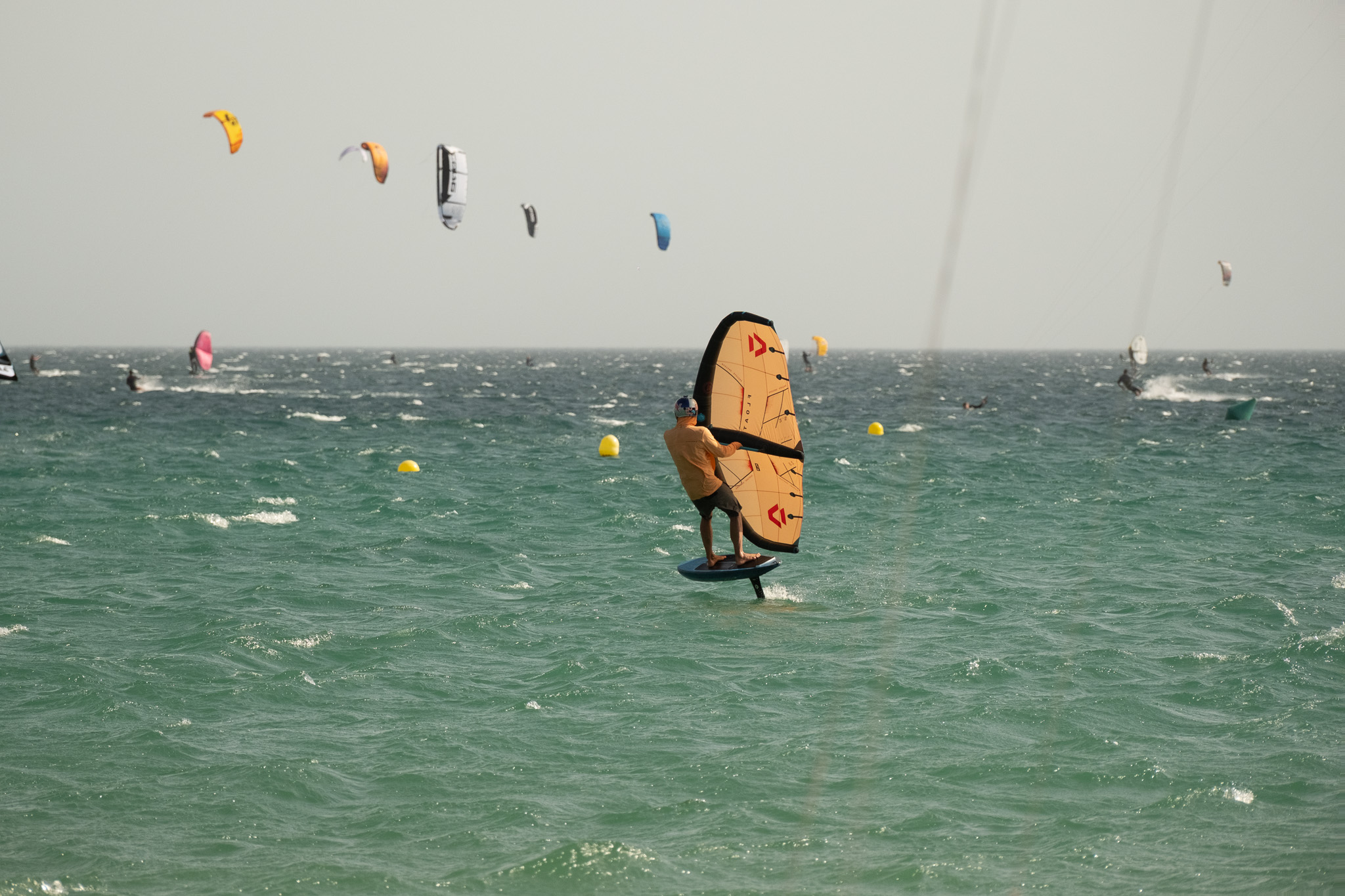
What happens if the conditions aren't right for your lesson?
Sometimes the best decision is to change the plan.
Wingfoiling depends on the wind, so a lesson cannot always be treated like an indoor activity that begins at exactly the same time regardless of conditions.
At Valdevaqueros, Poniente may build later in the afternoon. Levante can be stronger or gustier than a simple forecast number suggests. The water state can change too.
If the wind is lighter than expected, the useful lesson window may be later. If it becomes stronger, we may be able to adapt the equipment or change the exercise.
And if the conditions are simply not productive for your level, waiting can be the better decision.
The booked time should not be more important than the quality of the learning window.
A later session in suitable conditions can be much more useful than spending the original time fighting wind or water that makes every movement harder to understand.
Do I need to understand the Tarifa wind forecast before I book?
No.
You can look at Windguru if you are curious, but you do not need to become a Tarifa wind expert before booking your first lesson.
Forecast models are useful, but local conditions still need interpretation.
Levante can be stronger and gustier than the headline number suggests. Poniente can build through thermal wind later in the day. Instructors also look at what is actually happening on the beach and in the water.
The most useful information you can give us is:
-
when you will be in Tarifa
-
whether you have wingfoiled before
-
how many days you have available
-
how flexible you are around lesson times
Your job is to tell us when you are here. Our job is to work out whether the conditions make sense for what you need to learn.
Who might find learning wingfoil in Tarifa more challenging?
Tarifa can work very well for complete beginners, but it is not the same learning environment every day.
You may find it more demanding if you are very uncomfortable in open water, expect perfectly flat conditions every session or have only one fixed two-hour window with no flexibility.
That does not automatically mean Tarifa is the wrong place for you.
It means those details are useful for the instructor to know before the lesson.
The amount of instructor attention can also change depending on the lesson setup, so if that matters to you, compare our private, semi-private and group wingfoil lesson formats.
Tell us if open water makes you nervous, if you have never done a wind or board sport before, if your availability is very limited or if there is anything physical that may affect how you learn.
The less flexibility you have, the more useful it is for us to know that before you book.
For parents, there are a few extra things to consider. Our Wingfoiling for Kids in Tarifa guide explains how we look at age, swimming confidence, equipment and wind before planning a child’s session.
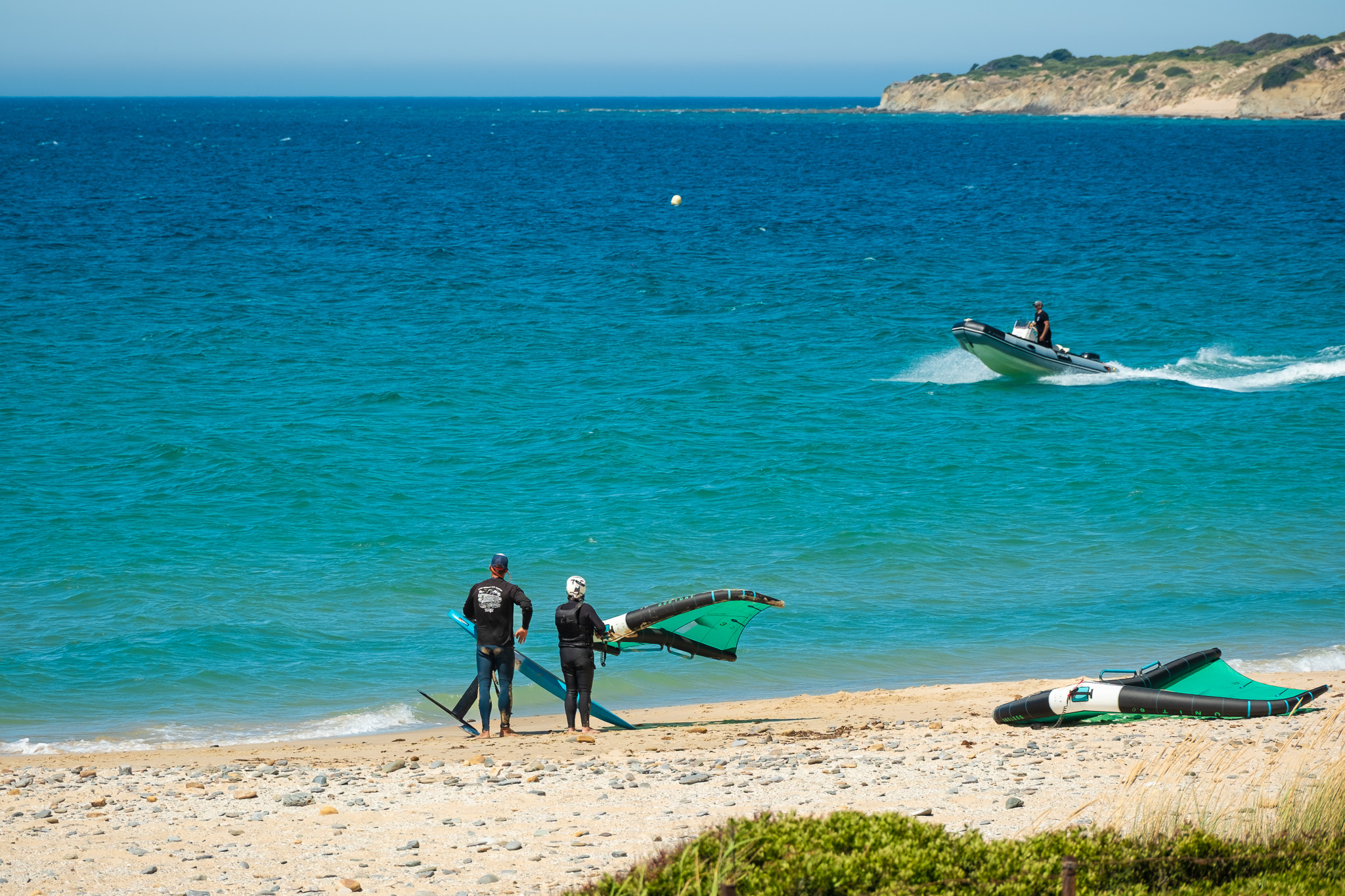
What should I tell the wingfoil school before booking in Tarifa?
You do not need to arrive with the perfect plan.
Before your lesson, it helps if we know:
-
whether you are a complete beginner
-
previous wind, board or water-sport experience
-
how comfortable you are in open water
-
your approximate weight
-
the dates you will be in Tarifa
-
how many days you have available
-
whether your lesson times are flexible
That gives us useful information for choosing equipment and looking at the conditions around your stay.
Planning your first wingfoil lesson in Tarifa?
Tell us your dates, experience and how long you'll be in Tarifa. We'll help you work out what kind of first session and learning window make sense for your stay.
Prefer to talk? Call us at +34 681 286 516.
Frequently asked questions
Can a complete beginner learn wingfoil in Tarifa with no previous water-sport experience? +
Yes. You do not need previous kitesurfing, windsurfing, surfing or other board-sport experience to start wingfoiling. Previous experience can make balance or understanding the wind feel more familiar, but it is not a requirement.
If you are still deciding which wind sport to start with, see our comparison of kitesurfing vs wingfoiling in Tarifa.
Is Tarifa too windy for beginner wingfoiling? +
Not necessarily. Tarifa can have very strong wind, but beginner suitability depends on the actual wind strength, gusts, water state, equipment and what you are learning that day.
The goal is not to put beginners out in the strongest conditions, but to find a useful learning window.
Is Levante or Poniente better for a first wingfoil lesson? +
Neither is automatically better. Strong Levante can be more gusty and reactive, while Poniente often feels steadier but can build later in the day and create more chop.
What matters most is how the actual conditions match your level and the skill you are practising.
Should I wait for the wind forecast before booking wingfoil lessons in Tarifa? +
No. You can book around the dates you will be in Tarifa and let the school interpret the forecast and local conditions.
Forecast apps are useful, but they do not always show exactly what the wind and water will be doing at Valdevaqueros.
How much flexibility should I leave for my wingfoil lesson time in Tarifa? +
As much as reasonably possible. Wind conditions can change during the day, so having some flexibility around lesson times gives the instructor more opportunity to choose a useful learning window rather than forcing the session into a fixed hour.
Latest News
- Levante vs Poniente for Wingfoil Lessons in Tarifa
- Levante vs Poniente for Kitesurf Lessons in Tarifa
- Is September a Good Month to Learn Kitesurfing or Wingfoiling in Tarifa?
- Am I Ready to Rent Kitesurfing Gear in Tarifa? (Or Do I Need More Lessons?)
- Wingfoiling for Kids in Tarifa: What Parents Should Know Before Booking
- Kitesurfing or Wingfoiling for Kids in Tarifa: Which Should They Try First?
- What Will You Learn in Wingfoil Lessons in Tarifa? From Day One to Independent Riding
- Is Tarifa a Good Place to Learn Wingfoiling? What We Tell Beginners Before They Book
- What Happens in Your First Wingfoil Lesson in Tarifa? We Get Asked This a Lot
- Am I Too Old to Learn Kitesurfing at 50 or 60 in Tarifa?