Wingfoiling for Kids in Tarifa: What Parents Should Know Before Booking
Thinking about booking a wingfoil lesson for your child while you’re in Tarifa?
You probably have a few questions. Are they old enough? Will they enjoy it? And what can they actually learn in a few days?
The first lesson gives them a chance to find out. They’ll get their hands on a wing, try a few movements and start working on balance. They don’t need to fly on the foil for it to be a fun, worthwhile experience. Even without wind, there are useful things they can practise.
We’ve put this guide together with insights from Matteo Micheletta, our instructor manager at Liam Whaley Pro Center, to answer the questions parents ask us before booking. We’ll walk you through what to expect and help you work out what fits your child and your holiday.
Already have your dates?
Explore our wingfoil lessons, or send us your child’s age and experience. We’re happy to help you work out the right first session.
Prefer to talk? Call us at +34 681 286 516.
What age can children start wingfoiling?
Some children can try an introductory lesson around age six; others may be better suited to starting at eight or nine. Those ages give you a starting point for the conversation, rather than a fixed minimum for every child.
We also look at their size, how they feel in the water and whether they want to give it a go. A six-year-old, for example, might start with a beach introduction in light Poniente conditions. Going into the water is a separate step.
For a young child, learning to hold the wing and enjoying a few new movements can be enough for a first experience. A trial lesson helps them discover whether they like it and want to come back.
Does my child need to know how to swim?
Your child should be comfortable swimming before joining the water-based parts of a lesson. We teach in the open sea at Valdevaqueros, and falling off the board and getting back on are part of learning.
Tell us how they feel in the sea, even if they swim well in a pool. Flotation equipment and an instructor’s support help, but they don’t replace swimming ability.
If your child is still learning to swim, talk to us before booking a water session. A beach introduction with the wing may be a better place to start.
Is Tarifa a good place for my child to learn wingfoil?
Yes, when we choose the right conditions for their first steps. At Valdevaqueros, your child will be learning in the open sea rather than a sheltered lagoon. That means we plan around what the wind and water are doing that day.
A manageable Poniente breeze can give us room to introduce the wing and board gradually. Strong Levante or rougher water can change the plan. If you have a few possible lesson days, we’ll have more options than if everything has to fit into one afternoon.
And if there’s no wind? A child who’s just starting can still spend useful time getting familiar with the wing and practising balance. Our guide to learning wingfoil in Tarifa explains the spot in more detail.
How does the instructor stay in contact with my child?
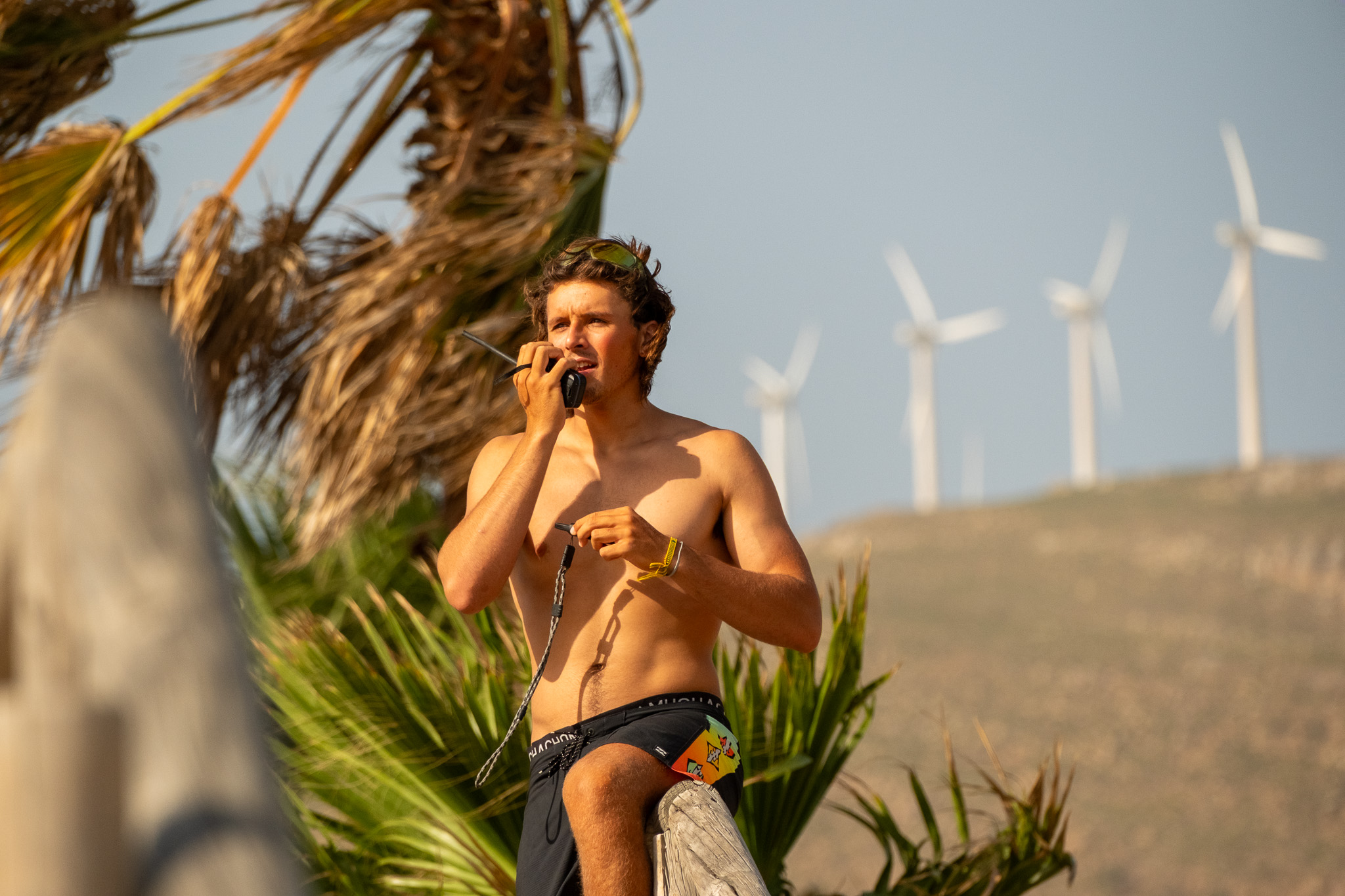
Your child wears a radio helmet or headset so they can hear the instructor while practising. The instructor can explain the next movement or give a correction, whether they’re nearby in the water or guiding from the beach.
Rescue support is included in our lessons. Our instructors also carry VHF radios to speak directly with the rescue boat at Valdevaqueros if help is needed.
That support is there throughout the lesson. We still choose the conditions and equipment around what your child can comfortably handle.
What happens during a child’s first wingfoil lesson?
Your child starts with the wing, practises balance and, when the conditions allow, begins moving on the water. Our guide to your first wingfoil lesson in Tarifa walks through the overall session. For children, we break it into small tasks with something clear to try each time.
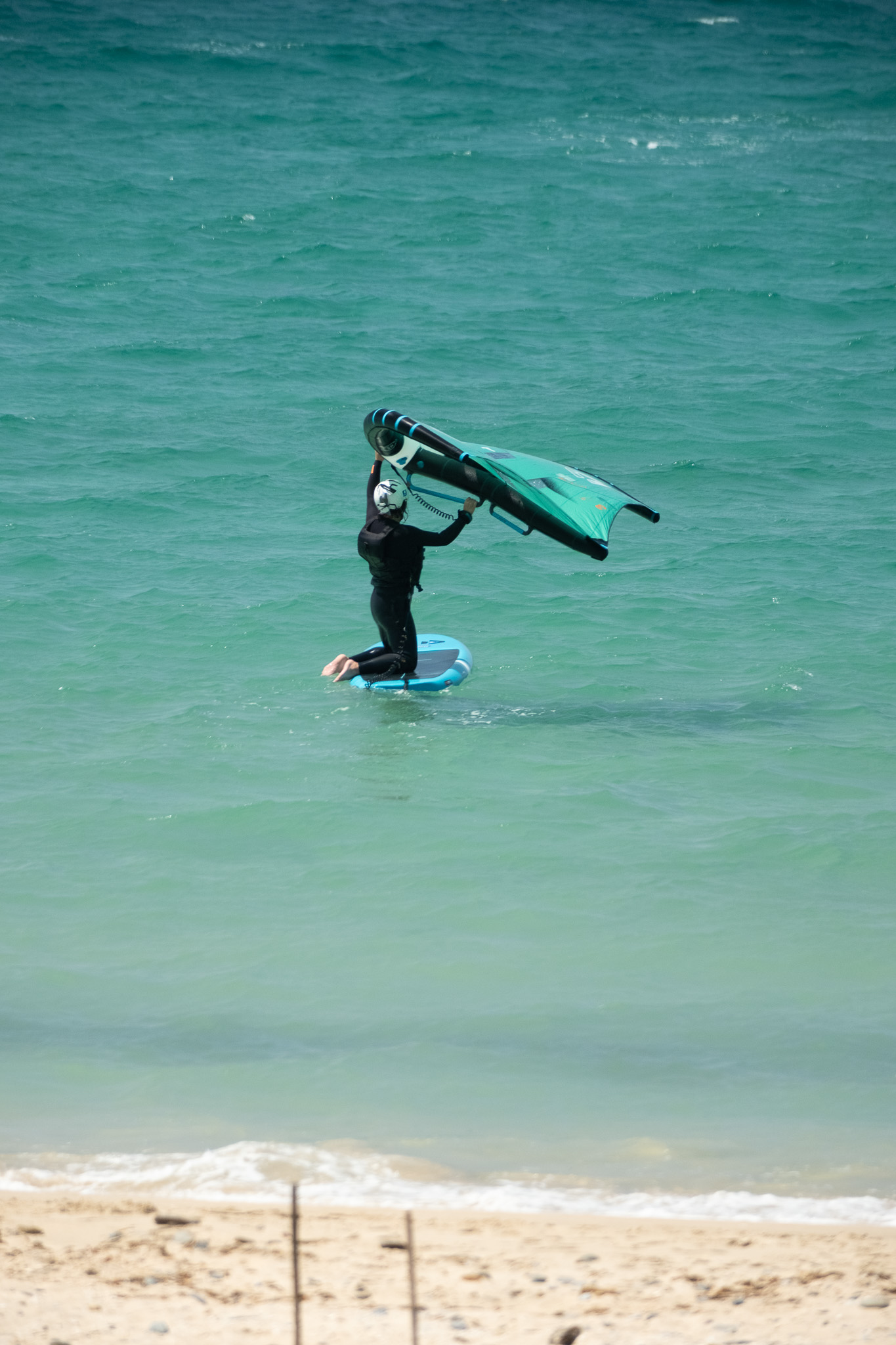
On the beach, they learn to hold the wing, change hands and position it in the wind. They get to practise while the instructor explains, then repeat the movement until it starts to feel familiar.
Will my child go into the water during the first lesson?
They can, if they’re ready and the conditions are suitable. Sometimes we start with a stand-up paddleboard, or SUP, secured to a buoy. Your child can try moving from their knees to standing without having to manage the wing at the same time.
They can then bring those skills together on a wingfoil board, with the instructor nearby. If the water conditions aren’t right, we keep the introduction on the beach or discuss another day.
Will my child stand up and ride in the first lesson?
They may start moving on the board and trying to stand in their first session. Some children get up quickly. Others spend more time on their knees, getting used to the wing and finding their balance.
Those first rides happen with the board floating on the water. Flying above it on the foil comes later, once your child has more control.
Do children use different wingfoil equipment?
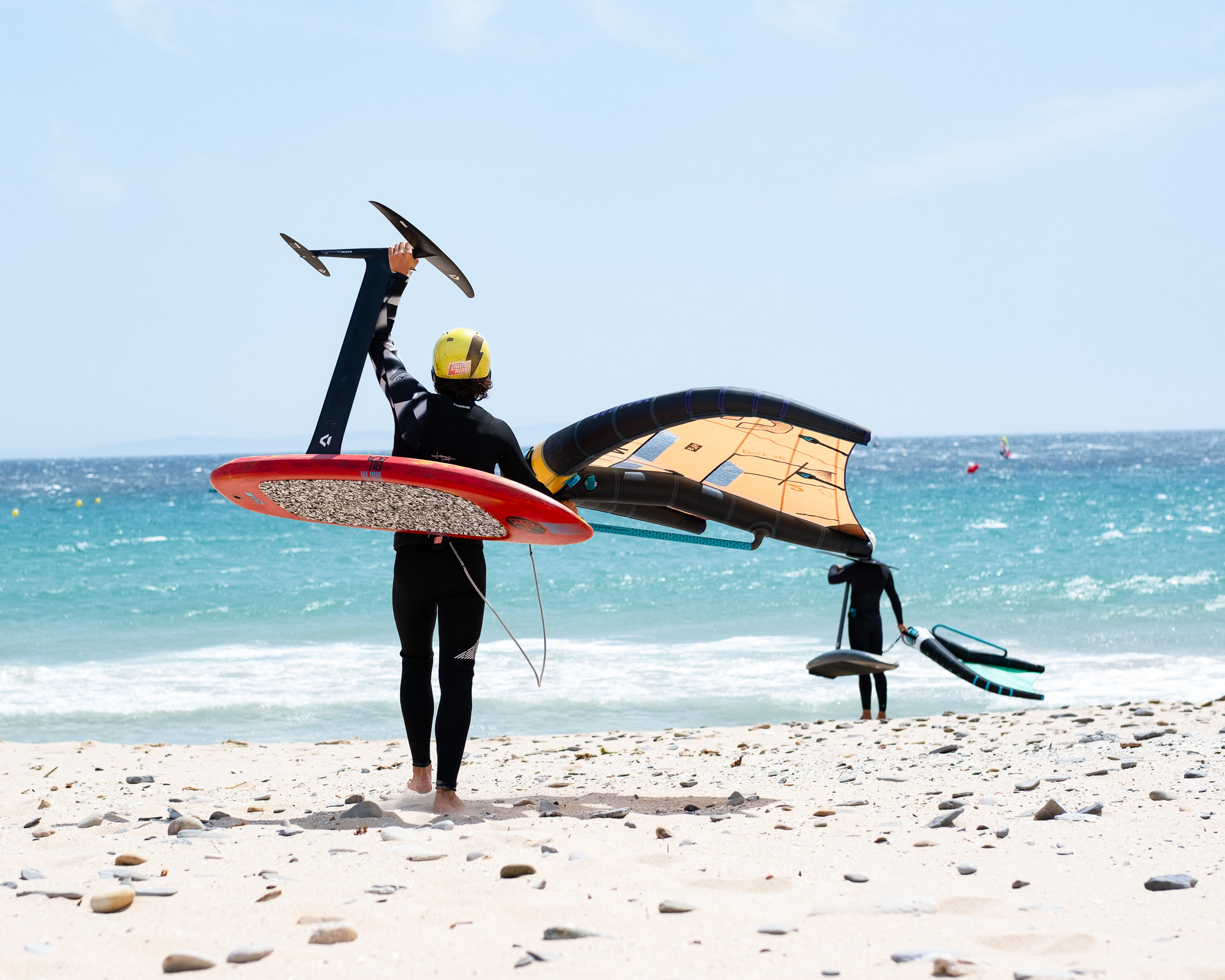
Yes. We choose a wing your child can lift and handle, and a board that helps them balance. They shouldn’t have to struggle with equipment that’s too big or awkward for them.
For introductory exercises, we may use a small wing of around 1.5–2 m². The size we choose depends on your child and the wind that day.
A buoyant board gives them more room to find their feet. We may start with a SUP or use a wingfoil board directly. We choose whichever works best for the exercise they’re learning.
How much wind is best for a child learning wingfoil?
Around 10–15 knots of steady wind can offer good conditions for introductory riding practice. It’s a useful reference, rather than a rule for every child. A smaller child and an older beginner may need different amounts of power, even when they’re learning the same thing.
We also look beyond the average wind speed. Gusts, wind direction and the water can make two days with the same forecast feel very different.
How much wind is too little for a child learning wingfoil?
Even at 0 knots, your child can practise parts of a wingfoil lesson. They can rehearse hand changes and work on kneeling, standing and balancing on a stable board when the water is suitable.
Without wind, they won’t feel the wing pulling them or use it to sail across the water. But for a child discovering the sport, there can still be plenty to learn.
As the breeze builds, they can start working on movement. Around 6–15 knots is a reference range for early wingsurfing practice. Learning to lift onto the foil generally needs more power. We’ll see how your child handles the wing and board before adding that challenge.
How much wind is too much for a child learning wingfoil?
Strong Levante winds of 35–50 knots are too much for very young beginners. We may also postpone at much lower speeds if the gusts or water make the lesson too difficult for your child.
Sometimes a smaller wing lets us practise on the beach. That doesn’t mean we should also head into the water.
If it’s too strong, we choose another day. Before booking, ask how weather-related changes will be handled during your stay.
How many wingfoil lessons does a child usually need?
After around three lessons, children are often standing on the board and making their first rides. They’ll still need help with direction and getting back to where they started.
One lesson gives your child a taste of the sport. Several sessions give them time to try again, remember what worked and get more comfortable on the board.
When will my child start turning and going upwind?
Your child learns wing control and hand changes in the first lesson, and may begin turning the board in the first or second session.
Going upwind takes more practice. They need to learn how to hold a course and make progress into the wind, so they don’t keep drifting farther down the beach. After around three sessions, this may still be one of the main things they’re working on.
How many lessons before my child flies on the foil?
There isn’t a fixed lesson count for a child’s first foil flight. Once they’re handling the wing and board, they start learning what to do as the board lifts out of the water.
We break the learning into three parts:
“One is stability, one is wing control and one is flying technique.”
— Matteo
Some children get their first short lifts quickly. Others need more practice before adding that extra movement. Staying in the air for a longer ride then means learning to control height, speed and balance together.
Is wingfoiling a good choice if my child only practises on holiday?
Yes. Wingfoiling is our first choice for children who will mainly practise on holiday. They can enjoy the wing and board during a short trip, then build towards longer rides and foil flights over future holidays.
Your child doesn’t need to master the sport in one week for the experience to be worthwhile. Making a first turn or riding a little farther gives them something to build on next time.
After a few months away, we start by seeing what they remember and what feels comfortable. A refresher can bring back familiar movements, check that the equipment still fits and help them take the next step.
Can my child practise with me after the course?
Yes, if they’re ready for the activities you’ll practise together and you have suitable equipment and conditions. Before the course finishes, ask the instructor what you can work on together and where your child still needs lessons.
If you have your own equipment, tell us what you use. Your wing might be too big for your child to handle, or your board might make balancing harder than it needs to be. We can help you work out whether it suits them.
Start with exercises they already know. Balance practice and hand changes can help keep things familiar between holidays. Riding and foiling need conditions and supervision that match what your child can do.
Can my children learn wingfoiling together?
Yes, siblings can learn together when they’re similar in weight and have compatible levels of experience and confidence. They get to practise, watch each other and share those first attempts.
If the wind becomes stronger, we may teach them one at a time so each child gets the attention they need. They can still share the experience without doing every exercise at the same time.
Our guide to private, semi-private and group wingfoil lessons in Tarifa explains how the options differ.
What should I know before booking my child’s wingfoil lesson?
You don’t need to work out the lesson format on your own. Send us a few details about your child and your holiday:
-
Age and approximate weight.
-
Swimming ability and confidence in the sea.
-
Previous experience with wingfoil, windsurfing, surfing or other board sports.
-
Travel dates and available days, including whether you can be flexible.
-
Who wants to join, especially if you’re bringing siblings or hoping to learn together.
Tell us what your child wants to try, too. Are they curious about the sport, or have they already started and want to learn to fly? That helps us plan the first session.
Before confirming, check how long the lesson lasts, what to bring and what happens if the weather changes.
Ready to get started?
Explore our wingfoil lessons, or send us your child’s age, approximate weight, experience and travel dates so we can help you plan the right first session.
Already discussed the options with us? You can book your child’s lesson directly above.
KEEP EXPLORING
More reading for your family’s trip to Tarifa
Choosing your sport
Kitesurfing vs Wingfoiling: Which Should You Learn in Tarifa? →
Compare the two learning experiences and decide which sport better fits your family, goals and time in Tarifa.
Learning kitesurfing
Kids’ Kitesurfing Lessons in Tarifa: What Parents Should Know →
See how age, weight, water confidence and Tarifa’s conditions affect a child’s first kitesurfing lessons.
Planning your stay
Planning a Kitesurfing Trip to Tarifa →
Plan travel, accommodation, transport and how to fit your family’s lessons around the conditions at Valdevaqueros.
Between lessons
What to Do in Tarifa When There’s No Wind →
Find ideas for family days, no-wind mornings and time away from the wing and board.
Latest News
- Wingfoiling for Kids in Tarifa: What Parents Should Know Before Booking
- Kitesurfing or Wingfoiling for Kids in Tarifa: Which Should They Try First?
- What Will You Learn in Wingfoil Lessons in Tarifa? From Day One to Independent Riding
- Is Tarifa a Good Place to Learn Wingfoiling? What We Tell Beginners Before They Book
- What Happens in Your First Wingfoil Lesson in Tarifa? We Get Asked This a Lot
- Am I Too Old to Learn Kitesurfing at 50 or 60 in Tarifa?
- Is Tarifa a Good Place for Kids to Learn Kitesurfing? Age, Safety and What Parents Should Know
- Kitesurfing vs Wingfoiling: Which Should You Learn in Tarifa?
- Private, semi-private or group wingfoil lessons in Tarifa: which should you choose?
- How Fit Do You Need to Be to Learn Kitesurfing in Tarifa?