
Is September a Good Month to Learn Kitesurfing or Wingfoiling in Tarifa?
Yes. September is a good month for many beginners to learn kitesurfing or wingfoiling in Tarifa, especially if you can stay flexible with your lesson days and times.
Tarifa is still warm and active, but the beach is generally less crowded than in August. That gives students more room in the teaching area, and it can give our instructors more flexibility to organize the week around your level and the conditions.
What September does not give you is a guarantee of easy wind every day. You can get steady Poniente, stronger or gustier Levante, waves, or a day with too little wind for the next stage of your course. That matters more if you are coming for three fixed days than if you have a week or longer and are happy to combine your lessons with the rest of Tarifa.
Our Instructor Manager, Matteo Micheletta, normally recommends September to complete beginners, solo travelers and couples who want to learn without the full August crowds. With fewer people on the beach, there is often more room to teach and more flexibility to adapt sessions around the student and the conditions.
That flexibility matters because learning in Tarifa does not follow a fixed daily schedule. You might have an ideal Poniente day, a stronger Levante session, some waves, or a day when the wind does not suit the next step in your progression. September works particularly well for people who can give themselves several possible lesson windows and let the week develop around the forecast.
In other words, it is a good month if your goal is to have a strong learning trip and make the most of the conditions you get, rather than arrive with a fixed milestone that has to happen on a specific day.
Planning a September trip to Tarifa?
Tell us your travel dates, experience and which sport you'd like to learn. We'll help you plan your lessons around the wind and conditions in Tarifa.
Prefer to talk? Call us at +34 681 286 516.
What was it like for other students?
Janwillem spent a week taking lessons in September, with the weather deciding when he could go out:
“With a full week of lessons when the weather allowed it.”
For Kim, it was her first time kitesurfing. She took two hours of lessons a day for five days. She had fun, but found the conditions challenging:
“The conditions are quite challenging for beginners, due to the wind and other factors. It was incredibly fun!”
Translated from German by Google.
Bene came with two friends for a ten-hour kiteboarding course. They could see their progress as the lessons went on:
“We were taught everything very well from the beginning, and we saw our progress day by day.”
Translated from German by Google.
Johan was also learning as a beginner. His review focuses on how he felt during the lessons:
“As a beginner, I felt safe and supported while building my confidence on the water.”
Gav took lessons with Lenny and Enrique and wrote about getting onto the board:
“Lenny and Enrique were excellent instructors - and managed to get us up on our boards quickly and efficiently…”
Antonio tried wingfoil with his children:
“…both my children and I had a great time in the Wingfoil classes…”
Translated from Spanish by Google.
September can be better than peak summer for beginners (July and August)
In September, there are usually fewer people on the beach than in August. There's more room to learn, and it's often easier to find a lesson time that works with the wind.
A couple Matteo taught came for ten days to learn kitesurfing from zero. They booked semi-private lessons together. One day, there were enough instructors free to give each of them a private session instead. It worked out that way because there was time and space to do it.
If you're deciding whether to learn on your own or with someone else, our guides to kitesurf lesson formats and private, semi-private and group wingfoil lessons explain how the sessions work.
There's also a bit more time to talk between lessons. Say you kept falling when you tried to get onto the board. Afterward, you can talk it through with your instructor: what was happening, what to change, and what to try in the next session.
With more space and often more instructors available, there's more flexibility to adapt the lesson. Say a strong Levante day makes getting onto the board too difficult for your level. If the conditions are suitable for teaching, your instructor might spend more time on kite control or body dragging instead, then come back to board starts when the wind suits you better.
If you're still wondering what it's like to start here, our guide to whether Tarifa is beginner-friendly for kitesurfing goes into more detail.

What are the wind and water conditions like in Tarifa in September?
September still has good wind for kitesurfing and wingfoiling in Tarifa, with both Poniente and Levante. Poniente is usually steadier, while Levante can be stronger and gustier. The weather is generally still warm, but the water isn't always flat, and days with little or no wind can happen too.
The Wind in September
On sunny September days, Poniente can still build through the afternoon as the land warms up. A quiet morning doesn't always mean the day is lost. If you're planning other activities around your lessons, it helps to leave some room for an afternoon session.
Levante can still be strong in September, with more gusts to deal with when flying a kite or a wing. For example, a gust can pull you off balance just as you're trying to stand up on a wingfoil board.
Our guide to how the forecast shapes your lesson explains what the team looks at when planning a session.
What is the water like in Tarifa in September?
You can get calmer water or days with chop and waves. September doesn't guarantee flat water, so the conditions during your stay matter more than the month alone.
What is the weather like in Tarifa in September?
September usually still feels like summer, with warm days and plenty of sun. You can get cloudy or cooler days too, so pack a warm layer for after your lessons.
Rain and storms tend to become more common later in autumn, around October. September can still have a wet day, but it's generally a good month for spending time outdoors.
What wetsuit do you need in September?
A shorty or a full-length 3/2 mm wetsuit is a good option for September. If you tend to get cold or expect to spend a lot of time in the water during your lessons, go for the full-length 3/2.
Is September different for learning kitesurfing and wingfoiling?
September's extra space makes more of a difference for kitesurfing. You're learning to fly a kite on long lines, so you need room on the beach and in the water. With fewer people around, there's less traffic to watch while you practise.
With wingfoil, you hold the wing directly and can practise in a smaller area. July and August can already work well for lessons. A quieter beach is welcome, but it doesn't make as much difference.
The water conditions matter too. With kitesurfing, a wave might push you off course while you're body dragging. You have to find your direction again while controlling the kite, but you can still practise if the conditions suit your level.
With wingfoil, waves can make standing up the hardest part. You get onto your feet, the board tips and you fall. You might spend longer getting comfortable on the board before moving on to foiling.
How much time you have also matters. Matteo had a wingfoil student who came for three days and got rough Levante and waves. They covered the basics, but there wasn't much time to wait for calmer water.
The kitesurf couple who stayed ten days had more flexibility. They went sightseeing on no-wind days and took lessons when conditions allowed.
Keeping several days available for lessons helps you work around the weather, whichever sport you choose.
Still deciding which one to try? Our kitesurfing versus wingfoiling guide compares what learning each sport involves.
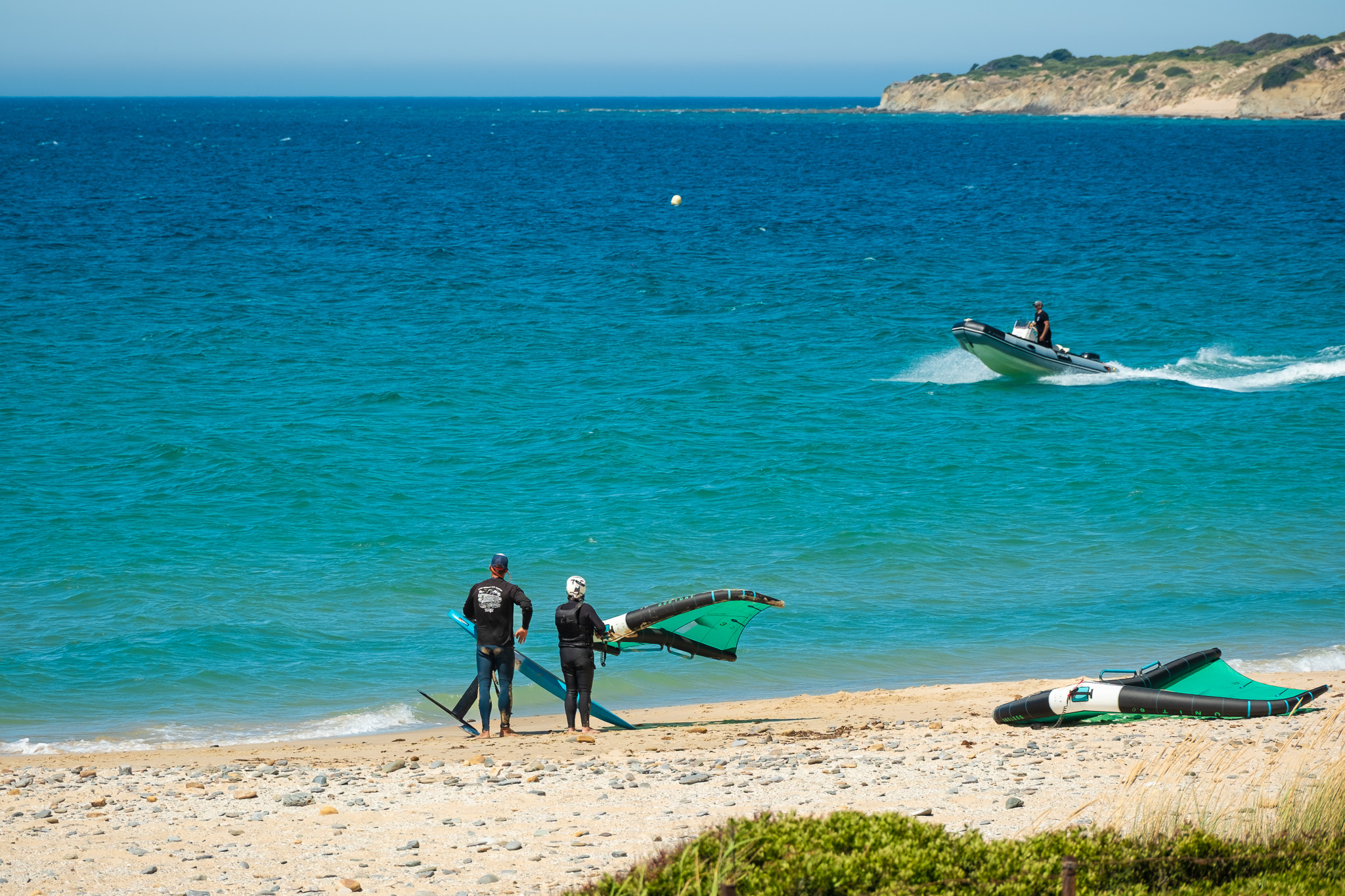
Early September still feels like summer, while late September is quieter
Early September still has more of the summer atmosphere. Later in the month, things tend to slow down. Some beach bars start reducing their hours, but they're still open, and restaurants and activities continue.
There's also less pressure to plan everything far ahead. It can be easier to find a place for dinner or fit another activity around your lessons, without having every day booked before you arrive.
If you want lessons along with evenings out and a busier town, early September may suit you better. If you'd prefer a quieter holiday, later in the month may be a better fit. You can still go out, but a beach bar might close earlier than it does in summer.
While you're choosing dates, have a look at our guide to holidays and events in Tarifa and check what's happening during your stay.
For learning conditions, there isn't a particular week that guarantees lighter wind or calmer water. Coming later in September doesn't automatically make the lessons easier. Choose the atmosphere you prefer, then leave several possible days open for lessons.
How many days should you stay to learn in September?
If you're booking ahead, try to give yourself a week. You don't need perfect conditions every day, but having a few extra days means you can work around the weather.
Three days can work too, especially if you can choose your dates at short notice and come when the forecast looks good. It's worth checking with the team first, though, because good wind for an experienced rider might be too much for your first lessons.
If you're checking it yourself, our guide to how to read Windguru for kitesurf lessons in Tarifa explains what to look for.
And leave some room in your plans. If you're here for a week but only have one afternoon free for lessons, you're still depending on the weather that afternoon.
If you're wondering how far you might get, our guides to how long it takes to learn kitesurfing in Tarifa and wingfoil progression explain the stages.
Is September cheaper than July and August in Tarifa?
Usually, yes. Mostly on somewhere to stay and a rental car, though. What you spend on food and drinks will probably be much the same.
In July and August, lots of people are trying to book apartments, rooms and cars at once. September takes some of that pressure off. You'll often have more places to choose from and a better chance of finding something within your budget.
It's worth trying a few dates if you can. Early September can still be busy, and prices don't drop overnight when August ends. Later in the month, finding somewhere to stay generally gets easier.
Restaurants don't tend to change their prices much. Your coffee, dinner or supermarket shop won't suddenly be cheaper because it's September.
For lessons, we generally offer 10% off in September. Ask us about discounts for your dates when you get in touch, and check the current lesson prices for the course you want.
And a cheaper place to stay might let you come for seven days instead of four or five. If you're learning, those extra days give you more room to work around the weather.
What is Tarifa like in September outside your lessons?
There are still people around, places to eat and things to do. You can spend the day learning and go into town for dinner afterward, without needing the whole trip to revolve around lessons.
Matteo sees more solo visitors and couples in September, and fewer families once school starts. If you're coming on your own, spending time at the center between sessions gives you a chance to get to know other students. Some people stay around after their lessons rather than head straight back to their accommodation.
And if the wind doesn't work out, you've got other ways to spend the day. We suggest surfing, cycling, yoga or a visit to Bolonia. The couple who stayed ten days also went sightseeing and whale watching between their kite sessions.
That helps if you're travelling with someone who isn't learning. You can leave time for a lesson without making every day about getting on the water.
For more ideas, our guide to things to do in Tarifa beyond kitesurfing covers days off and plans for companions too.
What should you check before booking September lessons?
Start with your dates, how long you're staying and whether you've tried either sport before. That helps us talk through what could work for your trip.
If you're coming for only a few days, check the forecast with us before committing to dates, especially if you can travel at short notice. If you're booking months ahead, leave a few possible lesson days open.
Ask about the lesson format and language you want, too. A quieter beach doesn't mean every instructor will be available whenever you need them.
Before paying, check how lesson times are confirmed and what happens to any hours you can't use if the weather prevents lessons before you leave. It's better to have that clear while you're planning.
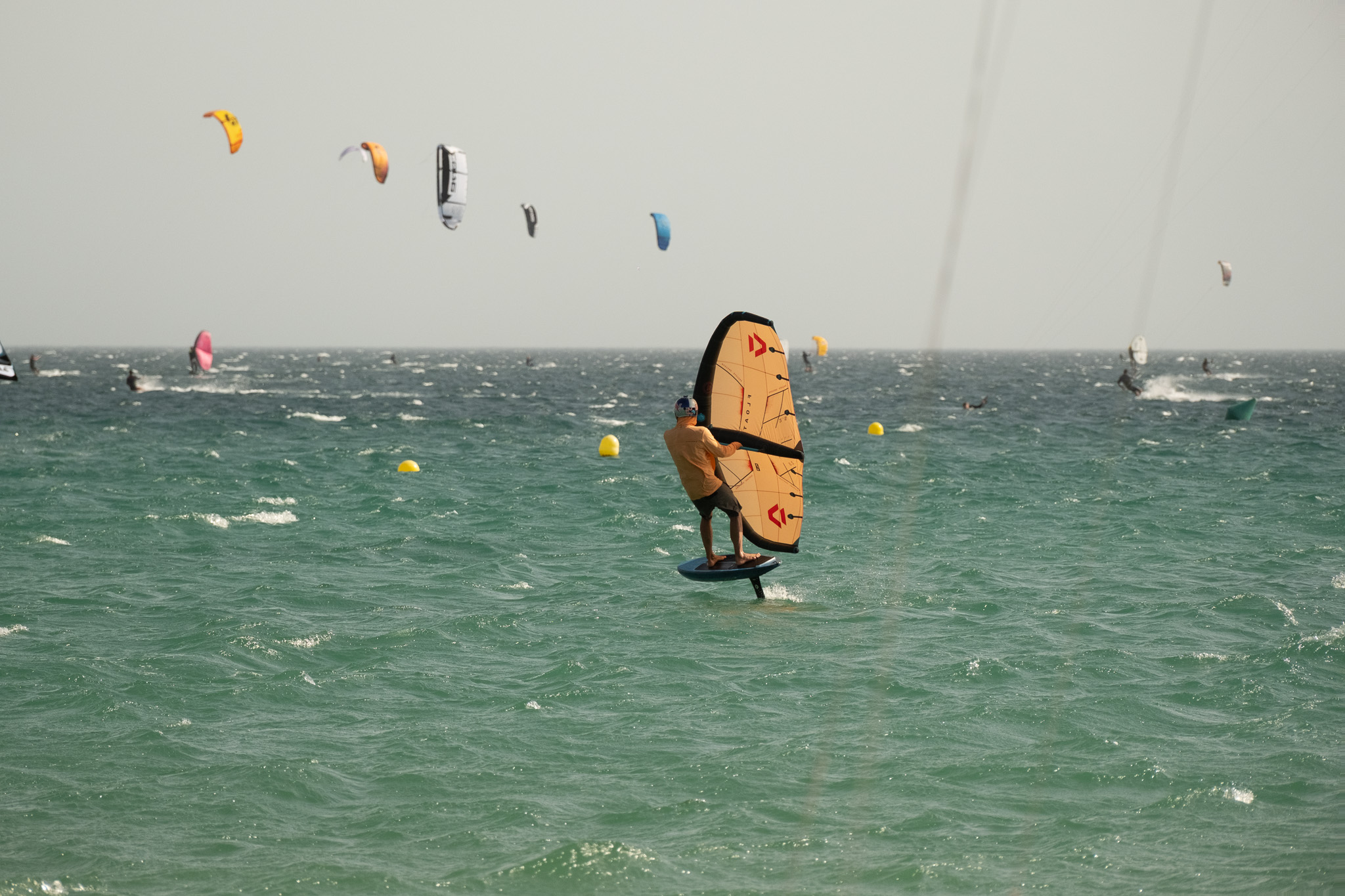
Ready to plan your September lessons in Tarifa?
Send us your travel dates, experience and any questions about the conditions. We'll help you plan your lessons. Already decided? Book your kitesurfing or wingfoil sessions directly.
Prefer to talk? Call us at +34 681 286 516.
KEEP EXPLORING
Related guides for your kitesurfing or wingfoiling trip to Tarifa
Planning your trip
Planning a Kitesurfing Trip to Tarifa →
Plan flights, accommodation, transport and how to organise your lessons around the wind at Valdevaqueros.
Choosing your sport
Kitesurfing vs Wingfoiling: Which Should You Learn in Tarifa? →
Compare learning time, conditions, equipment and progression to decide which sport fits your September trip.
Understanding the conditions
How the Tarifa Forecast Shapes Your Kitesurfing Lessons →
Understand how Levante, Poniente, gusts and changing wind conditions affect beginner lessons.
Kitesurfing progression
How Long Does It Take to Learn Kitesurfing in Tarifa? →
See realistic learning timelines, lesson hours and the skills needed to become an independent rider.
Wingfoil progression
Wingfoil Progression in Tarifa: From Day One to Independent Riding →
Follow the learning stages from wing control and balance to first foil flights, turns and independent riding.
Latest News
- Levante vs Poniente for Wingfoil Lessons in Tarifa
- Levante vs Poniente for Kitesurf Lessons in Tarifa
- Is September a Good Month to Learn Kitesurfing or Wingfoiling in Tarifa?
- Am I Ready to Rent Kitesurfing Gear in Tarifa? (Or Do I Need More Lessons?)
- Wingfoiling for Kids in Tarifa: What Parents Should Know Before Booking
- Kitesurfing or Wingfoiling for Kids in Tarifa: Which Should They Try First?
- What Will You Learn in Wingfoil Lessons in Tarifa? From Day One to Independent Riding
- Is Tarifa a Good Place to Learn Wingfoiling? What We Tell Beginners Before They Book
- What Happens in Your First Wingfoil Lesson in Tarifa? We Get Asked This a Lot
- Am I Too Old to Learn Kitesurfing at 50 or 60 in Tarifa?